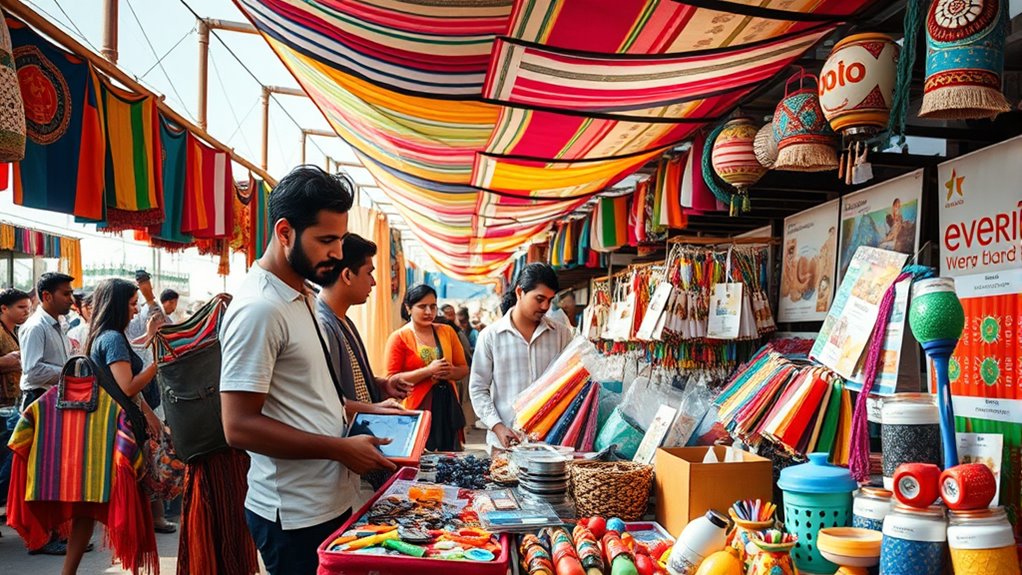

When designing for emerging markets, you need to focus on affordability, cultural relevance, and local collaboration. Simplify features to reduce costs and introduce tiered pricing to reach more consumers. Understand local customs, values, and preferences, then customize packaging, branding, and core features accordingly. Engage local stakeholders for insights and test your products to guarantee they meet real needs. If you keep exploring, you’ll discover how to develop tailored models that truly resonate with new audiences.
Key Takeaways
- Prioritize affordability by simplifying features and offering tiered pricing to meet consumers’ limited purchasing power.
- Understand and incorporate local cultural values into product design, branding, and messaging.
- Engage local stakeholders for insights, ensuring products align with community needs and preferences.
- Conduct thorough market research and pilot testing to tailor products to regional demands and preferences.
- Focus on core functionality and create a personalized, trustworthy connection to foster consumer loyalty.

What does it take to create products that truly resonate in emerging markets? The answer lies in understanding the unique needs and constraints of these regions. Affordability challenges are at the forefront—consumers in emerging markets often have limited purchasing power, which means your product must offer real value without breaking the bank. You can’t assume that a premium price point will work; instead, focus on designing affordable solutions that meet essential needs while maintaining quality. This might involve simplifying features, reducing production costs, or offering tiered pricing options. The goal is to make your product accessible without compromising on core functionality, ensuring it appeals to a broader segment of the population.
But affordability isn’t the only hurdle. Cultural adaptation plays a *pivotal* role in making your product appealing and usable. Every market has its own traditions, values, and behaviors that influence how people perceive and interact with products. If you ignore these cultural nuances, even the most affordable item might fail to gain traction. To succeed, you need to deeply understand local customs, language, and user habits. This could mean customizing packaging, branding, or even the product’s core design to align with local tastes and expectations. For example, colors, symbols, and messaging should resonate positively within the cultural context. Additionally, consider local preferences in functionality—what works in one country may not be relevant or useful in another.
Adapting your model for new audiences also involves engaging local stakeholders—customers, suppliers, and partners—who can provide insights that you might overlook from afar. They can guide you on what features are essential, what can be simplified, and how to present your product in a way that feels familiar and trustworthy. This collaborative approach helps you avoid cultural missteps that could alienate potential users.
Furthermore, you should be flexible in your approach. Emerging markets are diverse, and what works in one country might not work in another. Conducting thorough market research and pilot testing can help you identify the right balance between affordability and cultural relevance. Remember, the key is to create a product that feels tailor-made for local consumers—something that respects their economic reality and cultural identity. When you succeed in this, your product won’t just enter the market; it will truly connect with people, fostering loyalty and long-term success.
affordable product design tools for emerging markets
As an affiliate, we earn on qualifying purchases.
As an affiliate, we earn on qualifying purchases.
Frequently Asked Questions
How Do Cultural Differences Influence Design Choices in Emerging Markets?
You need to understand that cultural nuances greatly influence your design choices in emerging markets. By recognizing local customs, values, and preferences, you can make effective design adaptations that resonate with your audience. This approach guarantees your products are culturally relevant and accessible. Ignoring these differences risks alienating users or creating misunderstandings. Embracing cultural nuances helps you craft more impactful, tailored experiences that connect deeply with new audiences.
What Are Cost-Effective Strategies for Adapting Existing Models?
Did you know that 60% of emerging market consumers prefer affordable products? To adapt existing models cost-effectively, focus on affordable innovation by simplifying designs and using locally available materials. Optimize resources by leveraging partnerships with local suppliers and communities, which reduces costs and boosts relevance. This approach allows you to meet market needs efficiently while maintaining quality, ensuring your products resonate with new audiences without overspending.
How Can User Feedback Be Effectively Gathered in Diverse Markets?
You can effectively gather user feedback in diverse markets by using mobile surveys to reach a broad audience quickly and conveniently. Additionally, hosting community workshops allows you to engage directly with users, understand their needs, and gather qualitative insights. Combining these methods guarantees you capture a wide range of perspectives, helping you adapt your models better for local contexts and improve your offerings accordingly.
What Role Does Local Infrastructure Play in Design Adaptation?
You recognize that local infrastructure impact is vital for design adaptation, as it influences accessibility and usability. By focusing on local integration, you guarantee your designs align with existing infrastructure, making them more effective and sustainable. When you adapt your models, consider infrastructure limitations and opportunities, tailoring your approach to fit the unique environment. This way, your solutions become more relevant, reliable, and better suited to meet local needs.
How Should Brands Balance Global Consistency With Local Relevance?
You might think global consistency is king, but in reality, local relevance wins hearts. To do this, you balance brand storytelling with a flexible visual identity that respects cultural nuances. Keep your core message intact, yet adapt visuals and narratives to resonate locally. This approach guarantees your brand feels authentic and relatable, bridging the gap between a unified global image and meaningful local connections.
culturally relevant packaging materials
As an affiliate, we earn on qualifying purchases.
As an affiliate, we earn on qualifying purchases.
Conclusion
As you craft products for emerging markets, think of yourself as a gardener tending to a vibrant, untamed jungle. Every adaptation is like planting a seed that grows into a resilient tree, rooted in local culture and nurtured by understanding. Embrace the challenge with curiosity and patience, knowing that your efforts will bloom into solutions that resonate deeply. With each thoughtful touch, you’re weaving a tapestry of innovation that celebrates diversity and sparks new possibilities.
tiered pricing solutions for emerging markets
As an affiliate, we earn on qualifying purchases.
As an affiliate, we earn on qualifying purchases.

Sweet Corn Pop Up Canopy Tent, 10×10 Commercial Outdoor Instant Canopy Heavy Duty Vendor Tent for Local Farm Business with Roller Bag and Stake Kit, Backwall
EASY TO PUT UP AND TAKE DOWN – This pop up canopy can be deployed by 2 people…
As an affiliate, we earn on qualifying purchases.
As an affiliate, we earn on qualifying purchases.