
Advanced UX labs use cutting-edge tools like eye tracking, biometrics, and neuroscience to uncover deep insights into user behavior and emotions. These technologies measure subconscious reactions, facial expressions, heart rate, and brain activity, giving you a clearer picture of how users truly engage with your designs. Combining these methods reveals powerful emotional and cognitive responses that traditional metrics might miss. Keep exploring to discover how these innovative tools can transform your user experience approach.

Get business pricing on monitors, keyboards and dev gear
- Business-only prices and quantity discounts
- Tax-exempt purchasing
- Multiple users, one account, clear invoices
Key Takeaways
- Modern UX labs utilize eye tracking, biometrics, EEG, and fNIRS to gain comprehensive insights into user behavior and subconscious reactions.
- These tools measure neural and emotional responses, revealing feelings users may not consciously express.
- Combining biometric sensors with eye tracking enhances understanding of engagement, emotion, and cognitive load during interactions.
- Controlled environment testing with advanced tools uncovers hidden insights, informing more human-centric and emotionally resonant designs.
- Implementing these technologies improves product usability, strengthens emotional connections, and boosts user loyalty and advocacy.
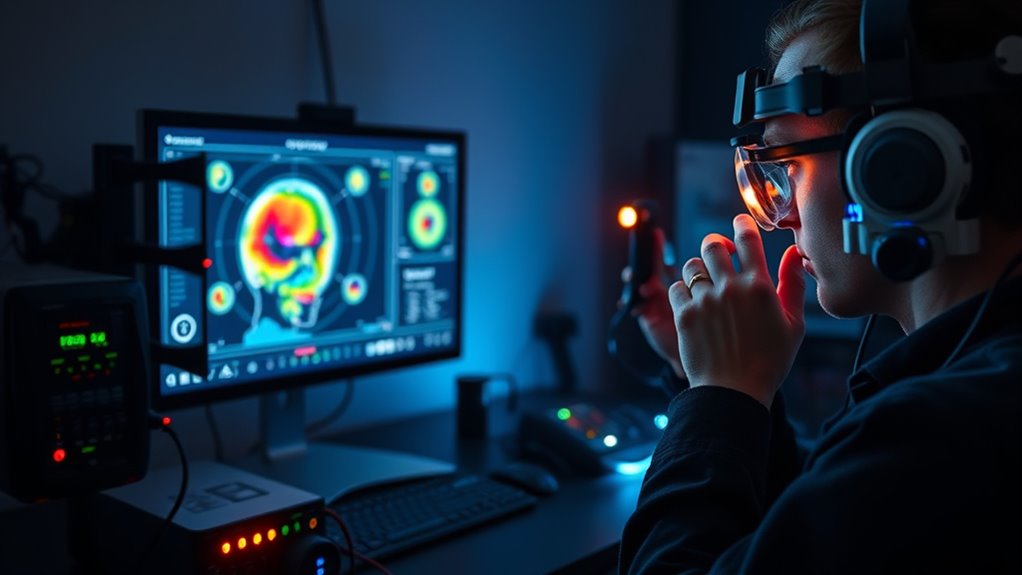
Have you ever wondered how cutting-edge user experience research transforms the way products are designed? Advanced UX labs leverage a range of innovative tools like eye tracking, biometrics, and other sophisticated technologies to gather deep insights into user behavior. At the core of these methods are neuroscience applications and emotional analytics, which help you understand not just what users do, but how they feel and why they respond the way they do. By tapping into these areas, you can create products that resonate more deeply with your audience, improving engagement and satisfaction.
Advanced UX labs use neuroscience and emotional analytics to understand user feelings and motivations, enhancing product design and engagement.
Neuroscience applications play a pivotal role in this process. They allow you to analyze brain activity, revealing subconscious reactions that users may not even be aware of. For example, functional near-infrared spectroscopy (fNIRS) and EEG devices measure neural responses to different interface elements, helping you pinpoint which features evoke positive or negative emotions. This data provides a window into the cognitive load users experience, enabling you to refine designs for *best* usability and emotional impact. The insights from neuroscience help you move beyond traditional metrics like click rates or time on page, giving you a richer understanding of user motivation and mental state.
Emotional analytics is another critical component of advanced UX research. It involves capturing and analyzing emotional responses during user interactions, often through biometric sensors that track heart rate, skin conductance, or facial expressions. These signals reveal how users genuinely feel about your product—whether they’re excited, frustrated, or indifferent. When combined with eye tracking data, emotional analytics paint a *well-rounded* picture of user engagement. For instance, if a user’s gaze lingers on a specific part of your interface while their biometric data indicates stress, you know that area needs improvement. This real-time feedback helps you make precise adjustments that enhance emotional connection and reduce frustration.
Using these tools together allows you to craft experiences that feel intuitive and emotionally satisfying. You can test prototypes in a controlled environment, observing how users react at a subconscious level and adjusting accordingly. The power of advanced UX labs lies in their ability to uncover hidden insights that traditional research methods might miss. Incorporating resources and tools like biometric sensors and eye tracking can further enhance your understanding of user responses. By understanding the neural and emotional underpinnings of user behavior, you’re better equipped to design products that truly resonate. This approach not only improves usability but also fosters a deeper emotional bond between your brand and your users, leading to higher loyalty and advocacy. *Fundamentally*, mastering neuroscience applications and emotional analytics through advanced UX labs transforms the way you approach design—making it more human-centric and impactful.
eye tracking device for user research
As an affiliate, we earn on qualifying purchases.
As an affiliate, we earn on qualifying purchases.
Frequently Asked Questions
How Accurate Are Eye Tracking Measurements in Diverse Lighting Conditions?
Eye tracking accuracy can vary with lighting variability, making measurements less reliable in changing or poor lighting conditions. You might face calibration challenges, especially in inconsistent environments, which can affect data precision. To improve accuracy, guarantee stable, controlled lighting and perform regular calibration. While advanced eye trackers are quite precise under ideal conditions, their effectiveness diminishes with significant lighting fluctuations, so maintaining consistent lighting is essential for reliable results.
What Are the Privacy Concerns Related to Biometric Data Collection?
Imagine your biometric data as a window into your personal world, revealing insights about your health or behaviors. You should know that collecting this data carries privacy risks; it can be misused or mishandled, leading to identity theft or unauthorized surveillance. Protecting your biometric information is essential, and organizations must follow strict privacy protocols to guarantee your data remains secure and your rights are respected.
How Do Advanced UX Tools Integrate With Existing User Research Methods?
You integrate advanced UX tools with your existing user research methods by combining quantitative analysis from eye tracking, biometrics, and other tools with qualitative insights. This data triangulation helps you validate findings across different sources, giving a thorough understanding of user behavior. You can identify patterns more accurately, refine your design strategies, and make data-driven decisions, ensuring your research is thorough and reliable.
What Is the Cost Range for Setting up a High-Tech UX Lab?
Setting up a high-tech UX lab can cost between $50,000 and $200,000, depending on your budget considerations and equipment costs. You’ll need to invest in eye tracking devices, biometric sensors, software, and calibration tools. Keep in mind that high-quality equipment and extensive setups increase costs, but they also provide richer insights. Planning your budget carefully ensures you select the right tools without overspending.
How Can Small Businesses Benefit From Advanced UX Lab Technologies?
Just like a skilled navigator uses tools to steer a ship, you can harness advanced UX lab technologies to enhance your user experience and fuel business growth. These tools help you understand customer behavior, optimize website design, and identify pain points efficiently. Small businesses gain valuable insights without massive investments, allowing you to make data-driven decisions, improve user satisfaction, and stay competitive in your market.
biometric sensors for emotional analytics
As an affiliate, we earn on qualifying purchases.
As an affiliate, we earn on qualifying purchases.
Conclusion
By exploring advanced tools like eye tracking and biometrics, you gain deeper insights into user behavior. These cutting-edge methods give you a clearer picture of what truly resonates, helping you make smarter design choices. Embracing these technologies means you’re not just guessing anymore — you’re in the driver’s seat. So, don’t wait for a perfect moment; jump in now and turn insights into action before the opportunity slips through your fingers.
As an affiliate, we earn on qualifying purchases.
As an affiliate, we earn on qualifying purchases.
Fall Picks
fall essentials
As an affiliate, we earn on qualifying purchases.