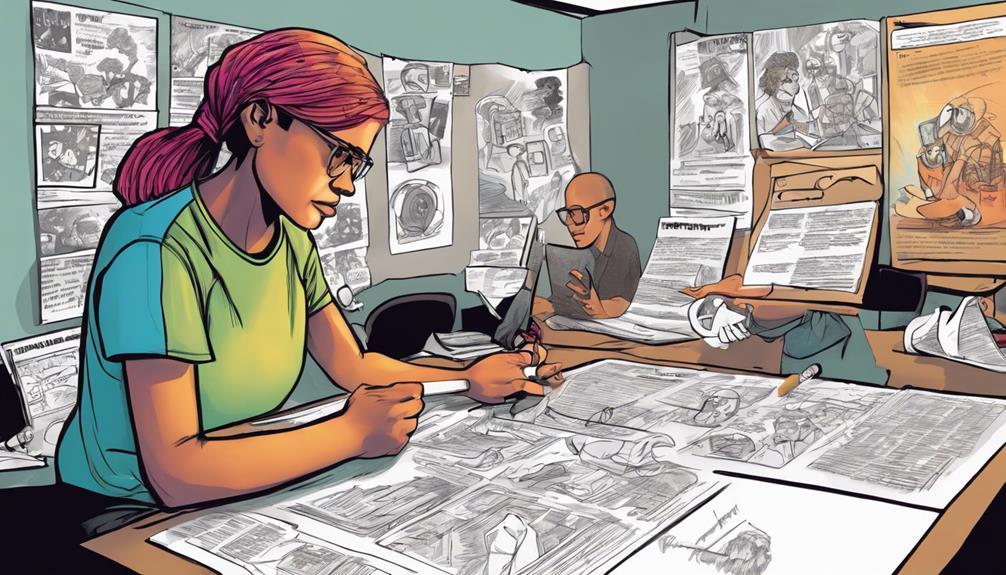
The future of design thinking is shaping up to be driven by AI integration, sustainability, and collaborative innovation. You’ll see smarter tools that rapidly analyze data, generate ideas, and automate routine tasks, freeing you to focus on creative solutions. Sustainability will become central, guiding responsible choices that consider environmental and social impacts. Cross-disciplinary teams will work more dynamically, fostering responsible, resilient designs. Keep exploring these trends to understand how they’ll transform your approach in the next decade.

Get business pricing on monitors, keyboards and dev gear
- Business-only prices and quantity discounts
- Tax-exempt purchasing
- Multiple users, one account, clear invoices
Key Takeaways
- AI will evolve from support tools to active collaborators, enhancing creativity and rapid problem-solving.
- Sustainability will become central, driving eco-friendly materials, processes, and circular economy practices.
- Holistic, interconnected approaches will integrate economic, environmental, and social factors for comprehensive solutions.
- Cross-disciplinary teams will leverage AI and sustainability to foster more dynamic, responsive, and responsible collaboration.
- Design practices will prioritize resilience and innovation, balancing technological advances with ecological and ethical considerations.
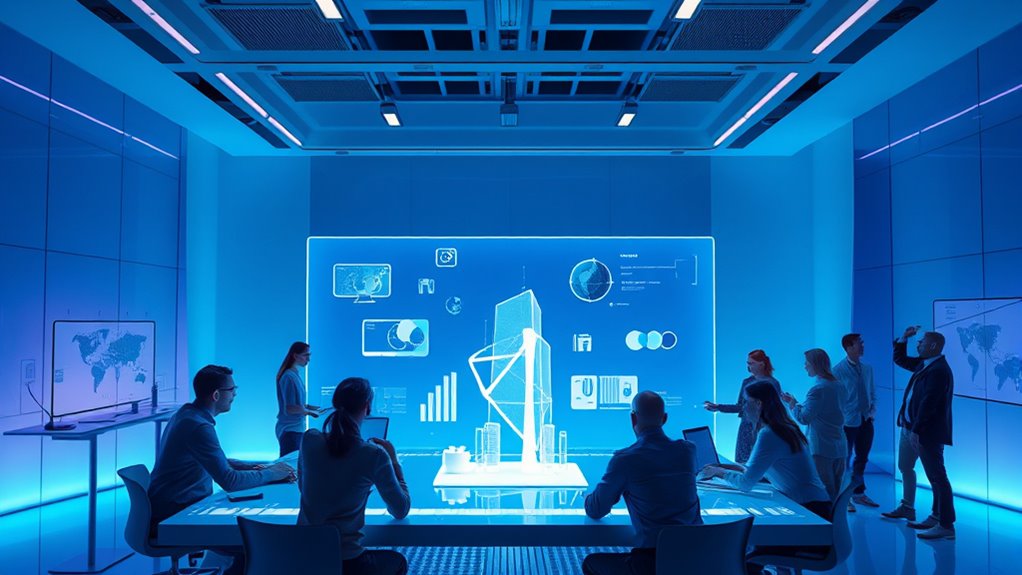
Have you ever wondered how design thinking will evolve to meet the challenges of tomorrow? As the world becomes increasingly complex, shifting toward more sustainable practices and advanced technologies, design thinking is poised to adapt in exciting ways. One of the most significant trends shaping its future is AI integration. You’ll find that AI tools are no longer just support systems; they’re becoming active collaborators in the creative process. These technologies help you analyze vast amounts of data quickly, uncover patterns, and generate innovative solutions that might have taken much longer to develop manually. By automating routine tasks, AI frees you to focus on more strategic, human-centered aspects of design, fostering a more iterative and responsive process. This integration also enables real-time testing and refinement, helping you to prototype faster and improve designs based on immediate feedback. Incorporating biodiversity principles into design processes can also promote healthier, more sustainable environments within urban and rural development projects.
AI transforms design by enabling rapid data analysis, real-time testing, and fostering innovative, human-centered solutions.
Alongside AI, a sustainability focus is fundamentally transforming how you approach problem-solving. Future design thinking places a stronger emphasis on creating solutions that are environmentally responsible and socially equitable. You’re encouraged to think beyond aesthetics and usability to consider the long-term impact of your designs. This shift pushes you to explore materials, processes, and business models that minimize ecological footprints and promote circular economies. Sustainability isn’t just a trend but a core principle, inspiring you to innovate in ways that benefit both people and the planet. You’ll find that incorporating sustainable practices often leads to more resilient and adaptable solutions, which are vital in a rapidly changing world.
The combination of AI integration and sustainability focus is driving a more holistic approach to design thinking. You’re encouraged to look at problems through a broader lens, considering economic, environmental, and social factors simultaneously. This interconnected perspective helps you develop more all-encompassing solutions that are not only innovative but also responsible. As you adapt to these trends, you’ll likely see a shift toward collaborative, cross-disciplinary teams that leverage AI’s capabilities while prioritizing sustainable outcomes. This synergy prepares you to tackle future challenges with agility and purpose.
In essence, the future of design thinking will be characterized by smarter tools and a deeper commitment to sustainability. You’ll find yourself working in more dynamic, responsive ways that balance technological advancements with ethical and ecological considerations. As these trends continue to evolve, you’ll be better equipped to create solutions that are innovative, responsible, and resilient—shaping a better future for everyone.
As an affiliate, we earn on qualifying purchases.
Frequently Asked Questions
How Will AI Influence Human-Centric Design in the Future?
AI integration will greatly enhance human-centric design by allowing you to better understand user needs through data-driven insights. It enables you to tailor solutions that truly resonate with human empathy, making designs more intuitive and personalized. As AI evolves, you’ll be able to create more empathetic experiences, ensuring that technology complements human emotions and behaviors rather than replacing them, ultimately fostering deeper connections between users and your designs.
What Role Do Ethical Considerations Play in Evolving Design Practices?
Imagine you’re a time traveler from the Renaissance, realizing that ethical considerations are vital in evolving design practices. You play a key role in promoting ethical innovation and moral responsibility, ensuring technology benefits everyone. By prioritizing transparency and inclusivity, you shape designs that respect user rights and societal values. Your focus on ethics helps prevent harm, fostering trust and sustainability in future innovations, making your work genuinely impactful and responsible.
How Can Small Businesses Adopt Advanced Design Thinking Methods?
You can adopt advanced design thinking methods by starting with a design sprint to rapidly prototype solutions and gather user feedback. Focus on developing user empathy by deeply understanding your customers’ needs and pain points. This approach helps you identify innovative opportunities quickly, even with limited resources. By engaging stakeholders early and iterating based on real user insights, your small business can stay competitive and foster continuous improvement.
Will Remote Collaboration Change the Core Principles of Design Thinking?
Imagine your team uses virtual brainstorming tools to solve a complex problem with colleagues worldwide. Remote collaboration doesn’t change the core principles but enhances them by enabling cross-cultural collaboration and diverse perspectives. You’re encouraged to embrace digital platforms that facilitate open communication, fostering empathy and ideation. This approach makes design thinking more inclusive, innovative, and adaptable, ensuring your process remains effective despite physical distances.
What New Skills Will Designers Need in the Next Decade?
You’ll need to develop strong cross-disciplinary collaboration skills and a deep understanding of user experience. As design becomes more integrated with technology, you’ll also need to stay adaptable and learn new tools quickly. Emphasizing empathy and communication will help you navigate diverse teams and complex problems. By honing these skills, you’ll stay ahead, creating innovative solutions that truly meet user needs and thrive in an evolving, interconnected landscape.
As an affiliate, we earn on qualifying purchases.
Conclusion
As you embrace the evolving landscape of design thinking, remember that 85% of innovative solutions now stem from collaborative, human-centered approaches. By staying adaptable and open to emerging trends, you’ll shape a future where creativity and technology intersect seamlessly. Keep experimenting, learning, and refining your approach—because the next decade promises exciting opportunities for those willing to lead with empathy and innovation. Your ability to adapt will define your success in this dynamic field.
collaborative project management tools
As an affiliate, we earn on qualifying purchases.
As an affiliate, we earn on qualifying purchases.
As an affiliate, we earn on qualifying purchases.
Fall Picks
fall essentials
As an affiliate, we earn on qualifying purchases.