
Smart airport service design reduces your stress before travel peaks by streamlining processes and creating comfortable spaces. It manages your flow from arrival to departure with clear signage, efficient security, and amenities like lounges that help you relax or work. Thoughtful planning anticipates your needs, minimizing confusion and delays. By making procedures predictable and environmentally friendly, airports help you stay calm and confident throughout the journey. Keep exploring to learn how these design strategies work together to ease your travel experience.
Key Takeaways
- Streamlines traveler flow with clear signage and organized security lines to reduce confusion and wait times.
- Offers comfortable lounge amenities to provide relaxation and a buffer from crowded areas.
- Incorporates advanced technology for quick, seamless check-ins and security screening, minimizing delays.
- Uses visual aids and standardized procedures to make processes predictable and less stressful.
- Integrates environmentally sustainable practices to create a calming atmosphere and reduce environmental stressors.
Have you ever wondered what makes some airports feel seamless and efficient while others seem chaotic? The secret lies in how airport service design manages the flow of travelers and the experience they encounter from the moment they arrive. When designed well, airports anticipate your needs and streamline every step, reducing stress before it even begins to build. From lounge amenities to security protocols, intentional planning makes all the difference.
Well-designed airports streamline travel, reducing stress through thoughtful planning of amenities and security from arrival to departure.
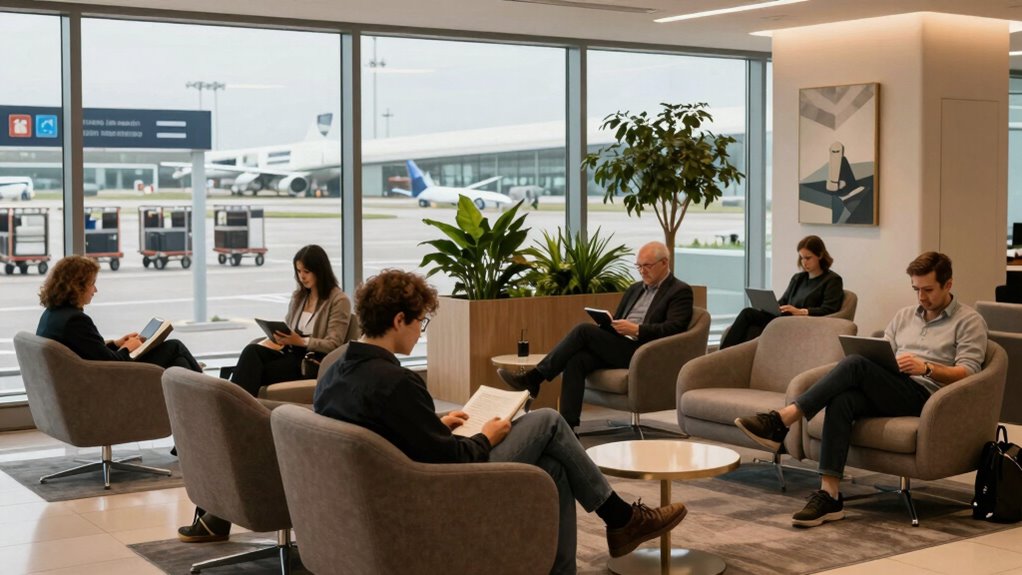
Lounge amenities play a vital role in easing your journey. When airports invest in comfortable, well-equipped lounges, they give you a space to relax, recharge, or get some work done before your flight. These lounges aren’t just about luxury; they serve as buffer zones that help ease congestion in common areas and reduce overall stress. When amenities like high-quality seating, free Wi-Fi, nutritious snacks, and quiet zones are readily available, you feel less rushed and more in control. This thoughtful design encourages travelers to spend time in these spaces, which alleviates crowding elsewhere and creates a calmer overall environment. Plus, with dedicated staff and clear signage, accessing lounge amenities becomes straightforward, eliminating confusion and frustration. When you know where to go and what to expect, your journey feels smoother from start to finish. Incorporating wayfinding systems can further enhance this experience by guiding travelers effortlessly through the airport.
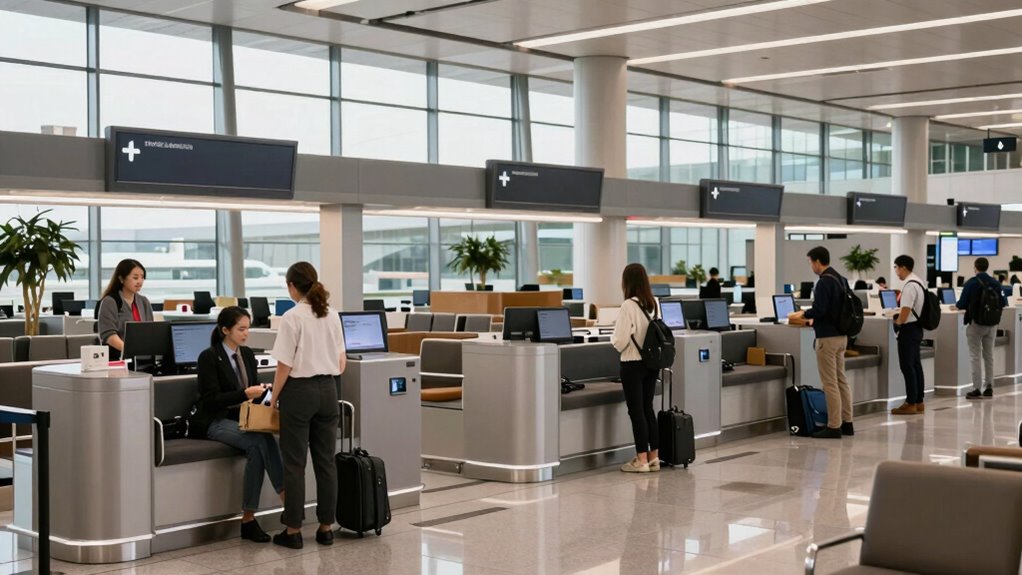
Security protocols are another critical element that can either heighten or ease your stress. Airports that prioritize efficient, well-organized security procedures minimize wait times and confusion. When security lines are designed with multiple lanes, clear instructions, and visible staff, you’re less likely to feel anxious or overwhelmed. Advanced technology like biometric screening and automated check-ins speeds up the process, meaning you spend less time standing in lines and more time preparing for your trip. Additionally, airports that provide clear signage and friendly staff help demystify the process, making it less intimidating. When security protocols are seamless and predictable, they serve as a foundation of trust and comfort, preventing stress from escalating before your flight even begins. Proper projector setup can even assist in providing clear visual instructions or announcements, further easing the process. Incorporating standardized procedures across airports can help create a consistent experience that travelers recognize and trust, reducing uncertainty and anxiety.
In essence, airport service design focuses on creating a balanced environment where every detail, from lounge amenities to security protocols, works in harmony to reduce your stress. It’s about anticipating your needs, removing obstacles, and making the entire experience as predictable and comfortable as possible. When these elements are thoughtfully integrated, the airport becomes less a place of chaos and more a space that guides you calmly toward your destination. This process is supported by understanding environmental considerations, which emphasize sustainable and low-impact practices that contribute to a more relaxing atmosphere. This proactive approach ensures that stress doesn’t peak unexpectedly but is instead managed and minimized at every step of your journey.

Best Choice Products Set of 2 Adjustable Steel Mesh Zero Gravity Lounge Chair Recliners w/Pillows and Cup Holder Trays – Ice Gray
LOCKABLE RECLINING SYSTEM: Smoothly glides into an ergonomic zero-gravity position, with removable elastic cords that immediately adjust to…
As an affiliate, we earn on qualifying purchases.
As an affiliate, we earn on qualifying purchases.
Frequently Asked Questions
How Is Passenger Feedback Integrated Into Airport Service Design?
You’re involved in integrating passenger feedback into airport service design by participating in feedback loops that prioritize passenger comfort. Your input helps identify pain points and areas needing improvement. Airports analyze feedback to implement targeted changes, ensuring services meet traveler needs. This continuous process allows you to see your suggestions shape airport experiences, reducing stress and enhancing overall comfort. Your voice directly influences how airports evolve to create smoother, more enjoyable journeys.
What Role Does Technology Play in Reducing Airport Stress?
Technology plays a vital role in reducing airport stress by streamlining security checkpoints and baggage handling. You experience shorter lines and faster processing as automated systems quickly scan documents and screen luggage. Self-service kiosks and digital updates keep you informed about delays, minimizing uncertainty. These innovations make your journey smoother, helping you feel more in control and less overwhelmed, ultimately easing your overall airport experience.
How Do Airport Designs Accommodate Travelers With Disabilities?
Airport designs are like welcoming arms for travelers with disabilities, ensuring comfort and independence. You’ll find accessible pathways that are smooth and clearly marked, making navigation effortless. Sensory accommodations, such as quiet zones and calming lighting, help those with sensory sensitivities feel more at ease. These thoughtful features prioritize inclusivity, allowing all travelers to move through the airport confidently and with reduced stress.
What Are the Latest Trends in Airport Service Innovations?
You’ll notice the latest airport service innovations focus on seamless travel, with enhanced lounge amenities offering comfort and productivity, and streamlined security procedures reducing wait times. These trends prioritize passenger experience by providing relaxing spaces and swift processes. You benefit from personalized services, digital check-ins, and contactless options, making your journey smoother. Airports are increasingly leveraging technology to anticipate your needs, ensuring you stay relaxed and stress-free before your flight even begins.
How Is Staff Training Aligned With New Service Design Strategies?
Staff training seamlessly synchronizes with new service strategies through targeted training programs that transform team talents. By prioritizing staff development, you guarantee everyone understands the updated service standards and can confidently deliver seamless, stress-reducing experiences. These programs foster familiarity, foster flexibility, and fuel familiarity with innovative processes. As a result, staff become proactive, prepared, and perfectly poised to provide passengers with prompt, professional, and personalized service, smoothing every step of the journey.

Thetis FIDO2 Security Key Fingerprint USB A, Two Factor Authenticator, Multi-Layered Protection HOTP / U2F Compatible Windows, MacOS, Gmail, Linux for Office Business – Black
Embedded Fingerprint Sensor – Advanced embedded fingerprint sensor which facilitates a world-class one-of-a-kind password-less experience. A powerful security…
As an affiliate, we earn on qualifying purchases.
As an affiliate, we earn on qualifying purchases.
Conclusion
By understanding and optimizing airport service design, you can stay calm and confident throughout your journey. When stress is managed before it peaks, travel becomes smoother and more enjoyable. Remember, “an ounce of prevention is worth a pound of cure.” By anticipating potential hiccups and designing services that support your needs, you turn travel challenges into stepping stones for a better experience. Embrace smart planning and arrive at your destination relaxed and ready for what’s ahead.

Airport Wayfinding
As an affiliate, we earn on qualifying purchases.
As an affiliate, we earn on qualifying purchases.

napfun Neck Pillow for Traveling, Upgraded Travel Neck Pillow for Airplane 100% Pure Memory Foam Travel Pillow for Flight Headrest Sleep, Portable Plane Accessories, Light Grey
CHIN SUPPORT TRAVEL NECK PILLOW – This airplane pillow can better wrap your neck and free your chin,…
As an affiliate, we earn on qualifying purchases.
As an affiliate, we earn on qualifying purchases.