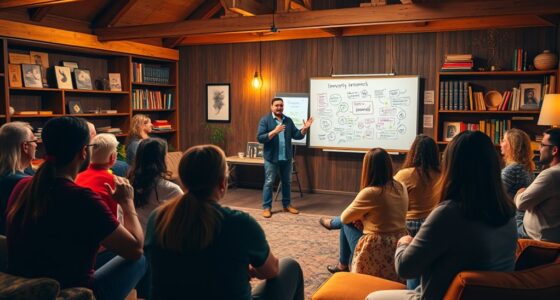

To craft a culture that survives leadership turnover, focus on embedding shared values deeply into your organization’s DNA. Engage employees to foster ownership and commitment, making them active stewards of culture. Use formal systems like onboarding and performance reviews to reinforce core principles. Incorporate rituals and traditions that build community and resilience. By doing these, your organization can maintain momentum and stability during leadership changes—keep exploring to learn more about creating lasting cultural strength.
Key Takeaways
- Embed shared core values into all organizational practices to ensure consistency beyond individual leaders.
- Foster employee engagement to create a sense of ownership and commitment to organizational principles.
- Incorporate shared rituals and traditions that reinforce culture and build resilience during leadership changes.
- Embed cultural principles into formal systems like onboarding, performance reviews, and decision-making processes.
- Promote transparency and open communication to maintain alignment and trust throughout leadership transitions.

Have you ever wondered how some organizations maintain stability and momentum despite frequent leadership changes? The key often lies in the culture they’ve built—a culture resilient enough to withstand the shifts at the top. When leadership changes occur, what keeps the organization moving forward isn’t just the vision of a single leader but a collective commitment rooted in shared values. This foundation ensures that everyone remains aligned and engaged, regardless of who’s at the helm.
Creating a culture that can survive leadership turnover starts with fostering high levels of employee engagement. When employees feel genuinely involved and invested in their work, they develop a sense of ownership that extends beyond individual leaders. Engaged employees are more likely to uphold the organization’s core principles, even as leadership evolves. They understand that their contributions are part of a larger purpose, which helps maintain consistency in performance and morale. To promote this, you need transparent communication, opportunities for growth, and recognition that makes employees feel valued. When people are connected to their work and the organization’s mission, they become stewards of the culture, not just followers of a leader. Additionally, embedding shared values into formal systems like onboarding and performance evaluations further reinforces their importance and helps sustain the culture through leadership transitions. A strong organizational culture also relies on well-defined processes that support cultural continuity, ensuring that core principles are consistently upheld. These processes act as cultural anchors, providing stability and guidance during times of change. Incorporating organizational rituals and traditions can also strengthen the culture, creating a sense of community and shared history that withstands leadership changes.
High employee engagement fosters ownership, ensuring organizational stability through leadership changes.
Shared values are the backbone of a resilient culture. These are the principles and beliefs that everyone in the organization agrees upon and lives by daily. When shared values are clearly defined and deeply embedded, they serve as a guiding compass through leadership transitions. Employees who internalize these values will naturally act in ways that support stability, even in uncertain times. It’s important that leadership communicates these values consistently and models them in their decisions and behavior. Over time, shared values become part of the organization’s DNA, creating a cohesive environment that endures beyond individual tenures.
Furthermore, embedding shared values into formal systems, like onboarding, performance reviews, and decision-making processes, reinforces their importance. When new leaders are introduced, they are expected to embrace and promote these values, which helps ensure continuity. This approach also clarifies expectations and reduces the risk of cultural drift. Ultimately, a culture built on shared values and employee engagement isn’t dependent on any one person. It’s a collective effort that sustains the organization’s identity and purpose, regardless of leadership changes. You’ll find that organizations with such cultures are more adaptable, resilient, and poised for long-term success, even amidst the inevitable shifts in leadership.

24 Pcs Employee of The Month Lapel Pin 1-12 Month Recognition Excellence in Service Appreciate Pins for Award Team Staff(Outstanding Employee)
Package Contents: you will receive 24 outstanding employee of the month lapel pins, including all 12 months of…
As an affiliate, we earn on qualifying purchases.
As an affiliate, we earn on qualifying purchases.
Frequently Asked Questions
How Do You Measure the Resilience of an Organizational Culture?
You measure the resilience of your organizational culture through resilience metrics like employee engagement, adaptability scores, and communication effectiveness. Assess cultural robustness by observing how well core values persist during change and how quickly teams recover from setbacks. Regular surveys, feedback loops, and performance indicators help you gauge if your culture withstands leadership turnover, ensuring it remains strong, adaptable, and aligned with your organization’s long-term goals.
What Role Do External Stakeholders Play in Cultural Stability?
External stakeholders play a vital role in cultural stability by exerting external influence that can reinforce or challenge your organization’s values. Through stakeholder engagement, you can foster trust, gather diverse perspectives, and align external expectations with internal culture. This ongoing interaction helps you adapt to external changes while maintaining core principles, ensuring your organizational culture remains resilient despite leadership shifts or market fluctuations.
How Can Technology Support Cultural Continuity During Leadership Changes?
Think of technology as a sturdy bridge during leadership shifts. You can use digital onboarding tools and knowledge transfer platforms to guarantee cultural continuity. For example, a company that digitized onboarding saw faster integration and maintained core values despite leadership changes. These tools preserve institutional memory, making transitions smoother and safeguarding your organizational culture against the chaos of leadership shifts. Technology consequently becomes your reliable anchor.
What Are Common Pitfalls When Attempting to Embed Culture Deeply?
You risk losing cultural depth when you rely solely on superficial actions or one-time initiatives. Avoid neglecting authentic cultural rituals and leadership storytelling, which are key to embedding values deeply. If you don’t consistently reinforce these elements, they can fade over time. Be mindful of overemphasizing formal policies, and instead, focus on genuine, ongoing practices that resonate with your team, ensuring your culture remains strong despite leadership changes.
How Do Cultural Values Influence Employee Retention During Leadership Transitions?
You might think leadership changes shake employee loyalty, but strong cultural values rooted in clear value alignment can actually strengthen retention. When employees share core beliefs, they’re more likely to stay committed despite leadership shifts. This shared sense of purpose fosters resilience and continuity, ensuring that even during periods of change, employees feel connected and valued. Cultivating these values helps create a stable environment where loyalty endures, regardless of leadership changes.

Onboarding Matters: How Successful Companies Transform New Customers Into Loyal Champions
As an affiliate, we earn on qualifying purchases.
As an affiliate, we earn on qualifying purchases.
Conclusion
You might believe a strong leader is the key to lasting culture, but research shows that resilient cultures thrive despite leadership changes. When you focus on core values, clear communication, and empowering everyone to uphold the vision, your organization can weather leadership turnovers. So, don’t rely solely on individual leaders—build a culture that’s rooted in shared purpose. This way, your organization remains steady, adaptable, and ready for whatever comes next.

The Holiday Business: How the Calendar Became a Corporate Script (Calendar Chronicles)
As an affiliate, we earn on qualifying purchases.
As an affiliate, we earn on qualifying purchases.
performance review software for culture reinforcement
As an affiliate, we earn on qualifying purchases.
As an affiliate, we earn on qualifying purchases.