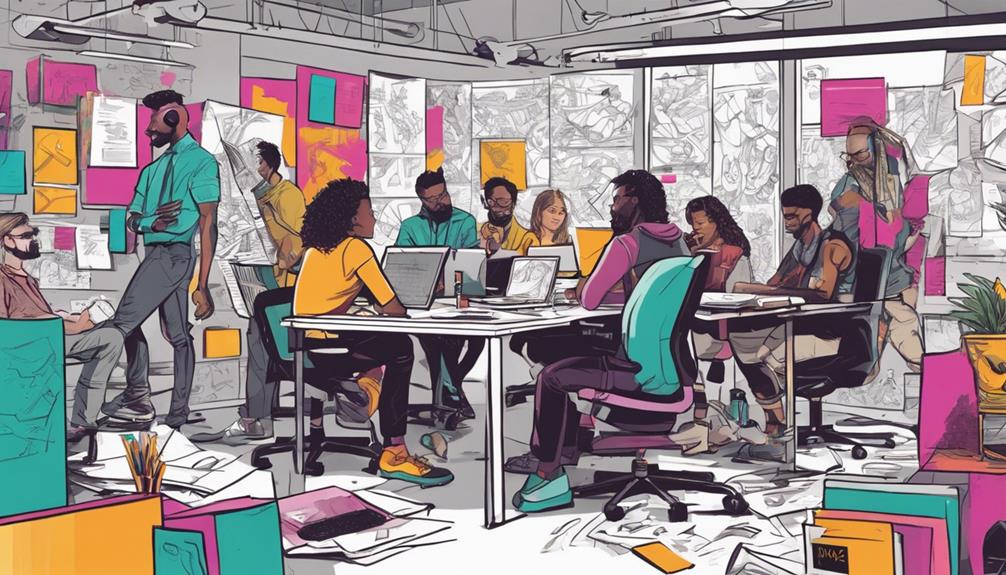

The core principles of design thinking center on understanding your users deeply and empathizing with their needs. You then prototype quickly, testing ideas early to learn and improve continuously. This iterative process encourages flexibility, viewing failures as chances to grow, and keeps your solutions aligned with real user problems. Maintaining a user-centric mindset helps craft innovative and practical outcomes. Keep exploring, and you’ll uncover how these principles can transform your approach to problem-solving.
Key Takeaways
- Empathize with users to deeply understand their needs, frustrations, and behaviors.
- Rapidly prototype solutions to test ideas quickly and gather meaningful feedback.
- Embrace an iterative process of refining ideas based on continuous user insights.
- Foster a flexible, learning mindset that views failures as opportunities for improvement.
- Focus on user-centered solutions that address real problems rather than assumptions.

Have you ever wondered how innovative solutions are created? It all begins with understanding the people you’re designing for. User empathy is at the core of this process. When you genuinely put yourself in your users’ shoes, you gain insights that go beyond surface-level needs. You start to see their frustrations, desires, and behaviors from their perspective, which guides your entire approach. This empathy allows you to develop solutions that truly resonate and address real problems, rather than just assumptions. By focusing on user experiences, you ensure your ideas are relevant and meaningful.
Once you’ve established a solid understanding of your users, rapid prototyping becomes a powerful tool to bring your ideas to life. Instead of waiting to perfect a solution before testing, you create quick, small-scale versions of your concepts. This approach allows you to experiment and learn fast. Rapid prototyping encourages you to iterate rapidly, making adjustments based on real feedback rather than assumptions. It’s about embracing the idea that your first attempt might not be perfect—and that’s okay. The goal is to learn what works and what doesn’t early in the process, saving time and resources down the line.
Integrating user empathy with rapid prototyping creates a dynamic cycle. You start by immersing yourself in your users’ world, then quickly prototype solutions that can be tested and refined. This cycle keeps you grounded in real needs, while also accelerating innovation. As you gather feedback from actual users, you can refine your prototypes, making them more aligned with their expectations. This iterative process minimizes risks and enhances the likelihood of developing a successful solution.
By continuously empathizing with users and rapidly testing ideas, you foster a mindset of flexibility and learning. You’re not committed to a single idea; instead, you’re open to evolving your approach based on what you discover along the way. This adaptability is the essence of design thinking. It encourages you to see failures as opportunities for growth, rather than setbacks. As a result, your solutions become more user-centric, practical, and innovative.
Ultimately, combining user empathy with rapid prototyping empowers you to create solutions that are not only innovative but also deeply rooted in genuine user needs. It’s a process that keeps you connected to your audience while enabling quick, effective iterations. When these principles guide your work, you’re better equipped to develop meaningful solutions that make a real difference.

IWMH Standing Desk Stool, Height Adjustable Standing Desk Chair, Ergonomic Sit Stand Stool with Footrest, 360° Swivel Leaning Stools for Office Home (Black)
Ergonomic Design: The standing chair features lumbar support, with an ergonomic design that cradles your lower back to...
As an affiliate, we earn on qualifying purchases.
Frequently Asked Questions
How Can Design Thinking Be Integrated Into Existing Business Processes?
You can integrate design thinking into your existing business processes by encouraging employee engagement in brainstorming and problem-solving sessions. Use technology integration to facilitate collaboration and rapid prototyping. By involving employees at each stage, you foster innovation and user-centered solutions. This approach helps identify pain points early, streamline workflows, and create more effective products or services, ultimately boosting overall efficiency and customer satisfaction.
What Industries Benefit Most From Applying Design Thinking Principles?
Think of industries like healthcare and education as fertile ground for design thinking, where innovation blossoms. You’ll find that applying these principles sparks healthcare innovation, improving patient experiences and treatment outcomes. Similarly, in educational reform, it helps you develop student-centered solutions that truly meet learners’ needs. By embracing empathy and experimentation, you turn complex challenges into opportunities, transforming industries into vibrant ecosystems of continuous improvement.
How Do You Measure Success in a Design Thinking Project?
You measure success in a design thinking project by tracking success metrics and measuring impact. Focus on how well the solution addresses user needs, improves processes, or increases satisfaction. Collect feedback, observe user interactions, and analyze data to gauge progress. By setting clear goals and regularly evaluating outcomes, you guarantee your project’s effectiveness and can make informed adjustments for better results.
What Are Common Challenges Faced When Implementing Design Thinking?
Implementing design thinking can feel like steering a stormy sea. You’ll often face stakeholder resistance, who may be hesitant to adopt new ideas, and resource constraints that limit your options. These challenges can slow progress, but staying flexible and transparent helps. Engage stakeholders early, demonstrate quick wins, and prioritize tasks wisely. With persistence, you’ll steer through these obstacles and foster a culture of innovation.
How Can Teams Foster a Creative Mindset for Design Thinking?
To foster a creative mindset, you should encourage open-mindedness and embrace experimentation within your team. Cultivate an innovation culture by promoting curiosity, collaboration, and risk-taking without fear of failure. Support diverse perspectives and provide space for brainstorming and iterative ideas. By valuing creativity and continuously challenging assumptions, you help your team develop a mindset that drives innovative solutions through design thinking.

ERGO COLLECT Standing Desk Chair - Ergonomic Wobble Stool for Adults - Active Seating Stool Height Adjustable (22"-31.9") - Perfect for Home Office, Standing Desks, and Classrooms
ERGONOMIC ACTIVE SEATING – Stay engaged and enhance your posture with this dynamic chair. Designed for standing desks,...
As an affiliate, we earn on qualifying purchases.
Conclusion
Just like a skilled chef tweaks a recipe until it’s perfect, mastering design thinking means refining your approach through empathy, ideation, and experimentation. Remember, even the greatest innovators like Steve Jobs started with simple ideas that evolved over time. By embracing these core principles, you turn raw concepts into innovative solutions. Keep experimenting, learning, and iterating—because, in design thinking, progress is a journey, not a destination.

SONGMICS Ergonomic Wobble Stool, Height Adjustable Standing Desk Stool 23.6-33.3 Inches, Swivel Balance Chair with Non-Slip Base, Standing Chair, for Active Sitting, Office, Home, Ink Black UOSC02BK
Active Sitting Anywhere: This ergonomic wobble stool with an 8° tilt promotes healthy posture and active sitting, helping...
As an affiliate, we earn on qualifying purchases.

Ergooffile Standing Desk Chair, Adjustable Ergonomic Standing Stool, Swivel Sitting Balance Chair, Anti-Slip Bottom Pad
Facilitate Your: No matter if you’re in the office or at home, this standing desk stool will facilitate...
As an affiliate, we earn on qualifying purchases.