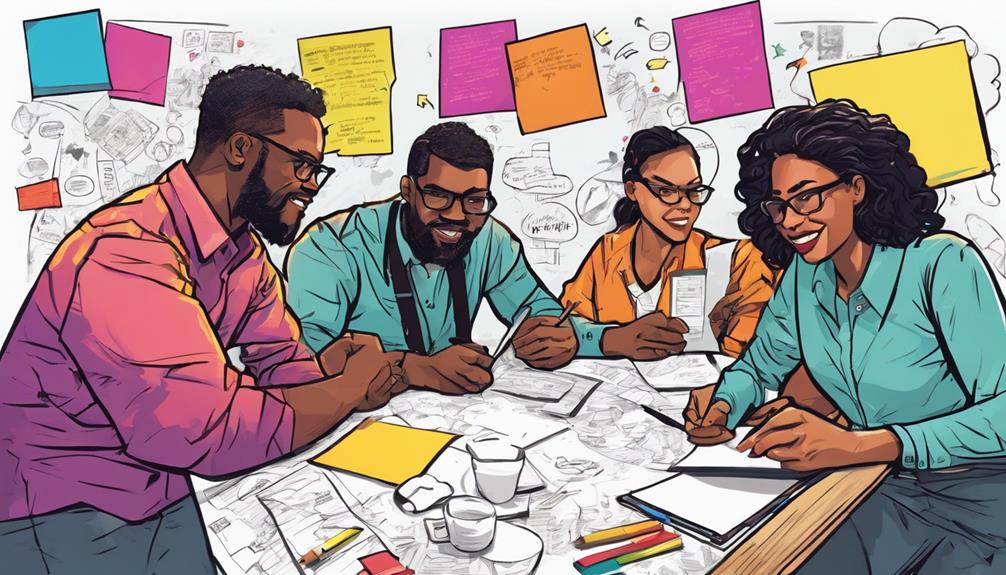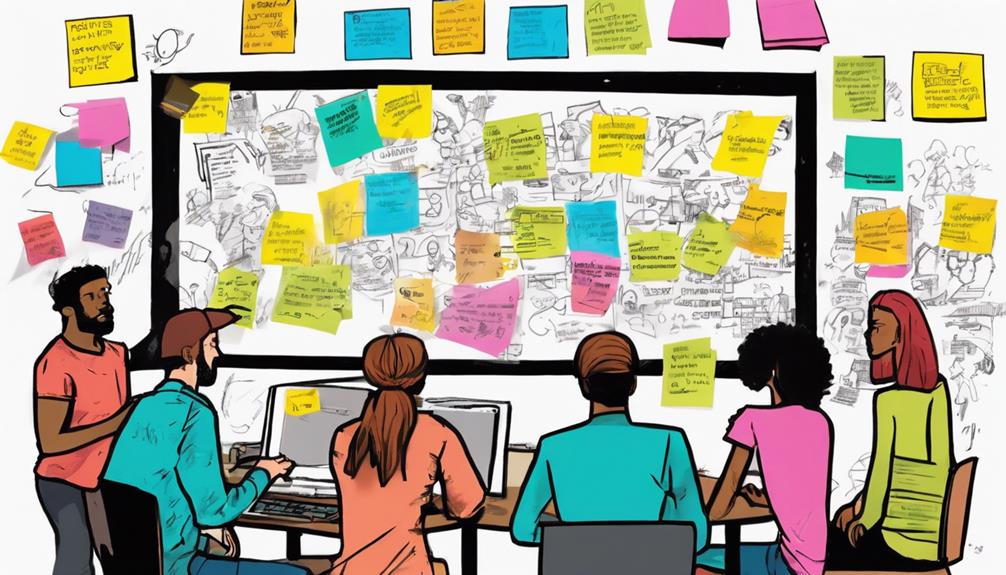

Design thinking is still highly relevant, but to stay effective in 2025, you need to adapt it beyond traditional methods. Relying solely on linear processes or past practices can limit innovation and miss emerging opportunities. Embracing new tools like AI, data analytics, and rapid prototyping, along with fostering cross-disciplinary collaboration, will keep your approach fresh and impactful. Stay open to continuous learning and evolving techniques—if you’re curious, there’s more to explore on how to make design thinking future-proof.
Key Takeaways
- Traditional design thinking must evolve to address rapid technological advancements and market changes in 2025.
- Incorporating AI, data analytics, and rapid prototyping enhances relevance and accelerates innovation.
- Cross-disciplinary collaboration fosters diverse insights, driving more relevant and robust solutions.
- Continuous learning and a growth mindset are essential to keep design thinking adaptive and impactful.
- Evolving practices prevent stagnation, ensuring design thinking remains a vital tool for future innovation.

In an increasingly competitive world, design thinking has become a pivotal approach for solving complex problems and fostering innovation. But as we move toward 2025, many wonder if it still holds the same relevance. The truth is, without adaptation, design thinking risks falling into patterns of innovation stagnation, especially when teams rely on outdated practices that no longer meet modern challenges. Sticking to the same methods can limit creativity and prevent breakthroughs, making it essential to evolve the approach to stay effective.
You might notice that traditional design thinking processes often follow a linear sequence: empathize, define, ideate, prototype, and test. While these steps are valuable, they can become predictable and restrictive if applied rigidly. Outdated practices tend to focus heavily on user feedback and iterative cycles without considering rapid technological advancements or shifting market dynamics. This can lead to incremental improvements rather than disruptive innovations, leaving teams vulnerable to competitors who leverage more agile, integrated methods.
To remain relevant, you need to reframe your understanding of design thinking as a flexible, adaptive mindset rather than a fixed set of steps. This means embracing new tools like AI, data analytics, and rapid prototyping technologies, which can accelerate the process and reveal insights that traditional methods might miss. Instead of waiting for extensive user feedback, you can incorporate real-time data and behavioral analytics to better anticipate customer needs. This approach helps prevent stagnation by continuously pushing boundaries and challenging assumptions.
Moreover, integrating cross-disciplinary collaboration is key. Outdated practices often silo teams or limit stakeholder involvement, which can stifle fresh ideas. You should foster environments where diverse perspectives—from engineers and marketers to end-users—interact seamlessly. Combining insights from different fields can spark innovative solutions that are more resilient and relevant. Additionally, adopting a mindset that values experimentation over perfection allows you to fail fast, learn quickly, and pivot as needed. This agility keeps your solutions aligned with evolving market demands and prevents stagnation.
Furthermore, staying informed about emerging technologies and industry trends, such as advancements in content creation tools, can help keep your design thinking approach current and impactful. Ultimately, design thinking remains relevant, but only if you evolve it to meet the demands of the modern world. Staying connected to current trends, adopting new technologies, and encouraging a culture of continuous learning and experimentation will guarantee your approach doesn’t become outdated. By doing so, you not only avoid innovation stagnation but also position yourself to lead rather than follow in your industry. The key is adaptability—remaining open to change and willing to challenge old practices to foster truly groundbreaking solutions.

Furmax Electric Standing Desk, 45 x 24 Inches Sit Stand up Desk, Sit Stand Height Adjustable Home Office Desk with 4 Height Position Memory - with Splice Board (Rustic Brown, 45)
Ultra-Stable & Durable Construction : Rock-solid stability with commercial-grade steel frame and connection area , ensuring Adjustable Standing...
As an affiliate, we earn on qualifying purchases.
Frequently Asked Questions
How Can Design Thinking Be Integrated With Emerging AI Technologies?
You can integrate design thinking with emerging AI technologies by focusing on AI integration and Ethical AI principles. Use empathy to understand user needs, then collaborate with AI experts to develop solutions that prioritize transparency and fairness. Incorporate iterative prototyping to test AI-driven features, guaranteeing they align with user values. Emphasizing Ethical AI ensures your innovations are responsible, fostering trust and long-term success in a rapidly evolving tech landscape.
What Industries Are Most Likely to Benefit From Updated Design Thinking Methods?
You’re in the thick of it when it comes to industries poised to benefit from updated design thinking. Healthcare innovation and educational reform stand out, where fresh approaches can make a real difference. By embracing these methods, you help create user-centered solutions that address complex problems. It’s like hitting two birds with one stone, transforming how services are delivered and learned, ultimately making a lasting impact in these fields.
How Does Cultural Diversity Influence Design Thinking Approaches?
Cultural diversity greatly influences your design thinking approach by highlighting the importance of cultural nuance and diversity inclusion. When you embrace different perspectives, you create solutions that resonate across varied communities. By actively considering diverse cultural backgrounds, you guarantee your innovations are more relevant and inclusive. This approach not only enriches your ideas but also broadens your understanding, making your designs more adaptable and impactful in a globalized world.
Can Small Startups Effectively Adopt Design Thinking at Scale?
You can effectively adopt design thinking at scale despite scaling challenges and resource limitations. Focus on small, iterative steps that build on each other, leveraging cross-functional teams and digital tools to maximize impact. Prioritize user insights and rapid prototyping to stay agile. With a flexible approach, your startup can overcome resource constraints and implement design thinking practices that foster innovation and customer-centric solutions across your organization.
What Are the Key Ethical Considerations in Modern Design Thinking?
Imagine a balanced scale, symbolizing fairness in design. You must prioritize bias mitigation to guarantee your solutions are equitable and inclusive. Respect user privacy by safeguarding data, like locking a treasure chest. These ethical considerations are essential in modern design thinking, guiding you to create responsible, trustworthy innovations that serve everyone fairly. By balancing these elements, you foster trust and integrity in your design process.

FEZIBO Standing Desk, 48 × 24 Inches Electric Height Adjustable, Sit and Stand Up, Computer Office Desk with Splice Board, White Frame/Maple TOP
Electric Height Adjustable Lifting System: FEZIBO standing desk has reliable motor that could support height adjustment between 28.3''-46.5''...
As an affiliate, we earn on qualifying purchases.
Conclusion
So, after all this talk about how design thinking might be outdated by 2025, you might as well toss your sticky notes and whiteboards out the window—because who needs empathy, iteration, or user focus when you can just guess and hope for the best? Ironically, in a world obsessed with innovation, it’s the simple act of truly listening that still holds the power to transform. Maybe, just maybe, some methods never go out of style—despite what the trendsetters say.

Huuger 55 x 28 Large Electric Standing Desk, Height Adjustable Computer Desk, 27.6" Deep Desktop, Stand up Gaming Office Desk with 2 Hooks, 3 Preset Heights, for Home Office, Rustic Brown
【Deep-ended Desktop, Wide Workspace】With a 55 x 27.6 inch wide desktop made from durable and green materials, this...
As an affiliate, we earn on qualifying purchases.

Huuger L Shaped Standing Desk with Power Outlets, 63 x 55 Inch Height Adjustable Computer Desk for Bedroom, Corner Stand up Desk for Home and Office, Work and Study, Rustic Brown
【Adjustable Height & Reversible L-Shaped Design】Find your ideal working height with a flexible range from 28.3" to 46.5",...
As an affiliate, we earn on qualifying purchases.