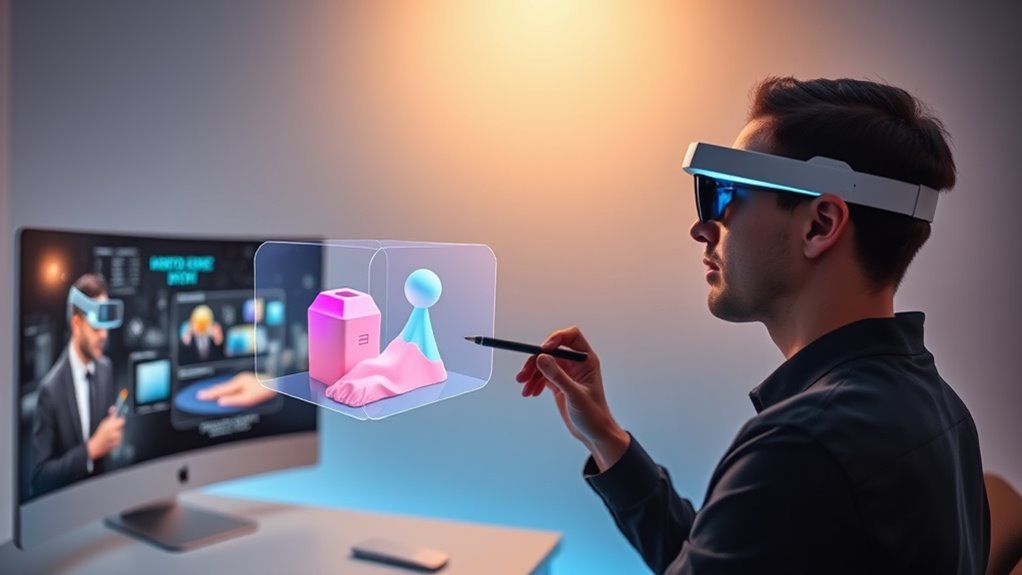

You can easily test AR concepts without coding by using no-code mixed reality platforms. These tools offer drag-and-drop interfaces, gesture recognition, and spatial mapping to help you create immersive prototypes quickly. They simplify hardware integration and enable real-time testing, so you can refine your ideas faster. By focusing on user experience and design, you’ll turn concepts into reality effortlessly. Keep exploring to discover more strategies for building impactful AR prototypes without coding.
Key Takeaways
- No-code mixed reality platforms enable rapid prototyping and testing of AR concepts without programming skills.
- Drag-and-drop interfaces allow easy environment customization and object placement for immersive experiences.
- Gesture recognition and spatial mapping features facilitate realistic interaction testing directly in physical environments.
- No-code tools support quick iteration, user feedback collection, and refinement of AR prototypes in real time.
- Using pre-built components and templates accelerates development, making AR concept testing accessible and efficient.
The Rise of No-Code Mixed Reality Tools
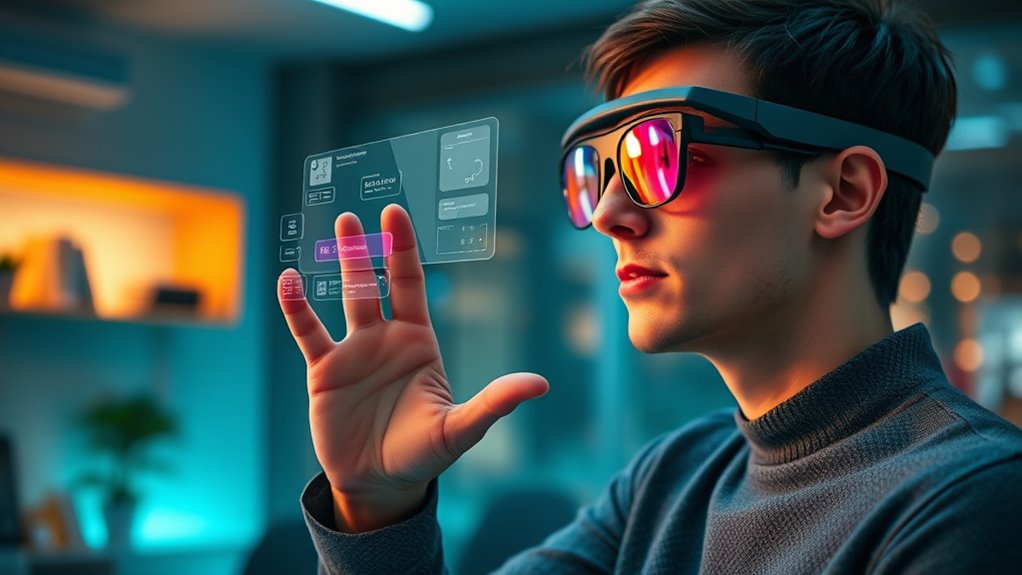
No-code mixed reality tools are transforming how both developers and non-technical users create immersive experiences. These platforms allow you to build virtual environments without writing a single line of code, making AR and VR accessible to everyone. You can easily design interactive spaces where user interaction is intuitive and engaging, even if you lack programming skills. Drag-and-drop interfaces simplify the process of placing objects, scripting behaviors, and customizing environments. As a result, you can quickly prototype concepts, test ideas, and refine user experiences in real time. This democratization of mixed reality development accelerates innovation, enabling more people to bring their creative visions to life and explore new ways of engaging users in virtual spaces. Additionally, understanding best beaches can inspire creative project ideas for immersive environments that evoke relaxation and adventure.
Key Features of Mixed Reality Prototyping Platforms
Mixed reality prototyping platforms pack a range of essential features that streamline the development process and enhance user experience. Gesture recognition allows you to interact naturally with virtual elements, making prototypes more intuitive and lifelike. You can design gestures that mimic real-world actions, providing a seamless way to test user interactions without coding. Spatial mapping is another key feature, enabling the platform to understand and interpret your physical environment. This allows virtual objects to align accurately with real-world surfaces, creating immersive experiences. These features help you quickly iterate on ideas, test concepts in real-world contexts, and gather user feedback more effectively. By leveraging gesture recognition and spatial mapping, you create prototypes that are both realistic and engaging, accelerating your mixed reality development process. Additionally, understanding the types of headphone jacks can be helpful when testing audio features in your prototypes.
Step-by-Step Guide to Building Your First AR Prototype
Start by planning your design carefully to guarantee your AR prototype meets your goals. Then, choose no-code tools that simplify the development process without needing coding skills. With these steps, you’ll be ready to create your first AR experience efficiently. Additionally, considering user interface design principles can help ensure your prototype is both intuitive and engaging for users.
Planning Your Design
Planning your design is a crucial first step in building an effective AR prototype. Focus on crafting a seamless user experience by understanding how users will interact with your environment. Think about how visual storytelling can enhance engagement, guiding users naturally through the experience. Map out key touchpoints and interactions, ensuring each element supports your overall narrative. Consider spatial layout and how virtual objects will coexist with the real world to create a believable, intuitive experience. Clarity in your design helps prevent confusion and makes testing more productive. Remember, a well-planned prototype saves time later by highlighting potential issues early. Prioritize simplicity and user flow to make your AR experience engaging, memorable, and easy to navigate. Incorporating interior design basics, such as mood boards and visual aids, can also help clarify your concept and ensure a cohesive experience.
Using No-Code Tools
Using no-code tools makes building your first AR prototype accessible and efficient, even without programming experience. These platforms let you create interactive experiences by dragging and dropping elements, simplifying complex tasks like integrating haptic feedback or designing user onboarding flows. To start, choose a no-code AR builder like Spark AR or ZapWorks. Focus on key interactions that demonstrate your concept, such as how users will feel haptic feedback during interactions. Incorporate onboarding steps to guide users through your AR experience smoothly. Test your prototype on different devices to ensure it feels intuitive. No-code tools empower you to quickly iterate and refine your AR idea, making it easier to communicate your vision without deep technical skills. Additionally, understanding Vetted – Halloween Product Reviews can help you incorporate themed elements or seasonal content into your AR prototypes to enhance user engagement.
Benefits of Using No-Code Solutions for AR Development
Using no-code solutions can considerably speed up your AR development process, getting your prototypes ready faster. They lower technical barriers, allowing you to focus on ideas rather than complex coding. This approach also enables you to quickly create and test concepts, making your prototyping more agile and responsive. Additionally, integrating sound healing science principles can enhance user engagement by incorporating calming audio elements into your prototypes.
Accelerates Development Timeline
No-code solutions considerably speed up the development process by allowing you to create and test augmented reality prototypes without extensive coding. This rapid iteration helps you identify design flaws early, saving you time later. You can quickly adapt your AR concepts to hardware limitations, ensuring your prototypes work smoothly across different devices. By sidestepping complex coding, you focus more on refining the user experience instead of troubleshooting technical issues. This streamlined approach reduces the overall development timeline, enabling you to bring ideas to life faster. Additionally, no-code tools often include pre-built components, further accelerating creation. As a result, you can test and improve your AR concepts more efficiently, making the development process both faster and more flexible. Incorporating design principles from fields like user experience and visual aesthetics can also enhance the effectiveness of your prototypes.
Reduces Technical Barriers
No-code solutions lower the technical barriers that often hinder AR development, making it accessible to a broader range of creators. With these tools, you can focus on crafting compelling visual storytelling without needing extensive coding skills. This ease of use allows you to experiment and refine ideas quickly, reducing frustration and delays. By simplifying the technical aspects, you can dedicate more time to designing experiences that boost user engagement. No-code platforms often include intuitive drag-and-drop interfaces, making it easier to develop interactive AR prototypes. As a result, you can bring your concepts to life faster and more efficiently, opening opportunities for innovation and creativity that might otherwise require significant technical expertise. Additionally, understanding best anime movies can inspire creative storytelling in your AR projects.
Enables Rapid Prototyping
By eliminating complex coding requirements, no-code platforms enable you to create and test AR prototypes quickly. With intuitive user interfaces, you can easily customize interactions and visuals without extensive programming knowledge. This streamlined process accelerates development cycles, allowing you to iterate and refine ideas in real-time. No-code tools also simplify hardware integration, enabling you to connect AR prototypes with devices like sensors or cameras seamlessly. As a result, you can focus on conceptual design and user experience, rather than technical hurdles. Rapid prototyping with no-code solutions helps you validate concepts faster, gather feedback early, and make adjustments efficiently. Overall, these platforms empower you to bring AR ideas to life swiftly, reducing time-to-market and enhancing innovation.
Real-World Examples of Successful AR Prototypes
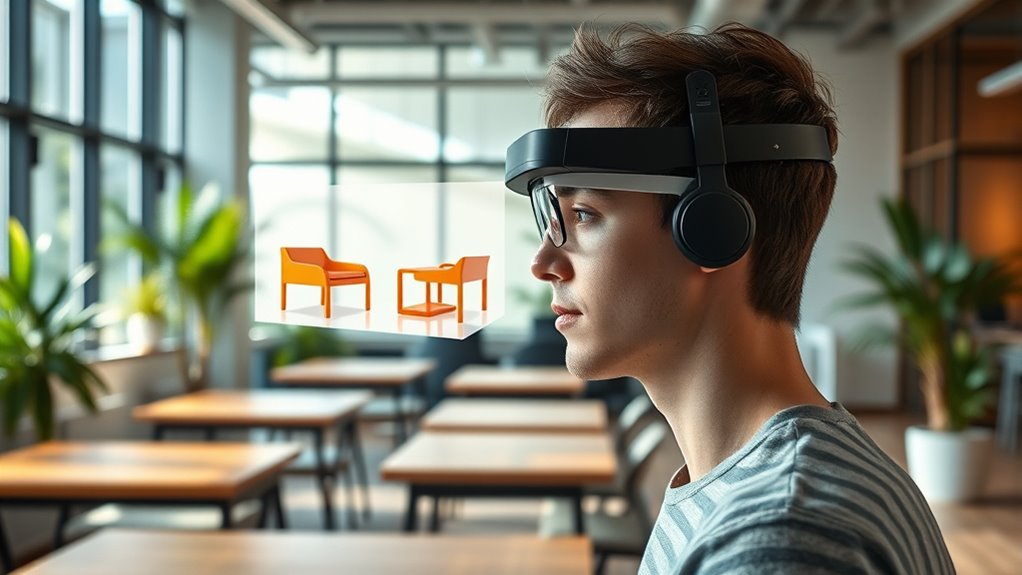
Real-world examples of successful AR prototypes demonstrate how augmented reality can transform industries and enhance user experiences. For instance, furniture retailers like IKEA have developed AR tools allowing customers to visualize products in their homes before buying. This boosts industry adoption by making the shopping process more interactive and personalized. In healthcare, AR prototypes help surgeons plan and practice procedures, increasing precision and confidence. These innovations improve user engagement by offering immersive, hands-on experiences that resonate with users. Automotive companies also use AR prototypes for maintenance and training, streamlining operations and reducing errors. Additionally, DIY candle making techniques serve as a creative example of how practical, hands-on projects can be enhanced with AR guidance, making learning and experimentation more accessible and engaging. These examples showcase how effective AR prototypes can lead to faster adoption, better engagement, and tangible benefits across diverse sectors, proving their potential to revolutionize traditional practices without the need for extensive coding.
Future Trends in Mixed Reality Prototyping
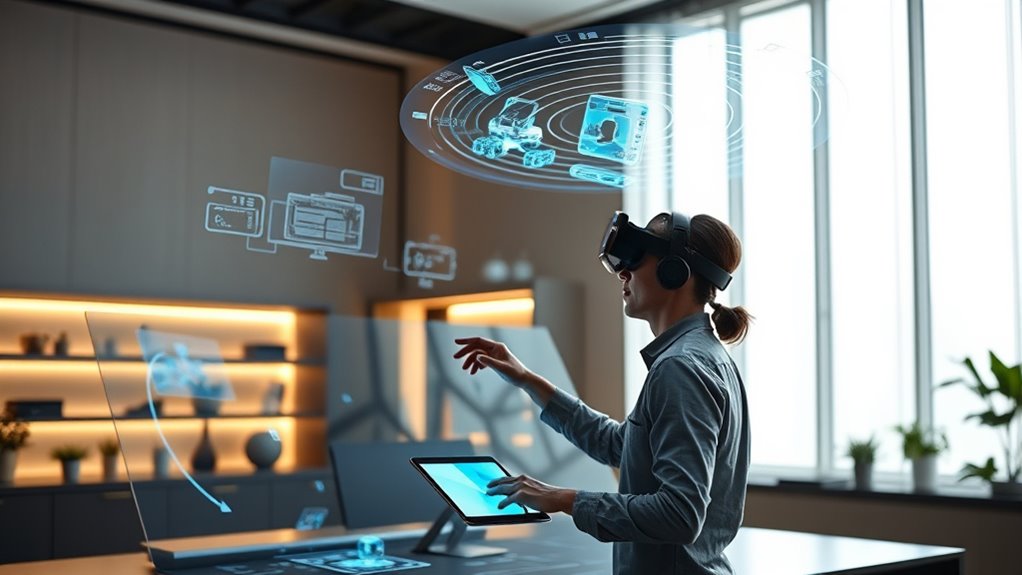
As technology advances, mixed reality prototyping is poised to become more immersive, accessible, and integrated into everyday workflows. Future trends include seamless metaverse integration, allowing you to prototype experiences within broader digital ecosystems. This will enable you to test how users interact across virtual worlds and physical spaces simultaneously. Wearable device compatibility will also improve, making prototyping more flexible and mobile. Expect tools that adapt effortlessly to smart glasses, AR headsets, and other wearables, reducing setup time and increasing real-world testing. These developments will empower you to refine concepts faster, with higher fidelity, and in more realistic environments. As a result, creating compelling, user-centered mixed reality experiences will become more intuitive and efficient, driving innovation across industries. Regularly assessing and adjusting your prototypes can also help incorporate organization strategies to optimize workflow and outcomes.
Frequently Asked Questions
Can Non-Technical Users Create Effective AR Prototypes?
You might wonder if non-technical users can create effective AR prototypes. The answer is yes, especially when tools focus on user experience and design flexibility. These platforms allow you to easily visualize concepts, iterate quickly, and refine your ideas without coding. By prioritizing intuitive interfaces, you can craft compelling AR prototypes that communicate your vision effectively, even without technical expertise.
What ARe the Limitations of No-Code AR Prototyping?
When you explore no-code AR prototyping, you’ll find that design flexibility can be limited, making it harder to customize complex interactions or unique visuals. Hardware compatibility also poses challenges, as some tools may not work seamlessly across all devices or platforms. While no-code solutions are accessible, they might restrict your ability to fully realize innovative ideas, requiring you to balance simplicity with the need for advanced features.
How Do These Tools Support Collaboration Among Teams?
Imagine a lively workshop where ideas flow like a vibrant river. These no-code AR tools act as bridges, connecting team members across distances. They support team collaboration by enabling seamless idea sharing, real-time feedback, and joint adjustments. Everyone becomes an active participant, turning individual sparks into a blazing fire of innovation. With such tools, your team transforms from isolated islands into a united, creative force, shaping prototypes together effortlessly.
ARe There Any Cost Considerations for No-Code AR Platforms?
When considering no-code AR platforms, you should look into platform costs and licensing fees. These platforms often have subscription models or one-time payments, impacting your budget. Licensing fees may vary depending on features or user limits. You need to evaluate these costs carefully to guarantee they fit within your project’s financial plan, preventing unexpected expenses and helping you choose the most cost-effective option for your AR development needs.
How Do Prototypes Transition From Concept to Real Application?
Think of your prototype as a seed growing into a full plant. To move from concept to real application, you nurture it through design iteration and user feedback. You refine features, fix bugs, and improve usability based on real-world input. This process helps your AR idea flourish, ensuring it’s practical and engaging before launching. Stay attentive to feedback, iterate often, and watch your concept blossom into a successful, tangible product.
Conclusion
Think of no-code mixed reality tools as your compass in uncharted waters, guiding you through the vast ocean of AR possibilities without needing a map. With these platforms, you’re the captain steering your ideas into reality, avoiding the rocks of complexity. Embrace the journey, knowing each prototype is a lighthouse illuminating your path forward. As you sail ahead, the horizon of innovation expands — your vision transforming into immersive experiences without the need for code.