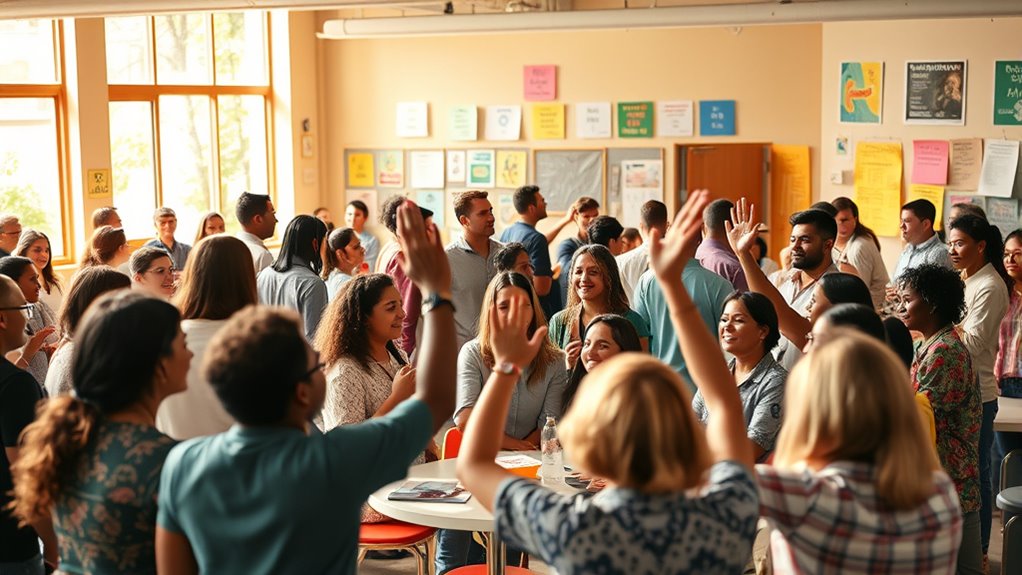

By building community into your services, you turn users into passionate advocates who feel connected and invested. Encourage engagement through peer support networks, such as forums or support groups, where members can share stories and advice. Involving your community in decision-making fosters ownership and trust. Creating opportunities for interaction deepens relationships and nurtures a vibrant, supportive environment. If you want to discover effective ways to cultivate these connections, there’s more to explore ahead.
Key Takeaways
- Involve community members in decision-making to foster ownership and tailored service experiences.
- Create structured opportunities like forums and support groups to facilitate peer interactions and sharing.
- Encourage users to share success stories and feedback, transforming them into enthusiastic advocates.
- Integrate peer support networks to build trust, shared understanding, and mutual encouragement among users.
- Prioritize active engagement and feedback to strengthen community bonds and ensure services meet evolving needs.

Creating services that truly resonate with your community requires more than just offering solutions; it demands embedding a sense of belonging and engagement into every aspect. When you prioritize user engagement, you’re inviting your community members to become active participants rather than passive recipients. This means designing your services to encourage interactions, feedback, and collaboration. The more you involve your community in shaping the services, the stronger their connection will be. People want to feel heard and valued; tapping into their experiences and insights makes your service more relevant and effective. Incorporating AI security technologies can also help protect user data, building trust and encouraging more open engagement. Peer support plays a vital role in turning users into advocates. When community members see others like themselves benefiting from your services, they’re more likely to engage deeply and advocate on your behalf. Creating peer support networks fosters trust and shared understanding, which enhances user engagement. These networks allow users to exchange advice, celebrate successes, and troubleshoot challenges together. As you cultivate spaces for peer support, you’re not just offering a service—you’re building a community that sustains itself through mutual aid and encouragement. In addition, integrating AI-driven insights can help tailor experiences to meet community needs more effectively. Involving community members in decision-making processes further solidifies their sense of ownership and commitment. When community members see familiar faces leading discussions or organizing activities, it boosts their confidence in the service and motivates them to get involved. This organic involvement creates ambassadors—users who actively promote your services and recruit others. These advocates are invaluable because their genuine experiences resonate more than any marketing message could. They become living proof of your service’s impact, inspiring others to participate and support. To foster this sense of belonging, consider implementing structured opportunities for peer interaction—such as support groups, online forums, or mentorship programs. These spaces give users a platform to connect, share stories, and learn from each other. As they form relationships, their investment in the community deepens, making them more likely to advocate for your service and help sustain its growth. Ultimately, building community into your services transforms users into passionate advocates. By emphasizing user engagement and nurturing peer support, you create an environment where people feel connected, understood, and empowered. This isn’t just about delivering a service; it’s about cultivating a vibrant, supportive community that values every member’s contribution. When your community feels a true sense of belonging, they’ll naturally champion your mission, ensuring your services grow stronger and more impactful over time.
Frequently Asked Questions
How Can We Measure the Success of Community-Building Efforts?
You can measure the success of your community-building efforts by tracking engagement metrics like active participation, content sharing, and event attendance. Additionally, use sentiment analysis to gauge members’ feelings and attitudes toward your services. These indicators show how connected and positive your community is becoming. If engagement rises and sentiment improves over time, you’re effectively turning users into advocates and strengthening your community.
What Are Common Challenges in Turning Users Into Advocates?
You’ll face challenges like maintaining user motivation and creating effective feedback loops. Users may lose interest if they don’t see their input making an impact, so you need to keep them engaged and valued. Ensuring consistent communication and recognizing their contributions helps sustain their enthusiasm. By fostering trust and transparency, you turn users into advocates who feel invested in your community and motivated to spread the word.
How Do Cultural Differences Impact Community Engagement Strategies?
Imagine steering a vibrant tapestry—each thread representing a different culture. Cultural nuances shape how you approach community engagement, requiring tailored tactics that respect diverse values and communication styles. You adapt your engagement tactics by listening deeply and embracing cultural differences. This sensitivity fosters trust and encourages users to become advocates, turning individual stories into a collective movement. Recognizing and honoring these nuances makes your community stronger and more unified.
What Tools Are Most Effective for Fostering Online Community Interactions?
You can foster online community interactions effectively by using gamification strategies that motivate participation and reward engagement. Incorporate moderation techniques to create a safe, respectful environment, encouraging users to share openly. Use interactive tools like polls, badges, and leaderboards to boost involvement. Regularly monitor conversations to maintain a positive atmosphere. These tools help turn users into advocates by making interactions enjoyable, meaningful, and inclusive.
How Can Small Organizations Compete With Larger Entities in Community Building?
Small organizations can succeed by prioritizing passionate, personalized outreach that fosters grassroots engagement. Focus on forming authentic connections through consistent communication, active listening, and genuine care. Use creative, cost-effective tools like social media and local events to amplify your voice. By building trust and encouraging community participation, you turn users into advocates, proving that size doesn’t dictate strength. Small, sincere efforts often spark the most significant, lasting community bonds.
Conclusion
By weaving community into your services, you transform users into passionate advocates, like seeds blooming into vibrant gardens. When you nurture connections and foster trust, you turn everyday interactions into powerful ripples that spread far beyond the initial touchpoint. Keep building bridges, and watch your users become the heartbeat of your success—pulsing with enthusiasm, inspiring others, and creating a thriving ecosystem where everyone’s voice fuels growth and innovation.