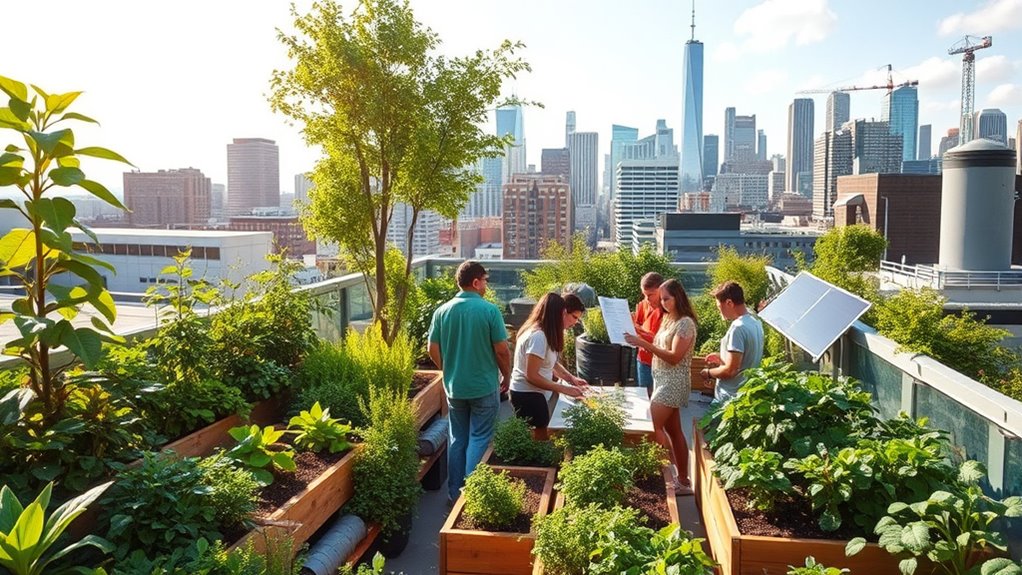

Regenerative design thinking invites you to go beyond sustainability by actively restoring ecosystems and communities through innovative, adaptive solutions. You focus on aligning your actions with natural processes, creating systems that thrive and evolve over time. By engaging communities and embracing feedback, you can develop resilient designs that support ecological health and human well-being. If you want to explore how this approach transforms environments and societies, there’s plenty more to discover here.
Key Takeaways
- Regenerative design actively restores ecosystems and communities, creating systems that thrive and evolve over time.
- It integrates natural processes into projects through features like green infrastructure and ecological mimicking.
- Emphasizes community collaboration, traditional knowledge, and social resilience to ensure sustainable, adaptable solutions.
- Uses an iterative approach, learning from failures to continually improve environmental and social outcomes.
- Aims to transform environmental impacts into positive, long-lasting benefits for ecosystems and human well-being.
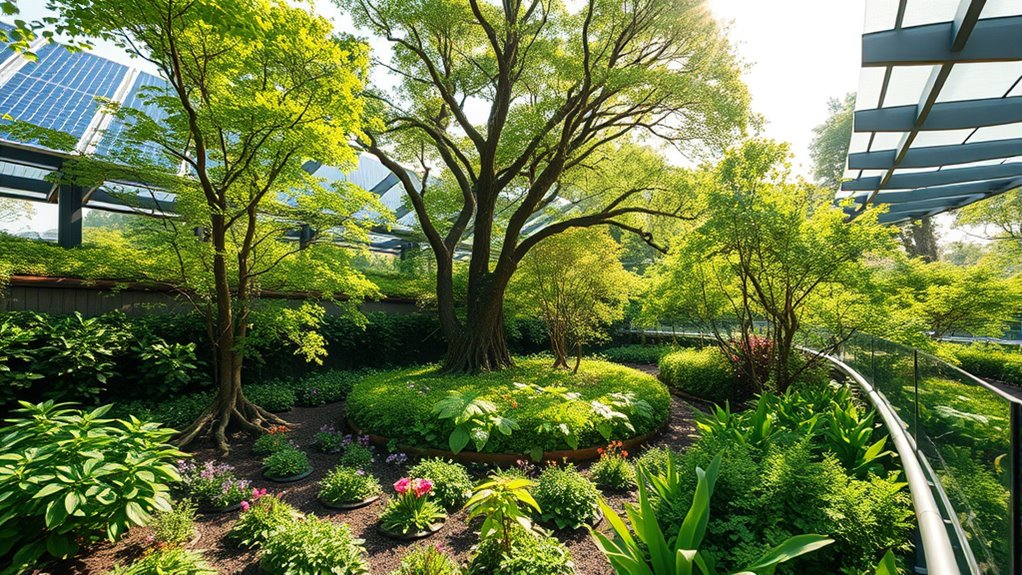
Regenerative Design Thinking is a forward-looking approach that goes beyond sustainability by actively restoring and enhancing ecosystems, communities, and economies. Unlike traditional methods that focus on minimizing harm, regenerative design emphasizes creating systems that thrive, grow, and evolve. When you adopt this mindset, you start to see every project as an opportunity to reconnect human activity with nature’s processes, fostering a deeper ecological integration. This approach encourages you to develop sustainable practices that not only reduce your environmental footprint but also contribute positively to the environment’s health.
Regenerative design actively restores ecosystems, communities, and economies, creating thriving, evolving systems that enhance environmental health.
In practical terms, ecological integration becomes the core of your design process. You consider how your actions influence the surrounding ecosystem and seek ways to harmonize human needs with natural systems. For example, instead of designing a building that simply minimizes energy use, you might incorporate green roofs, rain gardens, and natural ventilation that support local biodiversity and improve air quality. These sustainable practices are rooted in understanding how ecosystems function and how to mimic those processes within your projects. By doing so, you help restore natural balances rather than deplete them.
Thinking regeneratively also means you look at the bigger picture. You understand that every decision impacts social, economic, and environmental systems. This perspective urges you to collaborate with local communities, listen to their needs, and incorporate traditional knowledge into your designs. Such an approach promotes a sense of ownership and resilience, ensuring that your solutions are durable and adaptable over time. As you integrate ecological principles, you realize that ecological integration isn’t just a technical aspect but a foundational philosophy guiding your work toward positive, long-lasting change. Recognizing ecological processes as a guiding framework can enhance the effectiveness of your regenerative efforts.
Furthermore, regenerative design challenges you to view failures as learning opportunities. If a project doesn’t meet its ecological or social goals, you analyze what went wrong and adapt your strategies. This iterative process fosters innovation, pushing you to develop new sustainable practices that better align with nature’s rhythms. Your focus shifts from merely avoiding harm to actively fostering regeneration, which can lead to healthier soils, cleaner water, and more vibrant communities.
Ultimately, by embracing regenerative design thinking, you position yourself as an agent of change, committed to restoring ecosystems and empowering communities. You understand that sustainable practices must evolve into regenerative actions—those that not only sustain but also enhance. Ecological integration becomes second nature, guiding your decisions toward designs that regenerate the environment, support human well-being, and create a resilient future for all.

Green Infrastructure: Integrating Nature into Urban Planning
As an affiliate, we earn on qualifying purchases.
As an affiliate, we earn on qualifying purchases.
Frequently Asked Questions
How Can Businesses Implement Regenerative Design in Daily Operations?
You can implement regenerative design by embracing ecosystem integration and prioritizing circular resources in your daily operations. Start by evaluating how your processes impact the environment and seek ways to minimize waste. Use renewable materials and design products for reuse or recycling. Collaborate with local ecosystems to support biodiversity, and continually innovate to create closed-loop systems that restore rather than deplete natural resources. This approach benefits your business and the planet.
What Are the Economic Benefits of Regenerative Over Sustainable Approaches?
Think of regenerative approaches as planting a garden that keeps growing richer. They offer cost savings by reducing waste and resource use, turning expenses into investments. Plus, they boost your market competitiveness, showing customers you’re committed to sustainability. This forward-thinking strategy not only restores the environment but also fuels long-term profits, making your business more resilient and attractive in a future where eco-conscious choices win.
How Does Regenerative Design Influence Community Health and Well-Being?
Regenerative design boosts community health and well-being by enhancing urban resilience and fostering social interconnectedness. You’ll see improved air and water quality, which benefits physical health. As neighborhoods become more interconnected, social support networks strengthen, reducing stress and loneliness. This approach also encourages green spaces and local engagement, creating a sense of belonging and safety. Ultimately, regenerative design helps build healthier, more resilient communities where people thrive together.
What Are Common Challenges Faced When Adopting Regenerative Design Thinking?
You might face stakeholder resistance and knowledge gaps when adopting regenerative design thinking. Resistance occurs when stakeholders are hesitant to embrace new methods, while knowledge gaps hinder effective implementation. To overcome these challenges, you should foster open communication, educate stakeholders on benefits, and demonstrate successful case studies. By addressing these issues proactively, you can facilitate smoother adoption and maximize the positive impact of regenerative design on communities and ecosystems.
Can Regenerative Design Be Scaled for Large Infrastructure Projects?
Yes, regenerative design can be scaled for large infrastructure projects, but you’ll face scalability challenges and infrastructure integration issues. It requires careful planning, collaboration, and innovative solutions to adapt regenerative principles to complex systems. While it’s achievable, you need to make certain that sustainable practices align with project size, budget, and technical constraints. With the right approach, you can successfully implement regenerative design at a large scale.

Rain Bird LNDDRIPKIT Drip Irrigation Landscape/Garden Watering Kit with Drippers, Micro-Bubblers, Micro-Sprays
Comprehensive 108-piece kit for flower beds, gardens and landscaped areas; eliminates hand watering, saves time and money
As an affiliate, we earn on qualifying purchases.
As an affiliate, we earn on qualifying purchases.
Conclusion
Imagine your ideas as seeds planted in rich soil—you have the power to nurture them into vibrant forests, restoring what was once lost. By embracing regenerative design thinking, you become the gardener of our planet’s future, cultivating solutions that heal and flourish. Every action you take is a drop in the pond, creating ripples of change. Together, you can turn the landscape of our environment into a thriving, resilient ecosystem—renewed and reborn through your mindful innovation.

Natural Ventilation of Buildings: Theory, Measurement and Design
As an affiliate, we earn on qualifying purchases.
As an affiliate, we earn on qualifying purchases.
ecological mimicking design tools
As an affiliate, we earn on qualifying purchases.
As an affiliate, we earn on qualifying purchases.