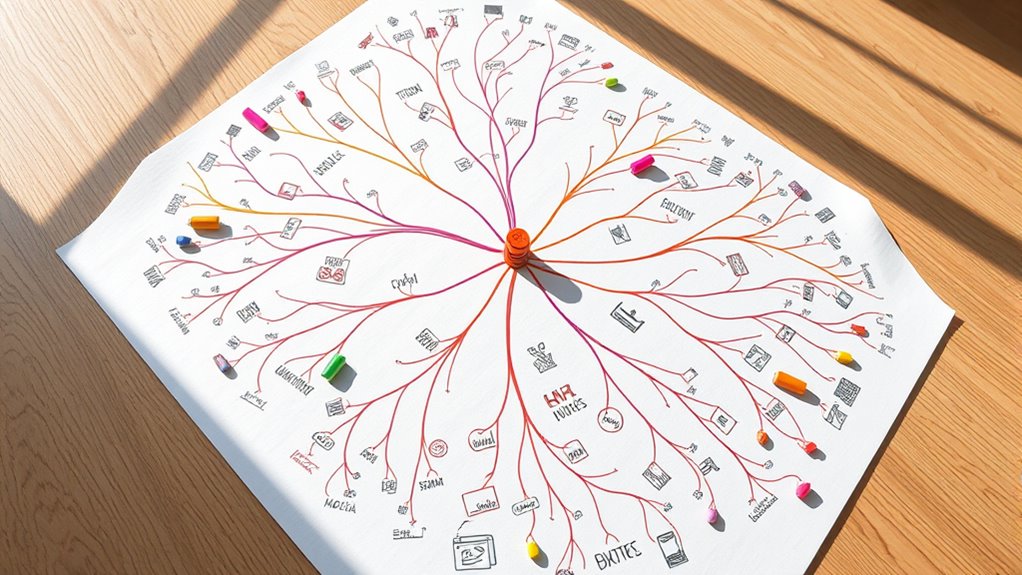

Mind mapping magic helps you visualize your ideas, making hidden connections easier to spot. By creating a visual map, you can organize thoughts, see patterns, and find gaps or new opportunities. It engages both sides of your brain, boosting creativity and problem-solving. As you expand your mind map, it becomes a dynamic tool for uncovering insights and generating ideas. Keep exploring, and you’ll discover how this technique can open your full creative potential.
Key Takeaways
- Mind mapping creates a visual network of ideas, making hidden connections more apparent through organized branches and sub-branches.
- It enhances pattern recognition by visually highlighting relationships and gaps among concepts.
- The technique encourages free-flowing thinking, allowing subconscious links to emerge naturally.
- Interactive and flexible, mind maps can be expanded and rearranged to uncover new insights.
- Combining mind mapping with data insights boosts creativity and reveals connections that aren’t obvious in linear notes.
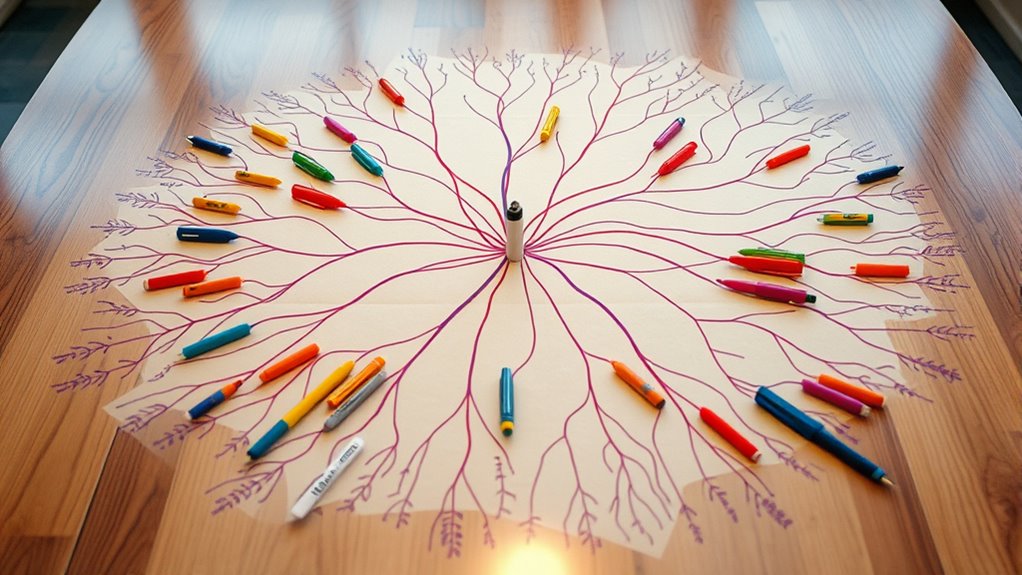
Have you ever wondered how some people effortlessly organize their ideas and boost their creativity? The secret often lies in their ability to use effective brainstorming techniques combined with visual tools like mind maps. When you harness the power of mind mapping, you create a visual representation of your thoughts that makes it easier to see connections, generate new ideas, and develop solutions. This method isn’t just about jotting down notes; it’s a dynamic way to enhance your creativity by engaging both sides of your brain. As you start to map out your ideas, you activate your imagination and encourage free-flowing thinking, which is essential for innovation and problem-solving.
Using brainstorming techniques within a mind map allows you to expand your ideas without self-censorship. Instead of limiting yourself to linear notes or lists, you let your thoughts branch out naturally. For example, if you’re working on a project or trying to solve a problem, you begin with a central concept and then generate related ideas around it. This approach makes it easier to uncover hidden connections that might not surface through traditional note-taking. As you add branches and sub-branches, you’re not only organizing your ideas but also fostering a creative environment where new insights can emerge. It’s like giving your mind permission to explore freely, which *substantially* enhances your creativity.
Another benefit of mind mapping is that it provides a clear visual overview, helping you prioritize and focus on the most promising ideas. When you see all your thoughts laid out visually, patterns and relationships become more apparent. You can identify gaps in your thinking or areas that need further exploration. This process encourages iterative thinking—reviewing, refining, and expanding your ideas—which ultimately leads to better problem-solving and more innovative outcomes. Plus, because mind maps are flexible, you can easily add new branches or rearrange existing ones, keeping your creative flow active and adaptable.
Incorporating mind mapping into your routine transforms the way you approach complex topics or projects. It turns abstract ideas into concrete visuals, making abstract concepts tangible and easier to manipulate. Whether you’re brainstorming for a new business idea, planning a writing project, or studying for exams, this technique helps you tap into your creative potential more effectively. The more you practice, the more natural it becomes to generate ideas quickly and see the bigger picture. By combining effective brainstorming techniques with visual thinking and insights from educational data mining, you’re not just organizing your thoughts—you’re actively boosting your creativity and *uncovering* insights that might otherwise stay hidden.

The Ultimate Mind Mapping Notebook: Blank Mind Map Template Workbook to Improve Memory and Focus for Studying, Organizing Thoughts and Brainstorming
As an affiliate, we earn on qualifying purchases.
As an affiliate, we earn on qualifying purchases.
Frequently Asked Questions
How Can I Adapt Mind Mapping for Team Collaboration?
To adapt mind mapping for team collaboration, you should use it during brainstorming sessions to gather diverse ideas. Encourage team members to contribute directly to the collaborative diagrams, adding their thoughts and connections in real-time. This approach promotes active participation, helps visualize different perspectives, and uncovers hidden links between ideas. Use digital tools if remote, and guarantee everyone feels comfortable sharing to maximize the benefits of collaborative mind mapping.
What Are Common Mistakes to Avoid in Mind Mapping?
You should avoid cluttered diagrams and oversimplification pitfalls. If your mind map gets too crowded, it becomes hard to see connections clearly. Don’t oversimplify complex ideas, as it can lead to missing important details. Keep your map organized with clear categories and relevant keywords. Regularly review and refine it to stay focused. This way, you create effective visuals that reveal insights without overwhelming or misrepresenting your ideas.
Can Mind Mapping Improve Memory Retention Effectively?
Yes, mind mapping can improve your brain retention effectively by engaging visual and kinesthetic memory techniques. When you create a mind map, you’re actively organizing information, which reinforces neural connections. This method helps you recall details better and makes learning more efficient. Using mind maps alongside other memory techniques boosts your ability to retain complex information, making studying and problem-solving faster and more effective.
How Do Digital Tools Compare to Paper for Mind Mapping?
Like Da Vinci choosing between parchment and digital sketches, you decide between digital tools and paper for mind mapping. Digital tools offer flexibility, easy editing, and sharing, making them perfect for quick modifications and collaboration. Paper, however, provides a tactile experience that can boost creativity and focus. Both have strengths; your choice depends on whether you value adaptability or a tangible connection to your ideas.
What Are Some Advanced Techniques for Complex Idea Visualization?
To visualize complex ideas effectively, use advanced techniques like conceptual layering, which adds depth and hierarchy to your map, and dynamic branching, allowing you to explore multiple pathways simultaneously. You should also experiment with color coding and interactive digital tools that support real-time adjustments. These methods help reveal hidden connections, making intricate concepts easier to understand and navigate, ultimately enhancing your creative problem-solving and strategic thinking skills.

Visual Tools for Brainstorming Sessions in Startups: Comprehensive visual intensifying and stabilizing tools
As an affiliate, we earn on qualifying purchases.
As an affiliate, we earn on qualifying purchases.
Conclusion
By harnessing the power of mind mapping, you can uncover hidden connections and spark creativity. Some studies suggest that visualizing ideas boosts memory and problem-solving skills, making it more than just a creative tool. So, next time you’re stuck, trust in the magic of mind maps—they might just reveal the answers you’ve been searching for. Give it a try, and you may be surprised at what your mind can do when ideas are laid out clearly.

SCRIBBLEDO United States Map for Classroom Dry Erase Board for Kids Map of The United States 11”x14” White Board Teacher Student Classroom Learning Practice Travel USA Whiteboard
United States Map Dry Erase Whiteboard – a dynamic learning tool and practical resource in one. This whiteboard,…
As an affiliate, we earn on qualifying purchases.
As an affiliate, we earn on qualifying purchases.

Unleash your creativity! : Mind mapping journal: Colored mind map and brainstorming log book ( mind maps templates )-Capture your brilliant idea … professionals ( mapping the mind journals )
As an affiliate, we earn on qualifying purchases.
As an affiliate, we earn on qualifying purchases.