

Teams are turning back to low-tech tools because they help you communicate more clearly and build genuine connections without digital noise. These tools reduce screen fatigue, making it easier to focus on meaningful conversations and spontaneous ideas. They also eliminate common technical frustrations and foster authentic creativity. By embracing simple, tangible methods, you can improve decision-making and create a healthier, more engaged team. Keep exploring to discover how low-tech tools can transform your collaboration approach.
Key Takeaways
- Teams seek clearer communication and genuine human connection beyond digital noise and screen fatigue.
- Low-tech tools simplify collaboration, reducing technical frustrations and ensuring inclusive participation.
- Physical methods enable faster decision-making and real-time feedback without software disruptions.
- Embracing creative simplicity fosters authentic idea sharing and artistic expression.
- Natural, tactile approaches help teams reconnect with fundamental teamwork and improve overall engagement.

In an era dominated by digital tools, teams are increasingly turning back to low-tech collaboration methods because they often foster clearer communication, stronger engagement, and less technical frustration. As screens multiply and notifications bombard you, it’s easy to feel overwhelmed or disconnected from your team’s true needs. Low-tech approaches offer a refreshing digital detox, allowing everyone to step away from constant connectivity and focus on the task at hand. When you strip away the noise of endless emails, apps, and digital platforms, you create space for what truly matters—meaningful conversations and genuine understanding.
Low-tech methods foster clear communication and genuine connection by reducing digital noise and screen fatigue.
This shift toward simplicity isn’t about rejecting technology altogether. Instead, it’s about embracing creative simplicity—using straightforward, tangible tools that help you collaborate more naturally. For example, a simple whiteboard or paper notes can often replace complicated project management software. These low-tech solutions encourage spontaneous brainstorming, where ideas flow freely without the constraints of digital interfaces. You might find that jotting ideas on a whiteboard sparks more creativity than typing into a crowded online platform. It’s about making collaboration less about navigating features and more about shared human connection. Additionally, this approach supports artistic expression by allowing team members to visually communicate ideas more freely and authentically.
Low-tech tools also help reduce technical frustrations that can stall productivity. When you rely on paper or physical objects, there’s less risk of software glitches, login issues, or compatibility problems. It’s a more reliable way to work, especially when quick decisions are needed. Plus, these methods are inclusive—everyone can participate without needing specialized training or access to specific devices. Whether in a small meeting or a large team, everyone can contribute equally, fostering a sense of shared ownership and engagement. Moreover, using tangible tools can also help teams better understand complex ideas, as physical representations often make abstract concepts more accessible. Incorporating natural cycles into planning can further enhance this understanding, aligning work with environmental rhythms for more balanced project management.
Using low-tech tools doesn’t mean sacrificing efficiency. In fact, they often accelerate decision-making by removing digital distractions. When you gather around a table with sticky notes or sketches, your focus sharpens. Ideas develop more organically, and feedback becomes more immediate. This tactile approach also helps your team retain information better because physical activity and visual cues reinforce understanding. It’s a reminder that sometimes, the simplest methods are the most effective. Additionally, integrating seasons and natural cycles into planning can help teams align their work with environmental rhythms, making projects more sustainable and inspired. By embracing these natural patterns, teams can create a more holistic and balanced workflow.
Ultimately, rediscovering low-tech collaboration tools allows you to reconnect with the fundamentals of teamwork. It’s about creating an environment where communication is clear, engagement is genuine, and creativity flows naturally. By embracing these low-tech strategies, your team can find a healthier balance—one that values human connection over digital clutter. This approach not only boosts productivity but also nurtures a more cohesive, motivated team ready to tackle challenges with renewed clarity and purpose.
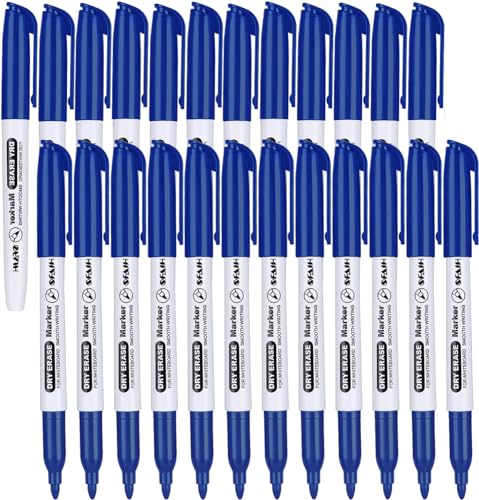
SFAIH Fine Tip Dry Erase Markers – 24 Pack Blue Whiteboard Erasable Markers Bulk, Ideal for Brainstorming & Visual Planning, Teams, Teacher & Creative Sessions, Vivid Blue Ink, Non-Toxic Easy Clean
The Creative & Collaborative Color: Blue is the color of ideas, clarity, and focus. This 24-pack of vivid…
As an affiliate, we earn on qualifying purchases.
As an affiliate, we earn on qualifying purchases.
Frequently Asked Questions
How Do Low-Tech Tools Compare to Digital Collaboration Platforms?
Low-tech tools often excel in fostering analog communication and physical brainstorming, making them more personal and immediate than digital platforms. You might find that they reduce distractions, encourage spontaneous ideas, and strengthen team bonds through face-to-face interaction. While digital tools are convenient for remote collaboration, low-tech options provide a tactile experience that can spark creativity and clarity, especially in team settings where nuance and direct engagement matter most.
Are Low-Tech Tools Suitable for Large, Remote Teams?
Imagine a vast, open field where manual communication and physical brainstorming create a tangible connection. Low-tech tools work well for large, remote teams because they foster direct interaction, reduce misunderstandings, and build trust. While digital platforms connect teams instantly, low-tech methods like whiteboards or printed notes offer a personal touch, making collaboration feel more genuine. So yes, these tools adapt well, even across great distances, when used thoughtfully.
What Are Some Examples of Effective Low-Tech Collaboration Methods?
You can use handwritten notes to quickly share ideas or updates, fostering a personal touch that digital tools often lack. Face-to-face meetings, whether in person or via video, help clarify complex topics and build stronger connections. These low-tech methods encourage active participation and immediate feedback, making collaboration more effective. Combining handwritten notes with regular face-to-face meetings keeps communication clear, personal, and efficient, even for remote teams.
How Do Low-Tech Tools Impact Team Creativity and Innovation?
Like sparks flying from flint, low-tech tools ignite creative spontaneity and boost idea generation within your team. Without digital distractions, you can focus more on open dialogue and spontaneous insights, fostering an environment where innovation thrives. These simple methods encourage genuine collaboration, allowing ideas to flow freely. As a result, your team becomes more inventive, turning fresh concepts into actionable solutions faster and with greater enthusiasm.
What Challenges Might Teams Face When Shifting Back to Low-Tech Tools?
When shifting back to low-tech tools, you might face challenges like increased reliance on manual communication, which can slow processes and cause miscommunications. You’ll also need to invest time in skill development, as team members adapt to less automated methods. These changes can initially reduce efficiency, but with patience and practice, your team can regain clarity and collaboration, strengthening skills and fostering a more intentional, thoughtful work environment.

Sticky Notes 3×3 Inches, Bright Colors Self-Stick Pads, Easy to Post for Home, Office, Notebook,100 Sheets/pad (8 Pads)
1、[Portable Size] 3 in x 3 in, 8 pads/pack, 100 sheets/pad,800 pages in total.
As an affiliate, we earn on qualifying purchases.
As an affiliate, we earn on qualifying purchases.
Conclusion
So, next time your high-tech gadgets crash, don’t panic. Dust off that trusty whiteboard and bring back the ancient art of sticky notes—because nothing screams “teamwork” like a colorful avalanche of ideas spilling onto your desk. Who needs fancy apps when you can have a paper trail, a dash of chaos, and the sweet satisfaction of deciphering chicken scratch? Sometimes, going low-tech is the only way to truly bring your team back down to earth.

High-Impact Tools for Teams: 5 Tools to Align Team Members, Build Trust, and Get Results Fast
As an affiliate, we earn on qualifying purchases.
As an affiliate, we earn on qualifying purchases.

HandyTalker® School Communication Card, Low Tech AAC Card.
100% Waterproof & Pool-Safe Design – Made from rigid, fiber-reinforced plastic, this AAC board is fully waterproof and…
As an affiliate, we earn on qualifying purchases.
As an affiliate, we earn on qualifying purchases.