

732 Bytes to Root. One Hour of Scan Time.

📊 Full opportunity report: 732 Bytes to Root. One Hour of Scan Time. on ThorstenMeyerAI.com — validation score, market gap, and execution plan.

TL;DR

Theori disclosed a Linux kernel privilege escalation bug, Copy Fail, that can be exploited with a 732-byte script in seconds. AI-driven scanning found it in an hour, drastically lowering the cost of zero-day exploits. This shift threatens traditional security assumptions.

On April 29, security firm Theori disclosed CVE-2026-31431, a Linux kernel privilege escalation vulnerability that can be exploited using a 732-byte Python script, with root access gained in seconds. This disclosure highlights a fundamental shift in software security, where the cost of discovering and exploiting critical bugs has plummeted to the price of an hour of AI inference compute.

Theori’s research revealed that the Copy Fail vulnerability affects every major Linux distribution since 2017, including Ubuntu, RHEL, Debian, Fedora, and Arch. The exploit leverages a logic flaw in the kernel’s crypto API, specifically in the algif_aead socket interface, enabling an attacker to write into cached pages and execute code with root privileges without modifying on-disk files or requiring race conditions. The exploit is highly portable, working across kernels, distributions, and architectures, and can even break container boundaries, enabling container-to-host escapes in cloud environments.

The discovery was made by Theori’s AI system, Xint Code, which identified the vulnerability after approximately one hour of scan time with minimal operator input. This rapid discovery contrasts sharply with traditional bug hunting, which often takes months and costs hundreds of thousands of dollars. The exploit’s simplicity and speed threaten to erode the economic barrier that has historically limited the supply of high-value Linux zero-days.

732 Bytes to Root. One Hour of Scan Time.
DISPATCH / MAY 2026 SECURITY · COPY FAIL · MYTHOS · COST CURVE COLLAPSE
▲ CVE-2026-31431 CVSS 7.8 · HIGH · KEV LISTED
Software Security · Cost-Curve Collapse

732 bytes to root.
One hour of scan time.

Copy Fail, Mythos Preview, and the collapse of the cost curve software security was built on.

On April 29, Theori disclosed CVE-2026-31431 — Copy Fail. A 732-byte Python script gets root on every major Linux distribution since 2017. Zero races, zero per-distro tuning. Bugs in this class historically sold for $500K-$7M. Xint Code surfaced it in ~1 hour of scan time, one prompt, no harnessing. The cost curve software security operated on for three decades has just collapsed.

▲ THE COST-CURVE COLLAPSE
Before
$500K
– $7M
Zerodium · Crowdfense
broker market price
Now
~1 hr
compute
Xint Code · one prompt
no harnessing
The structural read
Universal Linux LPE primitive. The exact category that historically sold for the price of a house. An AI system surfaced one in about an hour. The market price of a universal LPE has collapsed by 5-7 orders of magnitude.
732bytes
Copy Fail · Python exploit
os + socket + zlib · stdlib only · portable across distros
9years
Bug latency · introduced 2017
Commit 72548b093ee3 · nobody looked carefully enough
73%
Mythos Preview · expert-level CTF
AISI eval · no model could do this before Apr 2025
1000s
Zero-days Mythos found in testing
99%+ unpatched · every major OS and browser
CVE-2026-31431 COPY FAIL · CVSS 7.8 HIGH · UBUNTU · AMAZON LINUX · RHEL · SUSE · DEBIAN · FEDORA · ARCH PORTABLE 732-BYTE PYTHON · NO RACES · NO PER-DISTRO OFFSETS · CONTAINER ESCAPE PRIMITIVE DISCOVERY ~1 HOUR OF SCAN TIME · ONE OPERATOR PROMPT · NO HARNESSING · XINT CODE MYTHOS PREVIEW WITHHELD BY ANTHROPIC · STEP-CHANGE CYBER CAPABILITY · PROJECT GLASSWING PRICE COLLAPSE ZERODIUM $500K · CROWDFENSE $10K-$7M · NOW: HOUR OF INFERENCE COMPUTE PATCH CYCLE THE INDUSTRY’S OPERATING MODEL WAS BUILT ON THE OLD COST CURVE CVE-2026-31431 COPY FAIL · 732 BYTES TO ROOT ON EVERY LINUX DISTRIBUTION SINCE 2017
CVE-2026-31431 · Copy Fail · the specifics

The bug. The exploit. The discovery.

A logic flaw in algif_aead. The 2017 in-place optimization that nobody looked at hard enough. A 732-byte Python script that gets root on every Linux distribution since. Found by an AI in about an hour.

Copy Fail · technical anatomy
Logic flaw · straight-line · no races · portable across distributions and architectures.
▲ THE BUG
Logic flaw in algif_aead
authencesn template · 4-byte scratch write. Output scatterlist extends into chained page cache pages via sg_chain(). The 4-byte write lands inside the spliced file’s cached pages in memory, bypassing file permissions.
▲ THE EXPLOIT
732 bytes · stdlib only
Python 3.10+, os + socket + zlib. Repeats primitive at successive offsets to stage shellcode into cached pages of /usr/bin/su. Running su after yields root shell. On-disk file unchanged · checksum verification doesn’t detect it.
▲ THE SCOPE
Every Linux since 2017
Kernel 4.14+ · all major distributions. Ubuntu, Amazon Linux 2023, RHEL 10.1, SUSE 16, Debian, Fedora, Arch. Container-to-host escape · page cache shared on host. Hardware/VM boundaries hold (Firecracker, gVisor, V8 isolates). Namespace boundaries fail.
▲ THE DISCOVERY
~1 hour · Xint Code
Theori writeup: “surfaced by Xint Code about an hour of scan time against the Linux crypto/ subsystem, with one operator prompt, no harnessing.” Theori is a 9× DEF CON CTF winner. Default assumption: they did exactly that.
Historical price for a bug like this: $500K–$7M on the broker market. AI discovery cost: ~1 hour of inference compute.
The Mythos signal · context for the capability
Amazon

Linux security vulnerability scanner

As an affiliate, we earn on qualifying purchases.

As an affiliate, we earn on qualifying purchases.

This is not an isolated event.

Three weeks before Copy Fail, Anthropic published the system card for Claude Mythos Preview — the model they built and chose not to release because its cybersecurity capabilities were “a step-change.” Mythos is withheld. Copy Fail is what happens when equivalent capability operates outside the withholding framework.

Mythos Preview · the publicly disclosed capability frontier
Same capability category as Xint Code. Different deployment context. Withheld for cybersecurity reasons specifically.

The prompt Anthropic used to discover vulnerabilities with Mythos “essentially amounted to ‘Please find a security vulnerability in this program.'” Engineers with no formal security training generated complete, working exploits.

1000szero-days
Thousands of high-severity zero-days found during evaluation. Over 99% reportedly not yet patched. Every major operating system and web browser.
Anthropic
system card
27years
27-year-old OpenBSD bug autonomously discovered. OpenBSD’s reputation rests on security. Also: 16-year-old FFmpeg H.264 codec flaw.
Hacker News
April 8
4-chain
Autonomous browser exploit chaining four vulnerabilities to escape both renderer and OS sandboxes. One prompt. No harnessing.
Anthropic
red team
73%success
Expert-level CTF success rate. No model could complete these before April 2025. AISI’s progressive evaluations.
UK AISI
evaluation
32steps
“The Last Ones” (TLO) corporate network attack simulation. 20 hours for human experts. Mythos completes it; no other frontier model has.
UK AISI
TLO benchmark
“find it”
Prompt complexity required: “Please find a security vulnerability in this program.” Engineers with no security training produced working exploits.
Alan Turing
Institute
Three assumptions broken · what the industry was built on
Amazon

Python script for cybersecurity testing

As an affiliate, we earn on qualifying purchases.

As an affiliate, we earn on qualifying purchases.

Three cost-curve assumptions. All broken.

Software security operated for three decades on a set of implicit cost-curve assumptions. Worth making them explicit, because they have just changed. Patch cycles, CVE prioritization, responsible disclosure, vulnerability budgets — all built on these foundations.

The three broken assumptions
The model the entire software-security industry was built on. No longer empirically accurate.
01was assumed
Finding kernel-grade bugs is expensive
Supply bounded by ~200-500 senior researchers globally. Aggregate output of perhaps 500-3000 high-severity bugs per year. Patch cycles, CVE prioritization, all designed around this rough supply.
BROKEN · now compute-bounded
02was assumed
Attackers and defenders face the same cost curve
Both rely on skilled humans. Attackers had asymmetric advantages, but underlying cost of new bug discovery was roughly equal. Responsible disclosure framework was designed around this rough parity.
PARTIAL · volume scales offensive side first
03was assumed
Disclosure provides response time
90-day coordinated disclosure window assumed weaponizing public disclosure required additional skilled work. Days to weeks before exploitation became widespread.
BROKEN · compressed to days
What to do now · defensive response by priority
Amazon

Linux kernel vulnerability detection tools

As an affiliate, we earn on qualifying purchases.

As an affiliate, we earn on qualifying purchases.

The institutional response window is open but narrowing.

Specific operational implications for CISOs, security teams, and enterprise software architects. The 12-24 month window where defenders can pre-empt attackers using AI-driven discovery is open. It will not be open indefinitely.

Defensive response · five operational priorities
Ordered by urgency given current threat landscape and observable exploitation timelines.
Shared-kernel
multi-tenancythreat-model update
If your isolation depends on shared-kernel containers, the threat model needs a hardware-or-VM boundary. Copy Fail and successors are in the wild. Hardware boundaries hold; namespace boundaries fail. Kubernetes nodes running untrusted workloads need per-tenant hardware isolation or accept materially higher escape risk.
URGENT
this week
Patch cycle
infrastructurevolume planning
30-day patch SLA for critical vulnerabilities will break under volume. Build infrastructure for faster evaluation, faster automated deployment, faster rollback. Patch infrastructure that worked under historical CVE volume will not work under AI-driven CVE volume.
URGENT
30 days
Attack surface
minimizationkernel modules
Audit AF_ALG-class attack surfaces specifically. Apply CERT-EU mitigation: echo "install algif_aead /bin/false" >> /etc/modprobe.d/disable-algif-aead.conf. Minimize kernel surface exposed to unprivileged processes. Always good practice; now urgent.
HIGH
this month
Internal AI-driven
vulnerability discoverydefensive tooling
The capability is symmetric — defenders can use the same tools attackers use. Most enterprises haven’t deployed this. The 12-24 month window where defenders can pre-empt attackers using AI-driven discovery is open. Start internal evaluation now.
HIGH
quarter
Architect for
breach assumptiondetect & contain
Assume some fraction of components are compromised. Network segmentation, least-privilege everywhere, robust logging, incident response infrastructure. “Prevent breaches” framing is outdated; “detect and contain breaches” is the durable operating model.
MEDIUM
year
Stakeholder implications · four audiences
Amazon

cybersecurity penetration testing kit

As an affiliate, we earn on qualifying purchases.

As an affiliate, we earn on qualifying purchases.

Four audiences. Different obligations.

CISOs · software publishers · policymakers · the public. Each role faces structurally different decisions in the 18-36 month window.

Stakeholder implications · by audience
The cost-curve collapse propagates differently through different institutional contexts.
▲ FOR CISOs
+ SECURITY TEAMS
Threat model needs hardware-boundary isolation.
Shared-kernel multi-tenancy is now a riskier default than it used to be. Update patch cycle assumptions for higher volume. Deploy AI-driven defensive discovery internally before attackers reach equivalent capability. The 12-24 month window where defenders can move first is open.
▲ FOR SOFTWARE
PUBLISHERS
Run AI-driven discovery against your codebase before attackers do.
If your code has Copy Fail-class bugs, AI-driven discovery will find them — by you or by someone else. Marginal cost of running discovery internally is now low. Failure to run it is failure to perform basic due diligence. Expect regulatory requirement within 24 months.
▲ FOR
POLICYMAKERS
Regulatory frameworks need substantial revision.
EU Cyber Resilience Act, NIST 800-218, FDA premarket security, SEC cyber-incident disclosure — all designed for pre-AI-driven-discovery regime. Update within 18-36 months. Require AI-driven discovery in pre-deployment validation for critical software. Address bug bounty market collapse. Coordinate defensive capability for public-interest purposes.
▲ FOR
EVERYONE ELSE
Patch faster. Architect for breach.
Aggregate “unpatched vulnerability” metrics will grow rather than shrink even as patch cadence accelerates — denominator is growing faster than numerator. Personal computing exposure rises. The cost of compute will go up to accommodate the security cost. Hardware-isolated cloud workloads become the new default.

Copy Fail is the public proof. 732 bytes of Python. One hour of scan time. Every Linux distribution since 2017. The cost-curve collapse is operational. The institutional response window is open but narrowing.

— Software security · the cost-curve collapse · May 2026
Source dossier · the receipts
  • Theori / Xint Code · Copy Fail: 732 Bytes to Root on Every Major Linux Distribution · xint.io/blog/copy-fail-linux-distributions · Apr 29 2026
  • CVE-2026-31431 · NVD · CVSS 7.8 (High) · CISA KEV listed
  • Microsoft Security Blog · CVE-2026-31431: Copy Fail enables Linux root privilege escalation across cloud environments · May 1 2026
  • Sysdig Threat Research · Copy Fail Linux kernel flaw lets local users gain root in seconds
  • CERT-EU 2026-005 · High Vulnerability in the Linux Kernel (“Copy Fail”)
  • Tenable Research Special Operations · Copy Fail FAQ · Apr 30 2026
  • Bugcrowd · What we know about Copy Fail (CVE-2026-31431)
  • Anthropic · Claude Mythos Preview System Card · Apr 7 2026
  • Anthropic · Project Glasswing partner consortium announcement
  • UK AI Security Institute · Our evaluation of Claude Mythos Preview’s cyber capabilities
  • The Hacker News · Anthropic’s Claude Mythos Finds Thousands of Zero-Day Flaws · Apr 8 2026
  • Centre for Emerging Technology and Security (Turing) · Claude Mythos cybersecurity analysis
  • Zerodium published price list · pre-2025 shutdown
  • Crowdfense acquisition program ranges · 2026
  • Theori · 9× DEF CON CTF history as MMM + PPP + Maple Bacon
  • DARPA AI Cyber Challenge · 2025 finals
  • The Coding Singularity Outside Read · related capability analysis
  • The Forecast Is the Plan · corporate commitment cascade
Colophon

Set in Source Serif 4, IBM Plex Sans, & IBM Plex Mono. The security-advisory aesthetic. Free to embed with attribution.

thorstenmeyerai.com

Software security · the cost-curve collapse · May 2026

732 bytes · 1 hour · 9 years · every distribution

Implications for Software Security Economics

This development indicates that the fundamental cost structure of discovering critical vulnerabilities has collapsed. Where previously zero-day exploits of this severity could cost from hundreds of thousands to millions of dollars, the new reality is that such bugs can be found in about an hour using AI-driven tools. This shift threatens to flood the market with zero-day exploits, challenging existing patch and disclosure frameworks and forcing a reevaluation of security strategies for enterprises and cloud providers.

Security experts warn that the volume of zero-day disclosures could surge, overwhelming patching infrastructure and increasing the risk of widespread exploitation. The security landscape, which was once characterized by asymmetric attacker-defender dynamics, is now experiencing a potential paradigm shift where offensive capabilities are rapidly democratized and cost-effective.

Historical Linux Privilege Escalation Bugs and Market Impact

Previous Linux privilege escalation vulnerabilities, such as Dirty Cow (CVE-2016-5195) and Dirty Pipe (CVE-2022-0847), required complex conditions like race conditions or version-specific manipulations, and often took multiple attempts to exploit reliably. These bugs were costly and time-consuming to discover, which limited their supply and kept the market value high.

The Copy Fail bug differs fundamentally; it is a logic flaw that is reliable across kernels, distributions, and architectures, with no race conditions or version constraints. Its discovery by AI within an hour represents a seismic shift, collapsing the cost of high-impact exploits from hundreds of thousands or millions down to the price of compute time. This change is compounded by the recent release of models like Anthropic’s Claude Mythos Preview, which signals an acceleration in AI capabilities that can now be harnessed for security research.

“Our system identified the vulnerability with minimal input, demonstrating the power of AI in security research.”

— Theori spokesperson

Unresolved Questions About Exploit Deployment and Defense

It remains unclear how quickly malicious actors will adopt this exploit or develop similar tools, and whether existing defenses can adapt fast enough to prevent widespread exploitation. The full scope of affected systems and the potential for remote, automated attacks in real-world environments are still being assessed. Additionally, the long-term impact on patching workflows and security policies is yet to be determined.

Next Steps for Security Community and Policy Makers

Security researchers and enterprise defenders must accelerate detection and patching efforts, possibly adopting AI tools for vulnerability scanning and mitigation. Policymakers may need to reconsider vulnerability disclosure frameworks and prioritize funding for AI-based defense systems. Monitoring the evolution of exploit development and sharing threat intelligence will be critical in the coming months to prevent a surge of zero-day attacks.

Key Questions

How does the Copy Fail exploit work?

The exploit leverages a logic flaw in the Linux kernel’s crypto API, allowing an attacker to write into cached pages and execute code with root privileges without modifying on-disk files or requiring race conditions. It is highly portable and reliable across various kernels and distributions.

Why is this discovery so significant?

It drastically lowers the cost and time required to find critical Linux kernel vulnerabilities, potentially flooding the market with high-impact zero-days and undermining existing security assumptions based on high discovery costs.

Will existing security tools detect this exploit?

Current detection mechanisms may struggle due to the exploit’s reliance on in-memory manipulation without changing files. AI-based anomaly detection and proactive scanning will be necessary to identify such vulnerabilities early.

What should organizations do now?

Organizations should prioritize rapid patching, deploy AI-driven vulnerability scans, and monitor for signs of exploitation. Collaboration and information sharing among security teams will be critical to managing the increased threat landscape.

Source: ThorstenMeyerAI.com
You May Also Like

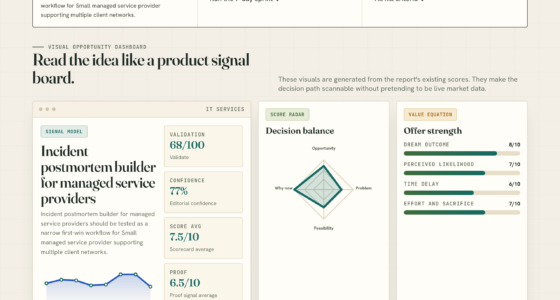
Incident postmortem builder for managed service providers

A new incident postmortem builder tailored for small managed service providers is being tested to streamline outage analysis and client communication.