
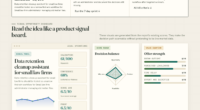
📊 Full opportunity report: The Skills Marketplace, Six Months Later: Predicted vs Actual on ThorstenMeyerAI.com — validation score, market gap, and execution plan.
Open a free Amazon Business account
Business pricing, bulk buying and tax-exempt orders.
Create a free accountAs an affiliate, we earn on qualifying purchases.
TL;DR
Six months after predictions, the skills marketplace has grown significantly, with over 4,200 skills and 120,000 monthly visitors. However, fragmentation, platform proliferation, and revenue concentration complicate the landscape. The ecosystem is profitable mainly for top creators, with ongoing structural issues.
Six months after Thorsten Meyer predicted the emergence of a skills marketplace based on the SKILL.md standard, the ecosystem has indeed materialized, with over 4,200 skills and 120,000 monthly visitors, confirming the core prediction. However, the marketplace’s structure is more complex and fragmented than initially forecasted, with multiple competing platforms and significant surface lock-in issues.
The directory at claudemarketplaces.com, last updated on May 4, 2026, reports 4,200+ actively listed skills, with growth rates of approximately 4-6× per quarter early, slowing to 1.5-2× as the ecosystem matures. The number of MCP servers exceeds 770, indicating widespread adoption of the Model Context Protocol for cross-agent communication. About 2,500 marketplaces, mostly GitHub repositories, are cataloged, though only a subset are meaningful distribution platforms.
Two major platforms, Agensi and Agent37, dominate the monetization landscape, with Agensi offering an 80% creator revenue share via Stripe, and Agent37 providing hosted access and tooling. The marketplace is profitable primarily for top skills, with the long tail generating little revenue. Platform proliferation—more than five competing marketplaces—has resulted in a fragmented environment, with no clear winner yet. Structural issues include surface fragmentation: skills uploaded to Claude.ai do not sync with API-based skills, creating a form of internal lock-in that was not anticipated in the original analysis.
The marketplace emerged.
Five of six predictions confirmed. Three structural facts the original analysis didn’t anticipate.
Six months after the original prediction: 4,200+ skills, 770+ MCP servers, 2,500+ marketplaces, 120K monthly visitors. Hosted-access monetization beat file-sales decisively. Cross-agent portability is real (Claude Code, OpenClaw, Codex, Cursor). But surface fragmentation persists. Platform consolidation has not happened. Winner-takes-most economics dominate within categories.
Six predictions. Six outcomes.
The November 2025 prediction said the skills marketplace would emerge as a structural shift. Five of six predictions confirmed empirically. One partial. Plus three structural facts the original analysis did not anticipate.
Five-plus platforms. No clear winner yet.
The marketplace emerged across multiple competing platforms with different distribution and monetization models. The 24-36 month consolidation window has begun. The winner integrates runtime + payments + entitlements + iteration + vendor-neutral distribution.
Three models. One scales.
The original prediction said hosted-access would beat file-sales. The empirical data confirms decisively. Roughly 10× revenue advantage for hosted access over file-sales. Median creator on Agent37: $300-1,500/mo. Top decile: $5-25K/mo. Top percentile: $50K+/mo.
IP given away at first download. Customer redistributes within team. “Objectively a terrible business model.” Default in GitHub-based distribution.
Returns to hourly consulting economics. Doesn’t scale beyond creator’s individual time. Pre-productization model. The trap skills were supposed to escape.
80%+ margins after $80/mo delivery cost. Iteration enabled by real usage data. Top decile $5-25K/mo. The model that wins.
The directional bet on the marketplace was right. Which platforms, which creators, and which enterprises capture the disproportionate share of the value — the answers will resolve over 2026-2028.
Four assignments. By role.
Pick a subdomain, not a top category.
The category-leading window is closing. Top categories (AWS tooling, db tooling, marketing automation) have established leaders. Target hosted-access (Agent37, Agensi). Test cross-agent on at least two agents. Price on outcomes ($99-499/mo for domain expertise). Plan for median ($300-1,500/mo). Treat top-decile ($5-25K/mo) as upside, not base case.
Ship cross-surface skill sync.
Current friction (Claude.ai vs API vs Claude Code separate deployments) is the largest structural barrier to marketplace growth. Fix is technically straightforward; strategic value substantial. Doing this in 2026 captures more of the marketplace value the company is enabling. Surface-fragmentation is the unfinished business of the skills launch.
Add the dimension you currently lack.
24-36 month consolidation window has begun. Agent37 needs Agensi’s economic clarity. Agensi needs Agent37’s integration breadth. Platform that integrates runtime + payments + entitlements + iteration + vendor-neutral distribution wins. Less integrated platforms become acquisition targets. Move fast.
Audit for reliability, not features.
Reliability premium is real. Pay for documented production track records, not feature breadth. Choose deployment surface deliberately (Claude Code dev / API prod / Claude.ai ad-hoc). Build internal MCP server portfolio for proprietary integrations — this is the integration moat. Cross-agent portable skills are the vendor-concentration hedge.
Implications of Marketplace Fragmentation and Dominance
The emergence of a sizable skills marketplace indicates a shift toward an agent economy, with monetization pathways for creators and enterprises. However, the fragmentation and platform competition mean that creators face challenges in reaching audiences and monetizing effectively outside top-tier skills. For enterprises, the ecosystem offers new integration opportunities but also complexity in choosing platforms and managing lock-in issues. Overall, the ecosystem’s profitability is concentrated among leading skills and platforms, which could influence future platform strategies and creator behaviors.
As an affiliate, we earn on qualifying purchases.
Evolution of the Skills Marketplace Ecosystem
The initial predictions in November 2025 foresaw a burgeoning skills marketplace driven by the SKILL.md standard, with about 1,000-3,000 skills expected by mid-2026. The actual count has exceeded expectations, reaching over 4,200. The ecosystem has grown rapidly, with early growth rates of 4-6× per quarter, now stabilizing. The landscape includes multiple platforms—Agensi, Agent37, ClawdHub, SkillsMP, LobeHub—each serving different needs, but none having achieved dominance. The structural issues of surface lock-in and platform proliferation were not fully anticipated, complicating the ecosystem’s development.
“The marketplace has emerged decisively, but it’s messier than predicted, with platform fragmentation and structural lock-in issues.”
— Thorsten Meyer
As an affiliate, we earn on qualifying purchases.
Unresolved Challenges and Structural Limitations
Several issues remain unresolved. The full impact of surface fragmentation—skills uploaded to Claude.ai not syncing with API-based skills—is still being understood. It is also unclear how platform consolidation will evolve, whether a clear leader will emerge, and how monetization will shift as the ecosystem matures. Additionally, the long-term sustainability for smaller creators and the potential for new platform entrants to disrupt existing dynamics are still uncertain.
As an affiliate, we earn on qualifying purchases.
Future Developments and Ecosystem Consolidation
In the coming months, expect continued growth in skills and platforms, with potential consolidation around leading marketplaces. Monitoring platform strategies, such as efforts to reduce fragmentation or improve interoperability, will be key. Further data on revenue distribution and creator success will clarify whether the ecosystem can sustain diverse participants or remains heavily skewed toward top skills. Regulatory and enterprise adoption trends could also influence platform evolution and lock-in dynamics.
As an affiliate, we earn on qualifying purchases.
Key Questions
How many skills are currently available in the marketplace?
As of May 2026, over 4,200 skills are actively listed and verified, with estimates suggesting the actual number of production-grade skills ranges between 2,500 and 4,500.
Which platforms dominate the skills marketplace?
Agensi and Agent37 are the leading platforms, with others like ClawdHub, SkillsMP, and LobeHub also active. No single platform has achieved clear dominance yet.
What are the main structural issues facing the marketplace?
Surface fragmentation creates internal lock-in, as skills uploaded to Claude.ai do not sync with API-based skills. Platform proliferation leads to ecosystem fragmentation, complicating discovery and monetization for creators and buyers.
Is the skills marketplace profitable for all creators?
No, profitability is concentrated among top skills and top platforms. The long tail of smaller creators earns little revenue, making the ecosystem skewed toward a few high-performing participants.
What is the outlook for the marketplace’s future?
Expect ongoing growth, potential platform consolidation, and efforts to address fragmentation. The ecosystem may evolve toward more interoperability, but structural issues could persist for some time.
Source: ThorstenMeyerAI.com
Fall Picks
fall essentials
As an affiliate, we earn on qualifying purchases.