📊 Full opportunity report: The license. Why the AI content market pays the brand-name corpus and strands the long tail. on ThorstenMeyerAI.com — validation score, market gap, and execution plan.

Get business pricing on monitors, keyboards and dev gear
- Business-only prices and quantity discounts
- Tax-exempt purchasing
- Multiple users, one account, clear invoices
TL;DR
Major publishers are striking large licensing deals with AI companies, capturing value from their archives. Small publishers are largely excluded, deepening existing inequalities. Collective licensing could change this dynamic.
Major publishers have entered into large-scale licensing deals with AI companies, securing access to their high-trust, brand-name archives in exchange for substantial payments. These agreements reinforce existing market asymmetries, leaving small publishers largely excluded from the licensing market.
Recent disclosures reveal that large publishers such as News Corp, the Associated Press, and prominent newspapers have negotiated licensing deals worth hundreds of millions of dollars over several years with AI firms like OpenAI and Meta. These deals grant access to their archives, which are seen as valuable, scarce, and leverage-rich assets.
In contrast, smaller publishers, including niche sites and independent outlets, are largely unable to negotiate similar agreements. Their content is abundant and interchangeable, offering little leverage to secure licensing deals or significant revenue. This creates a stark asymmetry: large publishers profit from licensing their brand-name, high-value archives, while small publishers’ content remains accessible for training AI models without compensation.
The pattern suggests that licensing, rather than serving as a fair market correction, reproduces and even deepens the existing inequality, favoring those with scarce, high-trust content and leaving the long tail of small publishers behind. Experts argue this dynamic confirms that the current licensing market is a winner-take-all system, not a solution to the collapse of referral-based revenue.
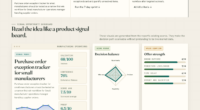
The license.
Why the AI content market
pays the brand-name corpus
and strands the long tail.
licensing deal below it
the large-publisher reality
largest licensing deal · a rounding error
tail’s most direct shot, via aggregation
↓
leverage
↓
a fee
The license that saved the Wall Street Journal does not reach the niche site, and the only thing that could is a market the small publisher cannot build alone. The escape route is real. For most of the publishers who needed it, it leads to a door they cannot open.Thorsten Meyer · The License · Post-Wire 04
Implications of Licensing for Market Power and Equity
This development underscores how the current licensing regime consolidates market power among large, brand-name publishers, effectively excluding small publishers from participating in the value generated by AI training data. As a result, small publishers face increased financial vulnerability, risking further consolidation or closure. The pattern reveals that licensing alone does not address the structural inequalities, raising questions about the future sustainability of diverse news ecosystems.
Experts suggest that only collective or statutory licensing—similar to music royalties—could democratize access and compensation, ensuring that all publishers benefit proportionally from AI training data. Without such measures, the market risks entrenching a winner-take-all landscape that favors the few with scarce assets.
As an affiliate, we earn on qualifying purchases.
Background: From Referral Collapse to Licensing Disparities
The collapse of search referrals in 2024, driven by AI search engines severing referral links, left publishers seeking alternative revenue streams. Large publishers quickly moved to secure licensing deals with AI companies, leveraging their high-value archives and brand trust to negotiate favorable terms. Smaller publishers, lacking such leverage, saw their traffic and revenue decline sharply, with little access to licensing arrangements.
Previous analyses have documented the death of the ‘identical paragraph’ and the severing of referral channels, which together decimated small publishers’ income. The current focus on licensing as an ‘escape’ has revealed an asymmetry: large publishers are capturing value, while small publishers remain sidelined, highlighting the structural inequalities that persist in the digital news ecosystem.
“The licensing market that emerged as a solution to the referral collapse reproduces the same asymmetry it was meant to address—value flows to brand-name archives, leaving the long tail unpaid.”
— Thorsten Meyer
As an affiliate, we earn on qualifying purchases.
Unresolved Questions About Licensing and Market Reform
It remains unclear whether collective or statutory licensing regimes will be implemented at scale before small publishers are pushed out of the ecosystem entirely. Legal and political battles are ongoing, and the viability of these solutions depends on future court rulings and legislative action.
As an affiliate, we earn on qualifying purchases.
Next Steps for Market Restructuring and Policy Action
Efforts are underway to develop collective licensing frameworks, including proposals from industry groups and policymakers such as the UK coalition, EU, and WIPO. The success of these initiatives will determine whether the licensing market can evolve to fairly compensate all publishers and reduce the asymmetry. Monitoring legal developments and policy debates over the coming months will be critical.
As an affiliate, we earn on qualifying purchases.
Key Questions
Why are large publishers able to secure licensing deals while small publishers cannot?
Large publishers possess scarce, high-value archives and brand trust, giving them leverage in negotiations. Small publishers’ content is abundant and interchangeable, offering little bargaining power.
Could collective licensing help small publishers get paid fairly?
Yes, collective licensing could establish a system where all publishers are compensated proportionally, regardless of individual leverage, but it is not yet implemented at scale.
What are the risks if small publishers are excluded from licensing agreements?
Exclusion risks further consolidation, revenue loss, and potential closure for small publishers, reducing diversity in news coverage and public trust.
Is the licensing market working as intended?
Current evidence suggests it is reinforcing existing inequalities rather than correcting them, favoring large, brand-name archives over the long tail of small publishers.
Source: ThorstenMeyerAI.com
Fall Picks
fall essentials
As an affiliate, we earn on qualifying purchases.