
📊 Full opportunity report: How to Reduce Heat and Noise in a High-Power AI Workstation on ThorstenMeyerAI.com — validation score, market gap, and execution plan.

Get business pricing on monitors, keyboards and dev gear
- Business-only prices and quantity discounts
- Tax-exempt purchasing
- Multiple users, one account, clear invoices
TL;DR
High-power AI workstations generate significant heat and noise due to sustained GPU loads. Effective cooling strategies include undervolting GPUs, improving airflow, and optimizing components. This guide explains confirmed methods and ongoing uncertainties.
High-power AI workstations produce excessive heat and noise due to continuous GPU loads, often surpassing typical gaming PC temperatures. Experts confirm that targeted cooling and power management can significantly reduce these issues, improving both performance and comfort.
AI workstations, especially those running sustained inference workloads, generate more heat and noise than gaming PCs because their GPUs operate at or near full load continuously. The main sources of heat and noise are the GPU itself, the CPU, the power supply, and case airflow. The GPU is responsible for roughly 70% or more of thermal output during inference, with fans running at high speeds to dissipate heat, causing loud noise.
One of the most effective confirmed methods to reduce heat and noise is undervolting the GPU and capping its power limit. This decreases power consumption and heat generation with minimal impact on performance for memory-bound inference tasks, according to experts from ThorstenMeyerAI.com. Improving case airflow and using high-quality cooling components further help manage thermal load. Additionally, selecting efficient power supplies and properly managing VRMs can prevent excess heat and noise from these components.
Fan noise and coil whine from GPUs under load are common contributors to overall noise levels. Fixes include replacing fans with quieter models, using vibration dampers, and optimizing airflow paths. However, some sources of noise, like coil whine, are harder to eliminate entirely without hardware modifications or component replacements.
An AI workstation isn’t a gaming PC —
and that’s why it runs hot.
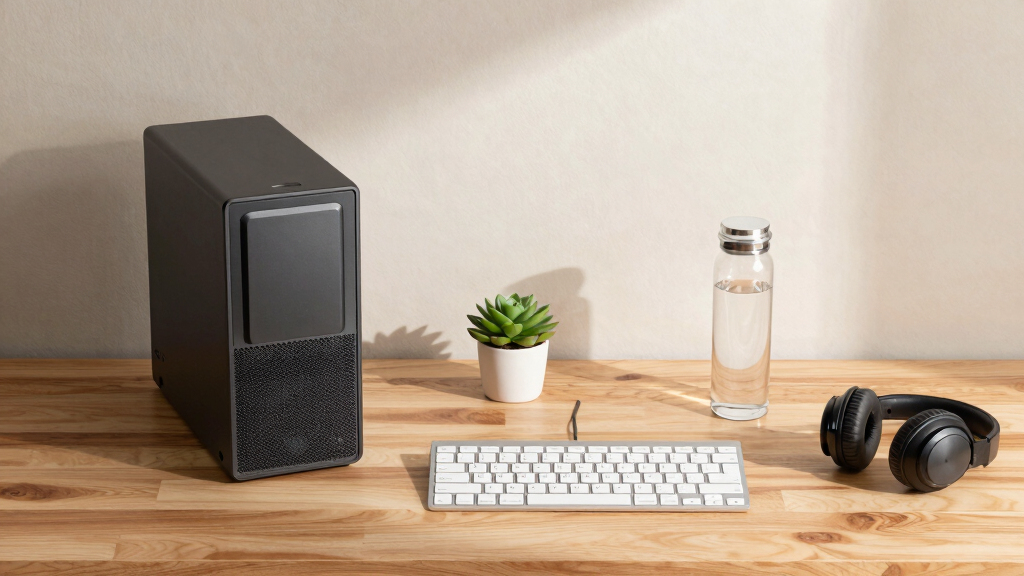
Local inference is a sustained load: the GPU sits near full power for hours with no loading screens, so the heat never dissipates and the fans never get a break. Here’s where the heat comes from — and the five levers that reduce it.
Why Managing Heat and Noise Matters for AI Workstations
Reducing heat and noise in high-power AI workstations improves user comfort, prolongs hardware lifespan, and maintains consistent performance. As AI inference workloads become more demanding, effective thermal management becomes critical for both individual users and enterprise deployments. Implementing proven cooling strategies can prevent thermal throttling, reduce energy costs, and create a quieter, more productive environment.
As an affiliate, we earn on qualifying purchases.
Background on Heat and Noise Challenges in AI Workstations
Unlike gaming PCs, AI workstations run continuous, high-load GPU tasks that generate sustained heat. Experts note that typical cooling solutions designed for gaming may be insufficient for these workloads. Historically, power draw and thermal output have increased with the rise of more powerful GPUs like the RTX 5090, which can draw over 575W, leading to louder fans and higher temperatures. Recent discussions from industry sources emphasize the importance of power management and airflow optimization for effective thermal control in these environments.
“Undervolting GPUs and capping power limits are the most cost-effective ways to reduce heat and noise without sacrificing inference performance.”
— Thorsten Meyer, AI hardware expert
high airflow PC case for AI workstation
As an affiliate, we earn on qualifying purchases.
As an affiliate, we earn on qualifying purchases.
Unresolved Questions About Optimal Cooling Strategies
While undervolting and power capping are proven effective, the precise settings for different GPU models and workloads can vary, and some hardware-specific issues like coil whine remain difficult to fully eliminate. The impact of liquid cooling versus air cooling in long-term reliability and noise reduction is still under investigation, with no consensus yet on the best approach for all setups.
As an affiliate, we earn on qualifying purchases.
Next Steps for Improving AI Workstation Cooling
Future developments may include more advanced power management tools, customized cooling solutions, and hardware modifications aimed at reducing noise further. Manufacturers are expected to release more efficient GPU models with integrated thermal management features. Users should stay informed about firmware updates and new cooling accessories designed for high-performance AI workloads.
low noise power supply for gaming PC
As an affiliate, we earn on qualifying purchases.
As an affiliate, we earn on qualifying purchases.
Key Questions
Can undervolting affect GPU performance?
For memory-bound inference workloads, undervolting typically reduces heat and noise with minimal or no impact on performance. However, in compute-bound tasks, aggressive undervolting may cause instability or performance drops.
What cooling options are best for high-power AI systems?
High-quality air coolers with large fans and good case airflow are effective, but liquid cooling can offer lower noise levels and better thermal performance for sustained loads. The choice depends on budget, space, and noise tolerance.
How much can power capping reduce GPU heat?
Power capping a GPU to 70–80% of its rated wattage can decrease heat output by a significant margin—often 20–30%—while maintaining most inference throughput in memory-bound tasks.
Are there hardware modifications that can eliminate coil whine?
Coil whine is often hardware-dependent and difficult to eliminate completely. Solutions include replacing affected components, using vibration dampers, or selecting models with lower coil whine ratings.
Source: ThorstenMeyerAI.com
Fall Picks
fall essentials
As an affiliate, we earn on qualifying purchases.