

📊 Full opportunity report: VigilSAR: The Object That Isn’t Transmitting on ThorstenMeyerAI.com — validation score, market gap, and execution plan.
TL;DR
VigilSAR is a radar-based platform that detects ships not broadcasting AIS, crucial for maritime security and safety. It fuses radar data with other signals to identify ‘dark’ vessels. Its capabilities are demonstrated with ESA’s Sentinel-1 data, but commercial deployment details remain undisclosed.
VigilSAR has unveiled a platform that detects ships visible on radar but not broadcasting transponder signals, a development that could significantly enhance maritime security and safety.
This SAR-based system combines radar detection with data fusion from transponders and open-source signals, aiming to identify vessels engaging in illegal activities or in distress, even under adverse weather or darkness.
The core of VigilSAR’s technology is its ability to detect objects using synthetic-aperture radar (SAR), which operates independently of weather and lighting conditions. Its detection pipeline involves identifying anomalous radar returns and classifying objects through neural networks. The key innovation lies in its fusion process, correlating radar detections with AIS and ADS-B signals to identify vessels that are ‘dark’—those that do not broadcast transponder data.
Confirmed capabilities are based on Sentinel-1 data from the European Space Agency, which is publicly available, providing a verifiable foundation. However, details about commercial deployment, including the full scope of integration with various satellite constellations and operational readiness, are not yet publicly confirmed. VigilSAR markets itself through a request-for-briefing process, typical for defense products, and no pricing information has been disclosed.
VigilSAR — the object that isn’t transmitting
Radar sees through cloud and darkness, when cameras can’t. Fuse it with transponder data and the signal is the one detection no transponder explains.
Independent commentary on public positioning, produced with AI assistance under human editorial oversight. The views are the author’s own and may change. This does not verify or endorse VigilSAR’s capabilities, contracts, or performance. Capabilities on Sentinel-1 / Copernicus reflect a free, public data foundation; commercial-constellation and air-gapped-deployment references reflect stated positioning, not independently demonstrated fact. ISR and related technologies may be subject to export controls and dual-use regulations — lawful, ethical use is solely the operator’s responsibility. Nothing here is an offer, pricing, or operational/safety/legal advice. AI detection and classification can err and require human verification. Product and company names are trademarks of their respective owners; mention does not imply endorsement.
Implications for Maritime Security and Safety
The ability to detect vessels that turn off transponders addresses a critical gap in maritime domain awareness. It enhances efforts against illegal fishing, smuggling, sanctions evasion, and search-and-rescue missions. Because it operates in all weather and darkness, VigilSAR offers a reliable, persistent surveillance tool that could transform maritime monitoring and enforcement.
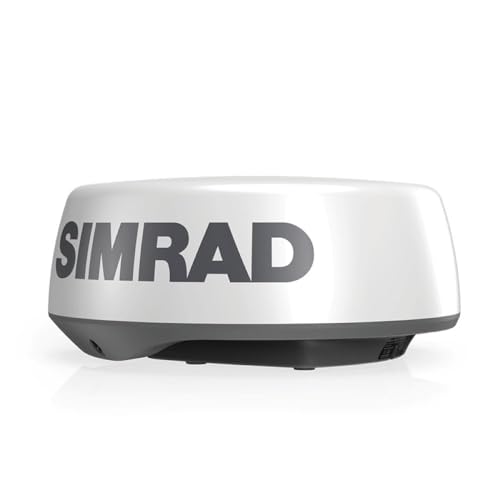
Simrad Marine Electronics, HALO20 Radar System, 24 Nautical Mile Range, Compact 20 Inch Dome, White, 000-14537-001
- Dome Size: 20-inch compact radar dome
- Detection Range: 24 nautical miles
- Performance: Reliable situational awareness
As an affiliate, we earn on qualifying purchases.
As an affiliate, we earn on qualifying purchases.
Background on SAR and Maritime Surveillance
Traditional optical satellites are limited by weather and lighting, making SAR a vital tool for all-weather, day-and-night surface imaging. Radar detects surface objects based on their scattering properties, but interpreting these signals requires sophisticated AI. The detection and classification pipeline is well-established; VigilSAR’s innovation is in its data fusion—pairing radar detections with transponder signals to highlight anomalies.
Previous efforts in maritime surveillance have relied heavily on AIS and other transponder signals, which can be turned off or spoofed. VigilSAR’s approach aims to fill this gap by identifying vessels that are intentionally ‘dark,’ providing a more complete picture of maritime activity.
“VigilSAR’s fusion of SAR data with transponder signals offers a new layer of maritime awareness, especially in detecting vessels that are actively hiding their identity.”
— Thorsten Meyer, remote sensing expert
As an affiliate, we earn on qualifying purchases.
Unconfirmed Aspects of Commercial Deployment
While the detection capabilities are demonstrated with ESA Sentinel-1 data, the extent of VigilSAR’s commercial deployment, operational integration, and pricing remains undisclosed. It is not yet clear how widely the platform will be adopted or how it will perform in live, contested maritime environments.

Optimus 3.0 GPS Tracker Bundle – Vehicle & Asset Tracking – 1+ Mo Battery
- Real-Time GPS Tracking: Accurate and discreet tracking
- Heavy Duty Magnet Case: Secure attachment to assets
- Long Battery Life: Up to 2 months on a single charge
As an affiliate, we earn on qualifying purchases.
As an affiliate, we earn on qualifying purchases.
Upcoming Demonstrations and Market Engagements
VigilSAR is expected to conduct further demonstrations with potential clients, including coast guards and maritime security agencies. The company may also reveal more details about its commercial offerings and operational deployments in the coming months, contingent on client interest and regulatory approvals.

Synthetic Aperture Radar (SAR) Meets Deep Learning
As an affiliate, we earn on qualifying purchases.
As an affiliate, we earn on qualifying purchases.
Key Questions
How does VigilSAR detect vessels that turn off transponders?
It uses radar detection via SAR to identify objects on the surface, then fuses this data with transponder signals like AIS or ADS-B. Vessels visible on radar but not broadcasting transponder data are flagged as ‘dark’ objects, which could indicate suspicious activity or distress.
Is VigilSAR’s technology publicly proven?
The core detection capability is demonstrated using publicly available Sentinel-1 SAR data from ESA. However, the full commercial system, including its integration and operational deployment, is still in development and not yet publicly verified.
Who can benefit from VigilSAR’s capabilities?
Maritime authorities, coast guards, fisheries regulators, and search-and-rescue organizations can benefit by gaining persistent, all-weather awareness of vessels that might otherwise evade detection.
What are the limitations of VigilSAR currently?
Its capabilities are demonstrated with existing satellite data, but real-world deployment, especially in contested or high-traffic areas, remains to be proven. Additionally, pricing and operational details are not yet available.
When will VigilSAR be available for operational use?
There is no publicly announced timeline. The company is likely to conduct further demonstrations and engage potential clients in the coming months, with full deployment possibly following after that.
Source: ThorstenMeyerAI.com