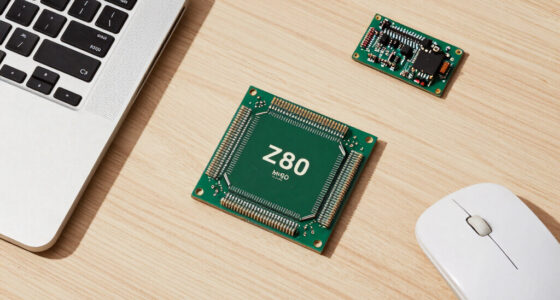

📊 Full opportunity report: The Memory Squeeze: Why Your RAM Bill Doubled on ThorstenMeyerAI.com — validation score, market gap, and execution plan.

Get monitors, keyboards and dev gear delivered free — and shop member deals
- Fast, free delivery on millions of items
- Access to Prime Big Deal Days deals on October 6–7
- Prime Video, Amazon Music and more included
TL;DR
DRAM prices have doubled or more in early 2026, with consumer memory now a smaller share of production. The shift is due to factories prioritizing high-margin AI memory, not a temporary shortage.
DRAM prices have approximately doubled or tripled since 2024, with the cost of 32GB DDR5 kits rising from about $80–$120 to nearly $375, and 64GB kits climbing above $600. This surge makes memory the most expensive component in many PC builds, according to industry sources. The cause is a fundamental shift in the chip-making industry, prioritizing AI memory over consumer RAM, not a temporary supply disruption.
Leading manufacturers — Samsung, SK Hynix, and Micron — are redirecting their production capacity from consumer-grade DRAM to High Bandwidth Memory (HBM), which is used in AI accelerators like Nvidia GPUs. HBM commands significantly higher prices, with modules selling for $60–$100, compared to $5–$10 for standard DDR5. This shift is driven by the higher profitability of HBM, despite its inefficiency in wafer usage, with each wafer producing fewer bits of HBM than DDR5.
As a result, HBM now accounts for roughly 23% of total DRAM wafer output, up from 19% a year earlier, and AI applications are projected to absorb about 20% of DRAM capacity in 2026. This reallocation is a deliberate industry choice to prioritize high-margin products, with manufacturers managing scarcity rather than flooding the market with more supply. Meanwhile, new capacity expansions are not expected to significantly impact prices until 2027–2028, due to the long lead times for building new fabs.
On the demand side, large buyers like hyperscalers have placed open-ended orders, and companies such as Micron have secured multi-year contracts through 2030, with billions paid upfront. This contractual approach limits supply availability for consumers, leading to shortages and higher prices, as discussed in industry supply chain analyses. Several PC manufacturers and tech companies have responded by raising prices or delaying product launches, and counterfeit modules are now appearing as shortages worsen.
Why your RAM bill doubled
“Doubled” is the polite version — consumer DRAM is running 3–6× its 2024 lows. The boom-bust cycle that always brought cheap RAM back isn’t coming this time, because the factories that make your RAM now make something far more profitable instead.
HBM
This is the quiet tax on the whole AI era. Relief isn’t forecast before 2028, and even then prices may settle 30–50% above pre-crisis levels. Buy what you genuinely need now; don’t panic-buy capacity you won’t use. You can’t out-wait the fab math — but, as this series will show, you can shrink what you need. Next: HBM Ate the Fab.
Impacts of AI-Driven DRAM Reallocation on Consumers
This shift in manufacturing focus affects consumers directly by causing a sharp increase in RAM prices and reducing availability. It also signals a fundamental change in the memory industry, where high-margin AI memory takes precedence over traditional consumer products. The resulting scarcity and elevated costs could slow PC upgrades and impact the broader supply chain, making memory a critical bottleneck in technology development and deployment.
As an affiliate, we earn on qualifying purchases.
Historical Memory Cycles and Industry Capacity Choices
Past memory shortages typically ended when increased supply flooded the market, causing prices to fall. However, the current situation differs because manufacturers are intentionally reallocating capacity toward higher-margin AI memory, despite rising demand for consumer RAM. The three dominant DRAM producers—Samsung, SK Hynix, and Micron—control about 95% of the market and have historically coordinated pricing, though no recent collusion has been proven. Long-term contracts and capacity discipline further limit supply availability for consumers, exacerbating shortages.
In 2025, consumer RAM prices remained relatively stable until early 2026, when prices suddenly surged. The shift to AI memory is driven by economic incentives, with HBM modules being significantly more profitable per wafer despite their inefficiency. This strategic reallocation reflects a broader industry trend prioritizing high-margin AI hardware over general consumer electronics.
“Our focus is on serving enterprise AI customers through long-term contracts, which impacts the availability and pricing for consumer memory modules.”
— Micron spokesperson
As an affiliate, we earn on qualifying purchases.
Unconfirmed Aspects of Market Manipulation and Future Prices
While the industry attributes the price surge to capacity reallocation toward AI memory, some analysts question whether market concentration and past collusion influence current pricing dynamics. It remains unclear whether prices are solely driven by supply-demand fundamentals or if strategic restraint by manufacturers plays a larger role. The long-term impact on consumer memory pricing and availability is still uncertain, pending further market data and supplier behavior transparency.
As an affiliate, we earn on qualifying purchases.
Projected Industry Developments and Market Responses
Manufacturers are expected to continue prioritizing AI memory production through 2026 and into 2027, with new fab expansions unlikely to significantly affect prices before 2027–2028. Consumers and PC builders should anticipate continued high prices and potential shortages until capacity increases. Industry analysts suggest that the market may stabilize once new fabs come online, but the current reallocation strategy indicates a lasting shift rather than a temporary supply crunch.
As an affiliate, we earn on qualifying purchases.
Key Questions
Will RAM prices return to previous levels?
It is uncertain. Prices may stabilize once new capacity from upcoming fab expansions begins production around 2027–2028, but current industry trends suggest high margins and capacity discipline may persist.
Why are HBM modules so much more profitable?
HBM modules sell for $60–$100 each, compared to $5–$10 for DDR5, despite being less wafer-efficient. The higher price reflects their specialized use in AI accelerators and the higher margins they generate for manufacturers.
Are current shortages due to collusion?
No conclusive evidence suggests collusion is driving prices. Industry officials attribute the surge to AI-driven capacity reallocation, though market concentration remains a structural factor.
How will this affect PC upgrades?
Higher RAM prices and shortages may slow or limit PC upgrades and new product launches until capacity increases or prices stabilize in the coming years.
Source: ThorstenMeyerAI.com
Halloween Picks
halloween
As an affiliate, we earn on qualifying purchases.