
📊 Full opportunity report: When One Agent Isn’t Enough: Claude Now Builds Its Own Team of Agents on the Fly on ThorstenMeyerAI.com — validation score, market gap, and execution plan.

Get business pricing on monitors, keyboards and dev gear
- Business-only prices and quantity discounts
- Tax-exempt purchasing
- Multiple users, one account, clear invoices
TL;DR
Claude has launched a new feature called dynamic workflows, enabling it to create and coordinate multiple agents automatically for complex tasks. This development aims to improve performance on high-value, multi-step projects by overcoming limitations of single-agent execution.
Claude has introduced a new feature called dynamic workflows, allowing the AI to automatically assemble and manage a team of agents tailored to complex tasks. This marks a significant step in AI orchestration, addressing previous limitations of single-agent operation for high-value or multi-stage projects. The feature is designed for tasks that require parallel work, independent verification, or iterative refinement, and is available in Claude’s latest updates.
The new capability enables Claude to write and execute small JavaScript programs that orchestrate multiple subagents, each with focused goals and isolated contexts. These subagents can be assigned different models based on task complexity, with some handling quick calculations and others providing detailed judgment. The system can also decide whether agents run in parallel or sequentially, and can resume interrupted workflows, making it suitable for long or intricate projects.
Anthropic emphasizes that this feature is intended for high-value, complex tasks rather than simple corrections. The workflow patterns include classify-and-act, fan-out-and-synthesize, adversarial verification, generate-and-filter, tournament, and loop-until-done, mirroring the practices of skilled human team leads. Claude writes these workflows dynamically, tailoring them to each specific task, which is a departure from static, hand-built orchestration scripts.
When one agent isn’t enough: Claude now builds its own team on the fly
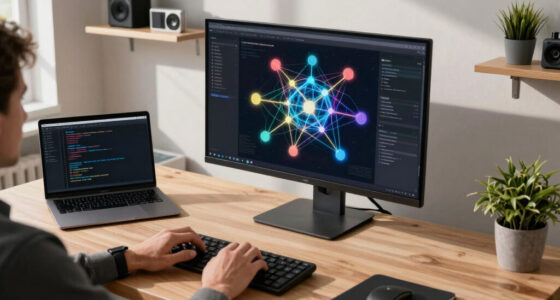
Skills package what you know; loops decide how far you delegate over time. Dynamic workflows are the third axis — within a single task, Claude writes its own harness and assembles a temporary team of subagents. Think of it as Claude drawing an org chart for one job.
The shift is from prompting a worker to commissioning a team — more output, more cost, and a manager’s judgment required. Reach for a workflow when a task is big, parallel, adversarial, or judgment-heavy — and when you can feel a single agent getting lazy, grading its own homework, or losing the plot. Bound it (token budgets, pilot first) — workflows can spawn hundreds of agents and burn far more tokens. For everything else, don’t hire five people to change a lightbulb.
Implications for AI-Driven Project Management
This development extends AI capabilities from single-agent tasks to multi-agent, autonomous team management, enabling more sophisticated and reliable handling of complex workflows. It addresses known failure modes such as partial work, bias, and goal drift, which occur when a single agent manages extensive or multi-faceted projects. For organizations, this could mean more effective automation in research, software development, and quality assurance, reducing reliance on human oversight for intricate tasks.
As an affiliate, we earn on qualifying purchases.
Evolution of AI Orchestration and Workflow Automation
Previous iterations of Claude focused on single-agent performance, suitable for straightforward tasks like coding or simple data processing. The introduction of static workflows allowed some degree of task division, but required manual setup. Anthropic’s recent announcement builds on this by enabling Claude to generate and execute dynamic, tailored workflows automatically, leveraging advances in model reasoning and JavaScript execution. This shift aligns with broader trends toward autonomous AI systems capable of managing complex, multi-step projects without constant human intervention.
“Claude’s new dynamic workflows allow it to write and run custom orchestration programs, effectively building its own team of agents tailored for each task.”
— Thorsten Meyer, AI researcher at Anthropic
multi-agent AI orchestration tools
As an affiliate, we earn on qualifying purchases.
As an affiliate, we earn on qualifying purchases.
Unanswered Questions About Workflow Robustness
It is not yet clear how well the dynamic workflows perform across a broad range of real-world tasks or how reliably they handle unexpected interruptions. The scalability and safety of fully autonomous agent teams in critical applications remain to be tested in practice, and there is limited publicly available data on their long-term effectiveness.
As an affiliate, we earn on qualifying purchases.
Next Steps for Deployment and Evaluation
Organizations interested in this feature can expect phased rollouts, with Anthropic likely to publish case studies and performance benchmarks. Further research will focus on refining workflow stability, safety protocols, and user controls to prevent unintended behaviors. Monitoring how clients adopt and adapt these capabilities will inform future improvements and broader deployment strategies.
As an affiliate, we earn on qualifying purchases.
Key Questions
How does Claude build its own team of agents?
Claude generates small JavaScript programs, called workflows, that specify how to spawn, coordinate, and manage multiple subagents tailored to each task’s needs.
What types of tasks benefit most from dynamic workflows?
High-value, complex projects involving multiple steps, verification, or parallel work—such as research synthesis, code refactoring, or detailed fact-checking—are the primary beneficiaries.
Are there limitations or risks associated with autonomous agent teams?
Yes, the system currently requires careful oversight, as the reliability and safety of fully autonomous workflows in critical applications are still under evaluation. The feature is designed for complex tasks, not simple corrections.
Will this feature be available to all users?
Availability depends on deployment phases by Anthropic, likely starting with select partners and gradually expanding as safety and performance are validated.
Source: ThorstenMeyerAI.com
Halloween Picks
halloween
As an affiliate, we earn on qualifying purchases.