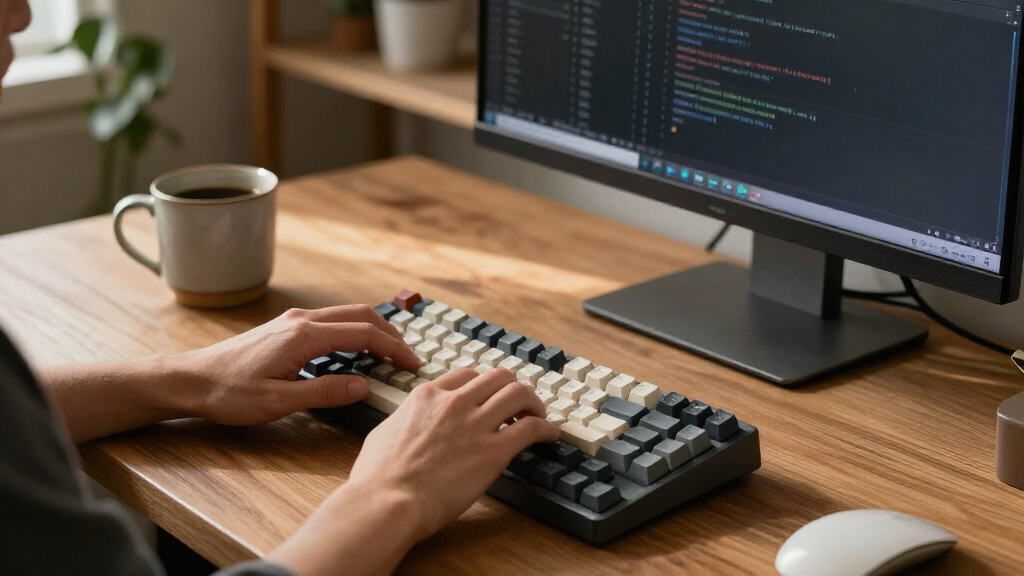

For most programmers, I’d start with the RK Royal Kludge S98: its compact full-function layout, wireless options, display, and knob balance everyday coding needs with desk flexibility. The Keychron C2 is a simpler full-size wired choice, while the AULA F75 Pro suits developers who want a smaller, hot-swappable board. The main tradeoffs are number-pad access versus desk space, quiet typing versus audible feedback, and wired simplicity versus wireless convenience. No single layout or switch feel suits every coding routine. Read on for the full breakdown and a guide to choosing by workspace, typing habits, and upgrade plans.

Get business pricing on monitors, keyboards and dev gear
- Business-only prices and quantity discounts
- Tax-exempt purchasing
- Multiple users, one account, clear invoices
Key Takeaways
- The S98 is the most balanced starting point: its 96% layout keeps a number pad while reclaiming desk space, and wireless connectivity adds flexibility that simpler wired picks lack.
- Layout changes matter more than gaming labels: full-size boards such as the Keychron C2 and Logitech G413 SE retain familiar navigation and number-pad access, while the F75 Pro gives desk space back by dropping the number pad.
- Hot-swap models offer a path to tune typing feel: the AULA F75 Pro, Redragon K745 Pro, and RK R98 Pro can suit programmers who may want to change switches without replacing the whole keyboard.
- Wireless and acoustic comfort are separate questions: tri-mode models bring connection flexibility, but programmers sharing a room should still check switch noise and typing sound rather than assuming wireless means quiet.
- Feature-heavy boards bring extra setup tradeoffs: displays, knobs, macro keys, and lighting can be useful, but simpler boards may be a better fit for buyers who want fewer controls to configure and maintain.
| RK Royal Kludge S98 Wireless Mechanical Keyboard with Smart Display and Knob |  | Best Overall for Programmers | Layout: 98 keys, QWERTY | Switch type: Linear | Connectivity: Bluetooth 5.0, 2.4 GHz RF, USB-C | VIEW LATEST PRICE | See Our Full Breakdown |
| Logitech G PRO Mechanical TKL Tenkeyless Gaming Keyboard (Clicky) – Black |  | Best for Programmers Who Prefer Clicky Feedback | Layout: 90-key QWERTY tenkeyless | Switch type: GX Blue clicky | Connectivity: Wired, detachable 1.8 m Micro-USB cable | VIEW LATEST PRICE | See Our Full Breakdown |
| Keychron C2 Full-Size Wired Mechanical Keyboard with Brown Tactile Switches, Retro Color, Non-Backlit |  | Best for Beginners and Full-Size Typing | Layout: Full-size QWERTY, 104 keys | Switch type: Tactile brown | Connectivity: Wired USB-C | VIEW LATEST PRICE | See Our Full Breakdown |
| AULA F99 Tri-Mode Wireless Mechanical Keyboard | 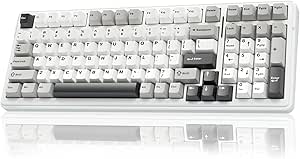 | Best for Multi-Device Programming Setups | Layout: 96%, 99 keys | Connectivity: Bluetooth 5.0, 2.4 GHz wireless, USB-C wired | Multi-device support: Up to 5 devices | VIEW LATEST PRICE | See Our Full Breakdown |
| Logitech G413 SE Full-Size Mechanical Gaming Keyboard |  | Best for a Sturdy, No-Frills Full-Size Desk | Layout: Full-size QWERTY, 108 keys | Switch type: Tactile mechanical | Connectivity: Wired USB 2.0 | VIEW LATEST PRICE | See Our Full Breakdown |
| AULA S99 Gaming Keyboard – Wireless Green Creamy |  | Best for Multi-Device Users Who Prefer a Membrane Board | Layout: 96% QWERTY, 99 keys | Switch type: Membrane | Connectivity: Bluetooth 5.0, 2.4 GHz wireless, USB-C wired | VIEW LATEST PRICE | See Our Full Breakdown |
| Redragon K580 Wired RGB Mechanical Gaming Keyboard, Macro Key & Media Wheel |  | Best for Dedicated Shortcuts and Switch Swapping | Layout: QWERTY, 104 keys | Switch type: Hot-swappable Outemu Blue clicky | Connectivity: Wired USB-C | VIEW LATEST PRICE | See Our Full Breakdown |
| Redragon K745 Pro Wireless 108-Key Gasket RGB Gaming Keyboard with 4 Hotkeys |  | Best Wireless Full-Size Mechanical Pick | Layout: Full-size QWERTY, 108 keys | Switch type: Custom linear, 3-pin/5-pin compatible | Connectivity: USB-C, Bluetooth, 2.4 GHz wireless | VIEW LATEST PRICE | See Our Full Breakdown |
| Redragon Mechanical Gaming Keyboard Wired, 11 Programmable Backlit Modes, Hot-Swappable Red Switch, Anti-Ghosting, Double-Shot PBT Keycaps, Light Up Keyboard for PC Mac |  | Best Straightforward Hot-Swap Wired Pick | Layout: QWERTY, 104 keys | Switch type: Hot-swappable linear red | Connectivity: Wired | VIEW LATEST PRICE | See Our Full Breakdown |
| ProtoArc K310 Pro Backlit Bluetooth Mechanical Keyboard, Linear and Quiet |  | Best for Quiet Multi-Device Typing | Layout: QWERTY, 108 keys | Switch type: Low-profile linear | Connectivity: Bluetooth, 2.4 GHz USB receiver | VIEW LATEST PRICE | See Our Full Breakdown |
| AULA F75 Pro 75% Wireless Hot-Swappable Mechanical Keyboard |  | Best Compact Wireless Pick | Layout: 75%, 81 keys | Standard layout: QWERTZ | Connectivity: Bluetooth 5.0, 2.4GHz wireless, USB-C wired | VIEW LATEST PRICE | See Our Full Breakdown |
| Redragon K668 108-Key Hot-Swap Wired RGB Gaming Keyboard with Extra 4 Hotkeys |  | Best Full-Size Value for Shortcuts | Layout: Full-size, 108-key QWERTY | Switches: Hot-swappable linear red switches | Connectivity: USB-C wired | VIEW LATEST PRICE | See Our Full Breakdown |
| RK ROYAL KLUDGE R98 Pro Wired Mechanical Keyboard, 96% Creamy Gaming Keyboard RGB Backlit with Number Pad and Volume Knob, Gasket Mount, MDA Profile PBT Keycaps, Hot Swappable Pre-lubed Linear Switch |  | Best for a Refined Typing Feel | Layout: 98 keys, 96% with numpad | Switches: Pre-lubed linear cream switches | Hot-swap support: 3-pin and 5-pin switches | VIEW LATEST PRICE | See Our Full Breakdown |
| mechanical keyboards for programmer | Layout | Connectivity | Switch type | Backlighting |
|---|---|---|---|---|
| RK Royal Kludge S98 Wireless M | 98 keys, QWERTY | Bluetooth 5.0, 2.4 GHz RF, USB-C | Linear | — |
| Logitech G PRO Mechanical TKL | 90-key QWERTY tenkeyless | Wired, detachable 1.8 m Micro-USB cable | GX Blue clicky | RGB LIGHTSYNC with onboard memory |
| Keychron C2 Full-Size Wired Me | Full-size QWERTY, 104 keys | Wired USB-C | Tactile brown | None |
| AULA F99 Tri-Mode Wireless Mec | 96%, 99 keys | Bluetooth 5.0, 2.4 GHz wireless, USB-C wired | — | — |
| Logitech G413 SE Full-Size Mec | Full-size QWERTY, 108 keys | Wired USB 2.0 | Tactile mechanical | Single-color white LED |
| AULA S99 Gaming Keyboard | 96% QWERTY, 99 keys | Bluetooth 5.0, 2.4 GHz wireless, USB-C wired | Membrane | RGB |
| Redragon K580 Wired RGB Mechan | QWERTY, 104 keys | Wired USB-C | Hot-swappable Outemu Blue clicky | RGB |
| Redragon K745 Pro Wireless 108 | Full-size QWERTY, 108 keys | USB-C, Bluetooth, 2.4 GHz wireless | Custom linear, 3-pin/5-pin compatible | RGB |
| Redragon Mechanical Gaming Key | QWERTY, 104 keys | Wired | Hot-swappable linear red | 11 programmable RGB modes |
| ProtoArc K310 Pro Backlit Blue | QWERTY, 108 keys | Bluetooth, 2.4 GHz USB receiver | Low-profile linear | Single-color, ten effects |
| AULA F75 Pro 75% Wireless Hot- | 75%, 81 keys | Bluetooth 5.0, 2.4GHz wireless, USB-C wired | — | — |
| Redragon K668 108-Key Hot-Swap | Full-size, 108-key QWERTY | USB-C wired | — | RGB, 19 preset modes, music sync |
| RK ROYAL KLUDGE R98 Pro Wired | 98 keys, 96% with numpad | USB-C wired | — | — |
More Details on Our Top Picks
RK Royal Kludge S98 Wireless Mechanical Keyboard with Smart Display and Knob
The S98 is my strongest all-round pick for programmers who want a compact desk footprint without giving up a number pad. Its 98-key layout keeps arrows and numeric entry close at hand, while Bluetooth, 2.4 GHz, and USB-C let it move between wireless setups and a wired workstation. The hot-swappable PCB supports both 3-pin and 5-pin switches, giving it more room to adapt than the fixed-switch Logitech G413 SE. A multifunction knob and customizable display add handy controls, though they are extras rather than reasons to choose it on their own. Layered dampening and PBT caps are aimed at a quieter, durable typing feel. The tradeoffs are its 3-pound weight and Windows-only listed compatibility; choose the AULA F99 instead if pairing with several devices is a priority.
Pros:- 98-key layout retains a number pad while taking less space than a full-size board.
- Bluetooth, 2.4 GHz, and USB-C support wired and wireless setups.
- Hot-swappable PCB accepts 3-pin and 5-pin switches.
- Layered sound dampening and double-shot PBT keycaps suit frequent typing.
Cons:- Compatibility is listed for Windows only.
- At 3 pounds, it is less convenient to carry than a lighter wired option.
- The smart display and knob add controls some programmers may not need.
Best for: Programmers who want a numpad, wireless flexibility, and the option to change switches without soldering.
Not ideal for: Mac-first developers or anyone who needs a light keyboard to carry between workspaces; listed compatibility is Windows only, and the S98 weighs 3 pounds.
- Layout:98 keys, QWERTY
- Switch type:Linear
- Connectivity:Bluetooth 5.0, 2.4 GHz RF, USB-C
- Hot-swappable:Supports 3-pin and 5-pin switches
- Keycaps:Double-shot PBT
- Sound dampening:IXPE switch pad, two sound-absorbing foam layers, silicone dampener pad
- Controls:Customizable smart display and multifunction knob
- Compatibility:Windows
Our verdict“Choose the S98 for a compact, adaptable programming keyboard with a numpad, provided Windows compatibility and its weight fit your setup.”
Logitech G PRO Mechanical TKL Tenkeyless Gaming Keyboard (Clicky) – Black
The Logitech G PRO suits programmers who like a clear, audible signal with each keystroke and want more room for a mouse or notebook. Its GX Blue clicky switches make key presses easy to feel and hear, but that same sound can be distracting in a shared office or on calls. The tenkeyless layout frees desk space compared with the full-size Keychron C2, although it drops the number pad that spreadsheet-heavy work can benefit from. RGB LIGHTSYNC saves settings to onboard memory, and the detachable Micro-USB cable makes packing it simpler than a permanently attached cable. This is a straightforward, portable wired choice, not a flexible workstation hub: it lacks wireless and hot-swap support, and its listed compatibility is Windows 11. I would pick the quieter, wireless RK Royal Kludge S98 for mixed-device work.
Pros:- GX Blue switches provide distinct tactile and audible feedback.
- Tenkeyless layout leaves more desk space than a full-size keyboard.
- Detachable 1.8 m Micro-USB cable makes it easier to pack.
- RGB LIGHTSYNC settings can be stored in onboard memory.
Cons:- Clicky switches can be disruptive in shared workspaces.
- Wired-only connectivity offers no cable-free setup.
- Listed compatibility is limited to Windows 11, and the board has no number pad.
Best for: Windows-based programmers who want tactile, audible keystroke feedback and a compact wired layout for a dedicated desk or travel kit.
Not ideal for: Developers sharing an office, working on calls, or needing a numpad, wireless connectivity, or listed Mac support.
- Layout:90-key QWERTY tenkeyless
- Switch type:GX Blue clicky
- Connectivity:Wired, detachable 1.8 m Micro-USB cable
- Backlighting:RGB LIGHTSYNC with onboard memory
- Dimensions:14.96 × 6.3 × 1.97 in
- Weight:2.2 pounds
- Compatibility:Windows 11 (PC)
Our verdict“Pick the G PRO if you want a compact Windows keyboard with unmistakable clicky feedback and do not need a numpad or wireless use.”
Keychron C2 Full-Size Wired Mechanical Keyboard with Brown Tactile Switches, Retro Color, Non-Backlit
The Keychron C2 makes a sensible starting point for programmers who want a familiar full-size layout and tactile feedback without relying on wireless settings or lighting software. Its 104 keys and number pad suit numeric entry, while brown switches give a tactile response without the pronounced click of the Logitech G PRO’s GX Blue switches. USB-C keeps the connection simple, and included Mac and Windows keycaps make this a more natural cross-platform pick than the Windows-only-listed RK Royal Kludge S98. The two adjustable typing angles offer some setup choice, but the C2 is deliberately basic: it has no backlighting, no wireless mode, and ABS rather than PBT keycaps. That simplicity can be a plus for a dependable wired desk, but programmers who want switch customization or a compact layout should look at the AULA F99 instead.
Pros:- Full-size 104-key layout includes a number pad and function keys.
- Brown switches provide tactile feedback without the sharper click of GX Blue switches.
- Includes extra keycaps for Mac and Windows.
- Two adjustable feet positions allow a choice of typing angle.
Cons:- No backlighting, which makes key legends harder to see in dim workspaces.
- Wired-only USB-C connection may not suit multi-device setups.
- ABS keycaps are a less durable material choice than the PBT caps on the S98.
Best for: New mechanical-keyboard users and cross-platform programmers who want a full-size wired board with a number pad and tactile, non-clicky switches.
Not ideal for: People who work in dim rooms, need wireless connectivity, or want hot-swappable switches and more compact desk use.
- Layout:Full-size QWERTY, 104 keys
- Switch type:Tactile brown
- Connectivity:Wired USB-C
- Backlighting:None
- Compatibility:macOS and Windows
- Keycap material:ABS
- Adjustable feet:Two levels: 6° and 9°
- Keystroke lifespan:Up to 50 million keystrokes
Our verdict“Choose the C2 for a straightforward, full-size wired starter keyboard with tactile switches and Mac/Windows keycap options.”
AULA F99 Tri-Mode Wireless Mechanical Keyboard
For programmers who switch between a work computer, tablet, and personal machine, the AULA F99 puts connectivity ahead of a display or dedicated knob. It supports Bluetooth, 2.4 GHz, and USB-C, with pairing for up to five devices, giving it an advantage over the S98 when several hosts share one desk. Its 99-key, 96% layout keeps a number area and arrow keys while trimming the footprint of a traditional full-size board. Pre-lubed linear switches, a gasket structure, and layered dampening aim for a softer, less hollow typing sound than the more basic wired Keychron C2. Hot-swap support and customizable macros offer room to adapt, but the compact key arrangement may take adjustment, and macro setup requires the driver. Choose the C2 if you prefer a conventional full-size layout with no software-led customization.
Pros:- Bluetooth, 2.4 GHz, and USB-C cover wireless and wired connections.
- Supports up to five devices, useful for multi-host desks.
- 96% layout retains arrow keys and a number area in a compact footprint.
- Hot-swap support and layered gasket construction allow customization and a softened typing feel.
Cons:- The compact layout may require adjustment for users accustomed to a standard full-size board.
- Macro customization and music-rhythm lighting effects require the driver.
- Linear switches may not suit programmers who prefer a tactile bump like the Keychron C2 offers.
Best for: Programmers who regularly switch among up to five computers or devices and want a compact layout with a number area.
Not ideal for: People who prefer a familiar full-size key arrangement or want to set up macros without using the driver.
- Layout:96%, 99 keys
- Connectivity:Bluetooth 5.0, 2.4 GHz wireless, USB-C wired
- Multi-device support:Up to 5 devices
- Switches:Pre-lubed linear
- Hot-swappable:Supports 3-pin and 5-pin switches
- Battery capacity:8000 mAh
- Structure:Gasket structure with five layers of sound-dampening filling
- Compatibility:PC, tablet, PS, and Xbox
Our verdict“Choose the F99 if you need a compact number-pad layout that can move among several devices, and are comfortable with driver-based customization.”
Logitech G413 SE Full-Size Mechanical Gaming Keyboard
The Logitech G413 SE is a practical fit for programmers who want a full-size wired keyboard with tactile switches and a sturdy metal upper case, but do not need wireless features or extensive customization. Its 108-key layout and 12 media controls keep numeric entry and common shortcuts close, while PBT keycaps are a more durable choice than the ABS caps on the Keychron C2. The aluminum-magnesium alloy top case and aluminum plate give it a solid construction; white-only backlighting keeps the visual setup restrained, unlike the RGB options on the S98 and AULA F99. The compromise is limited flexibility: the connection is USB-only, lighting is single-color, and 6-key rollover is less suited to simultaneous multi-key input than the F99’s N-key rollover. Choose it for a dependable, straightforward desk board rather than a customizable one.
Pros:- Full-size 108-key layout includes a number pad and 12 media controls.
- PBT keycaps offer a durable alternative to ABS keycaps.
- Aluminum-magnesium alloy top case and aluminum plate provide a sturdy structure.
- Tactile switches and white LED lighting keep typing feedback and visibility straightforward.
Cons:- Wired USB connection does not support cable-free use.
- Backlighting is limited to one color.
- 6-key rollover offers less simultaneous-key support than the AULA F99’s N-key rollover.
Best for: Programmers who want a full-size tactile keyboard with durable PBT caps, a solid metal top case, and simple white lighting.
Not ideal for: Developers who need wireless connections, hot-swappable switches, multicolor lighting, or higher key rollover for simultaneous key presses.
- Layout:Full-size QWERTY, 108 keys
- Switch type:Tactile mechanical
- Connectivity:Wired USB 2.0
- Backlighting:Single-color white LED
- Keycap material:PBT
- Top case:Aluminum-magnesium alloy
- Anti-ghosting:6-key rollover
- Function keys:12 media controls
Our verdict“Choose the G413 SE for a sturdy, full-size wired keyboard with tactile switches and durable PBT keycaps, not for wireless or switch customization.”
AULA S99 Gaming Keyboard – Wireless Green Creamy
The AULA S99 offers a compact way to keep a number pad while adding Bluetooth, 2.4 GHz, and USB-C connections for switching between a computer and mobile devices. Its rotary knob handles volume or lighting, while macro programming and dedicated shortcuts can reduce repetitive input during coding workflows. Compared with the mechanical Redragon K745 Pro, the S99 is a membrane keyboard, not a mechanical one; that means it misses the distinct switch feel and mechanical customization many programmers seek. Its foldable stand and 96% layout make it more adaptable than a conventional full-size board, but no hot-swapping means there is little scope to change its typing character. I’d choose it for flexible device use, not for a mechanical typing experience.
Pros:- Bluetooth, 2.4 GHz wireless, and USB-C wired connections suit multi-device setups.
- 96% layout retains a numeric keypad in less space than a typical full-size board.
- Rotary knob provides quick volume and backlight adjustment.
- Foldable stand offers two typing-angle settings.
Cons:- Membrane switches do not provide the mechanical feel or switch choice of the other keyboards here.
- No hot-swapping limits customization and repair options.
- The 99-key layout may require adjustment for users accustomed to standard full-size key spacing.
Best for: Programmers who alternate between a laptop, tablet, or phone and want a number pad with wireless connectivity.
Not ideal for: Buyers specifically seeking mechanical switches, tactile feedback, or the ability to swap switches.
- Layout:96% QWERTY, 99 keys
- Switch type:Membrane
- Connectivity:Bluetooth 5.0, 2.4 GHz wireless, USB-C wired
- Backlighting:RGB
- Programmability:Full-key macro programming
- Controls:Dual-mode rotary knob for volume and lighting
- Color:Green and beige
- Power:Rechargeable battery
Our verdict“Choose the S99 if device flexibility and a number pad matter more to you than mechanical switches.”
Redragon K580 Wired RGB Mechanical Gaming Keyboard, Macro Key & Media Wheel
For programmers who want shortcuts physically separated from the main typing area, the K580 combines five dedicated macro keys with a media wheel. Those controls can keep frequently repeated commands or audio adjustments within reach, while hot-swappable Outemu Blue switches let owners change the switch type without soldering. That flexibility is a meaningful difference from the K671, which also offers hot-swapping but does not list dedicated macro keys. The tradeoff is the K580’s loud clicky switches: they deliver pronounced feedback, but can be distracting in an office or shared room. It is also wired, so it lacks the placement freedom of the wireless K745 Pro. I’d rank it for programmable, desk-based setups where tactile clicks and quick access matter more than quiet typing.
Pros:- Five dedicated macro keys keep frequently used commands accessible.
- Media wheel offers quick volume control without reaching for software controls.
- Hot-swappable Outemu Blue switches allow switch changes without soldering.
- Full anti-ghosting supports simultaneous key presses across all 104 keys.
Cons:- Clicky switches are loud and may disturb nearby coworkers or household members.
- Wired connection limits placement flexibility compared with wireless alternatives.
- No built-in wrist rest may make long sessions less comfortable for some users.
Best for: Desktop programmers who want dedicated macro keys, a media wheel, and the option to change switches later.
Not ideal for: People who code in shared or quiet spaces, or who need wireless connectivity and a detachable cable.
- Layout:QWERTY, 104 keys
- Switch type:Hot-swappable Outemu Blue clicky
- Connectivity:Wired USB-C
- Macro keys:Five dedicated programmable keys
- Backlighting:RGB
- Keycaps:Double-shot
- Plate material:Aluminum
- Weight:1,200 g
Our verdict“Pick the K580 for a wired programming desk where dedicated macros and switch swapping outweigh noise concerns.”
Redragon K745 Pro Wireless 108-Key Gasket RGB Gaming Keyboard with 4 Hotkeys
The K745 Pro is the strongest fit here for programmers who want a full-size mechanical layout without a permanently attached cable. Its USB-C, Bluetooth, and 2.4 GHz modes accommodate desk and mobile setups, while the number pad keeps numeric entry convenient. Compared with the wired K671, it adds wireless options and a gasket-mounted build intended to soften the typing feel; compared with the ProtoArc K310 Pro, it offers hotkey customization and RGB rather than single-color backlighting. The custom linear switches suit smooth, uninterrupted typing, though they provide less tactile confirmation than the K580’s clicky switches. The plastic enclosure also feels less premium on paper than the K310 Pro’s aluminum chassis, and the battery life is not specified. I’d choose it for a quieter-feeling, customizable wireless workstation.
Pros:- USB-C, Bluetooth, and 2.4 GHz modes support wired and wireless setups.
- Gasket-mounted construction is designed to provide a cushioned typing feel.
- Four programmable hotkeys can put recurring commands within easy reach.
- Translucent PBT keycaps let RGB lighting show through and resist shine.
Cons:- Plastic enclosure may feel less substantial than the ProtoArc K310 Pro’s aluminum chassis.
- Battery life is not specified, making wireless runtime harder to judge.
- Linear switches offer less tactile feedback than the K580’s clicky switches.
Best for: Programmers who want a full-size board, smooth linear switches, wireless device options, and programmable shortcuts.
Not ideal for: Buyers who prioritize a metal enclosure, documented battery runtime, or strong tactile feedback.
- Layout:Full-size QWERTY, 108 keys
- Switch type:Custom linear, 3-pin/5-pin compatible
- Connectivity:USB-C, Bluetooth, 2.4 GHz wireless
- Mount:Gasket-mounted
- Keycaps:Translucent PBT
- Backlighting:RGB
- Programmable hotkeys:Four
- Enclosure material:Plastic
Our verdict“Choose the K745 Pro if you want a wireless full-size mechanical board with a soft linear feel and programmable hotkeys.”
Redragon Mechanical Gaming Keyboard Wired, 11 Programmable Backlit Modes, Hot-Swappable Red Switch, Anti-Ghosting, Double-Shot PBT Keycaps, Light Up Keyboard for PC Mac
The Redragon K671 keeps its proposition simple: a 104-key wired layout, linear red switches, and hot-swappable sockets. That combination makes it a practical entry point for programmers who want to try different switches or replace one without soldering. It has four spare switches listed, plus double-shot PBT keycaps and full anti-ghosting across the board. Compared with the K580, the K671 trades dedicated macro keys and a media wheel for a quieter linear switch profile; compared with the wireless K745 Pro, it gives up mobility and a cushioned gasket mount. Its 11 backlight modes add visual choice, but the available information says color selection is limited to presets. I’d shortlist it for a no-frills wired desk where switch maintenance matters more than wireless convenience or advanced shortcut controls.
Pros:- Hot-swappable linear red switches allow changes and maintenance without soldering.
- Four spare switches are included for replacements.
- Full anti-ghosting covers all 104 keys.
- Double-shot PBT keycaps are designed to resist wear from frequent typing.
Cons:- Wired-only connectivity does not suit mobile or multi-device setups.
- Backlight colors are limited to preset options rather than software-selected hues.
- The product information gives conflicting ABS and PBT descriptions for the keycaps.
Best for: Programmers who want a full-size wired mechanical keyboard with replaceable linear switches and straightforward backlighting.
Not ideal for: People who need wireless connectivity, dedicated macro keys, or software-based control of RGB color.
- Layout:QWERTY, 104 keys
- Switch type:Hot-swappable linear red
- Connectivity:Wired
- Backlighting:11 programmable RGB modes
- Brightness:Five levels
- Keycaps:Double-shot PBT listed in specifications
- Included spares:Four switches
- Dimensions:17.13 × 4.88 × 1.42 in
Our verdict“The K671 suits programmers who want an affordable-to-maintain wired layout with linear switches, but not those seeking wireless use or deep lighting control.”
ProtoArc K310 Pro Backlit Bluetooth Mechanical Keyboard, Linear and Quiet
The ProtoArc K310 Pro targets programmers who want a full-size mechanical board that stays quiet and moves between devices. Its low-profile linear red switches are described as smooth and quiet, making it a more office-friendly choice than the K580’s clicky Outemu Blues. Bluetooth and a 2.4 GHz receiver support multi-device use, while the aluminum chassis and tilt legs give it a more substantial build than the plastic-bodied K745 Pro. It also includes macro programming and ten backlight effects, though the lighting is single-color rather than RGB. Some keys cannot be customized through the macro feature, and the listing notes detection trouble through multi-port hubs and no Safari support. I’d favor it for quiet cross-device coding, but check your browser and connection setup before choosing it.
Pros:- Low-profile linear red switches are designed for smooth, quiet typing.
- Bluetooth and a 2.4 GHz receiver support switching among up to three devices.
- Aluminum enclosure and plate provide a sturdier construction than the K745 Pro’s plastic case.
- Ten backlight effects and macro programming offer setup options.
Cons:- Single-color backlighting lacks the color range of RGB keyboards such as the K671.
- Macro customization is unavailable for some keys.
- The product data notes detection issues through multi-port hubs and lack of Safari support.
Best for: Programmers who work across a computer and mobile device and need quiet, full-size mechanical typing.
Not ideal for: People who require RGB color choice, broad macro remapping, or reliable use through a multi-port hub.
- Layout:QWERTY, 108 keys
- Switch type:Low-profile linear
- Connectivity:Bluetooth, 2.4 GHz USB receiver
- Device switching:Up to three devices
- Backlighting:Single-color, ten effects
- Programming:Macro programming
- Enclosure and plate:Aluminum
- Dimensions:17.64 × 6.1 × 1.77 in
Our verdict“Choose the K310 Pro for quiet, multi-device programming with an aluminum build, provided its single-color lighting and connection limitations suit your setup.”
AULA F75 Pro 75% Wireless Hot-Swappable Mechanical Keyboard
The AULA F75 Pro suits programmers who want a smaller desk footprint without giving up arrow keys or switching among work devices. Its 75% layout is more practical for coding than a cramped minimalist layout, while Bluetooth, 2.4GHz, and USB-C let it connect to as many as five devices. That flexibility sets it apart from the wired RK ROYAL KLUDGE R98 Pro, which offers a numpad and a more sound-focused build but stays tethered to one setup.
Pre-lubed linear switches and five-layer dampening aim for a smoother, quieter typing feel, and hot-swap sockets make later switch changes possible without soldering. The tradeoffs are the supplied QWERTZ layout, which may frustrate QWERTY typists, and water-repellent construction that is not waterproof. Programmers seeking a dedicated numpad should also look to a larger board.
Pros:- Three connection modes support switching between up to five devices.
- 75% layout keeps arrow keys while taking up less room than a full-size board.
- Hot-swap sockets accept both 3-pin and 5-pin switches.
- Five-layer sound dampening, programmable keys, and a multifunction knob add customization.
Cons:- QWERTZ key layout may require adjustment or replacement keycaps for QWERTY users.
- Water-repellent design is not a guarantee against spills.
- No dedicated numpad, unlike the full-size Redragon K668.
Best for: Programmers with limited desk space who want arrow keys, wireless device switching, and the option to change switches.
Not ideal for: QWERTY-only typists, frequent number-pad users, or anyone who needs a waterproof keyboard.
- Layout:75%, 81 keys
- Standard layout:QWERTZ
- Connectivity:Bluetooth 5.0, 2.4GHz wireless, USB-C wired
- Device connections:Up to 5
- Switches:Pre-lubricated linear Reaper switches
- Hot-swap support:3-pin and 5-pin switches
- Battery:4000mAh rechargeable
- Lighting:RGB, 16.8 million colors, 16 preset effects
- Additional features:Multifunction knob, programmable keys, N-key rollover
Our verdict“Choose the F75 Pro if you want a compact, adaptable keyboard for coding across multiple devices and can work with its QWERTZ layout.”
Redragon K668 108-Key Hot-Swap Wired RGB Gaming Keyboard with Extra 4 Hotkeys
For programmers who depend on a number pad and want dedicated macro controls, the Redragon K668 makes a straightforward wired workstation option. Its full-size layout keeps navigation and numeric entry close at hand, while four programmable shortcut keys can be assigned to repeated commands. That favors a desk-bound workflow over the wireless, space-saving AULA F75 Pro, which preserves arrow keys but omits the numpad.
The K668 also supports hot-swappable 3-pin and 5-pin switches, so its linear reds need not be a permanent choice. Adjustable feet offer two typing angles, and the included alternate keycap set gives some room for personalization. The tradeoffs are a USB-C cable-only connection and a plastic enclosure rather than the more acoustically focused gasket construction of the RK ROYAL KLUDGE R98 Pro. Its full width may also crowd smaller desks.
Pros:- Full-size layout includes a numpad and navigation keys.
- Four programmable hotkeys can streamline repeated commands.
- Hot-swap sockets support 3-pin and 5-pin switches.
- Two-stage adjustable feet and two mixed-color keycap sets allow basic setup customization.
Cons:- Wired USB-C connection does not suit portable or multi-device workflows.
- Plastic enclosure feels less substantial than the aluminum-and-plastic R98 Pro.
- Full-size footprint takes more desk space than the AULA F75 Pro.
Best for: Programmers who regularly enter numeric data, want dedicated macro keys, and keep their keyboard at a fixed desk.
Not ideal for: People who need wireless device switching, a compact layout, or a more premium-feeling enclosure.
- Layout:Full-size, 108-key QWERTY
- Switches:Hot-swappable linear red switches
- Connectivity:USB-C wired
- Programmable keys:4 extra shortcut keys
- Backlighting:RGB, 19 preset modes, music sync
- Keycaps:Two sets of mixed-color keycaps
- Dimensions:17.3 × 4.7 × 17.3 inches
- Enclosure:Plastic
- Compatibility:PC and laptop; Windows 11 and macOS 14 Sonoma
Our verdict“Pick the K668 for a fixed programming desk where a numpad and four programmable shortcuts matter more than wireless freedom or a compact footprint.”
RK ROYAL KLUDGE R98 Pro Wired Mechanical Keyboard, 96% Creamy Gaming Keyboard RGB Backlit with Number Pad and Volume Knob, Gasket Mount, MDA Profile PBT Keycaps, Hot Swappable Pre-lubed Linear Switch
The RK ROYAL KLUDGE R98 Pro is the sound-and-feel pick for programmers who need a numpad but want a more considered typing setup than a conventional full-size board. Its gasket mount and five layers of sound-absorbing foam are designed to soften keystrokes, while pre-lubed linear switches and MDA-profile PBT keycaps offer a ready-to-type package. Compared with the Redragon K668, it fits a numpad into a 96% layout and adds a more elaborate dampening design, though it gives up the K668’s four dedicated programmable hotkeys.
A detachable aluminum volume knob and status indicators provide useful control without relying on software menus. Hot-swap support also leaves room to change switches later. Its main compromise is wired-only USB-C; the AULA F75 Pro is a better match for switching among devices or working untethered. The 98-key footprint still needs more desk room than a compact 75% board.
Pros:- Gasket mount and five sound-absorbing layers are designed to reduce harsh typing noise.
- 96% layout retains a numpad in a smaller arrangement than a full-size board.
- Hot-swappable sockets accept 3-pin and 5-pin switches.
- Detachable aluminum volume knob and status indicators provide accessible controls.
Cons:- USB-C wired connection limits portability and multi-device use compared with the AULA F75 Pro.
- Larger footprint is unsuitable for some compact desks.
- Does not list dedicated programmable shortcut keys like the Redragon K668.
Best for: Programmers who want a numpad, hot-swappable switches, and a dampened typing feel at a permanent wired workstation.
Not ideal for: Wireless users, compact-desk setups, or programmers who specifically need dedicated macro keys.
- Layout:98 keys, 96% with numpad
- Switches:Pre-lubed linear cream switches
- Hot-swap support:3-pin and 5-pin switches
- Mount:Gasket mount with five layers of sound-absorbing foam
- Keycaps:Double-shot PBT, MDA profile
- Connectivity:USB-C wired
- Lighting:RGB, 20+ modes
- Volume control:Detachable aluminum CNC knob
- Operating systems:Windows, macOS, Linux, ChromeOS, HarmonyOS
Our verdict“Choose the R98 Pro if a numpad and dampened linear typing feel matter more than wireless use or dedicated macro keys.”
How We Picked
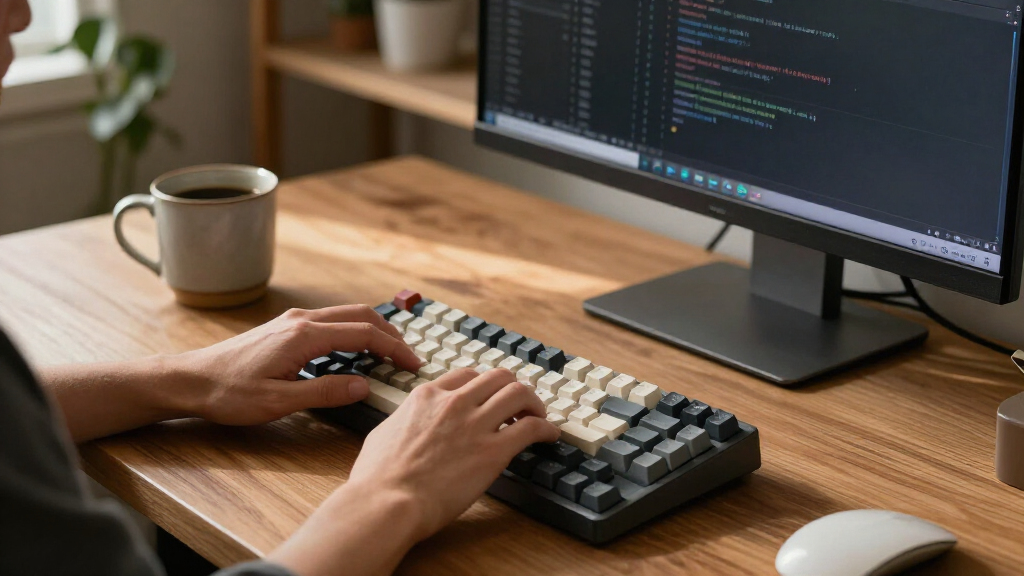
I ranked these keyboards around the needs that shape a programmer’s daily typing: layout, switch feel, connection options, build details, programmability, and the ability to adapt the board later. A number pad can help with data entry, while a compact layout can leave more room for a mouse and reduce desk crowding. Hot-swap support and adjustable controls matter when they solve a real preference, not just because they add features.
The S98 ranks first for its mix of compact full-function layout and flexible features. I placed straightforward wired boards lower for buyers who need wireless choice or switch customization, while recognizing that their simpler setup can be an advantage. Compact, hot-swappable, and feature-rich models each earn a distinct place, but tradeoffs such as missing keys, extra configuration, or less flexibility keep any one style from being right for every programmer.
Factors to Consider When Choosing Mechanical Keyboards For Programmers
Before choosing a board, I’d match it to the work you actually do rather than the feature list that looks most impressive. These broader checks can help avoid a keyboard that fits a spec sheet but frustrates you at the desk.
Choose a layout around your daily shortcuts
A full-size layout preserves the number pad and familiar navigation cluster, which helps if your work includes spreadsheets, numeric entry, or frequent use of dedicated keys. A 75% or TKL board frees desk space but may require layers or key combinations for functions that were once one tap away. The 96% layout is a middle ground, though its tighter spacing can take adjustment. Before buying, check the physical layout image and confirm that the keys you rely on are present. Don’t assume a smaller board automatically improves ergonomics; a cramped arrangement can slow down a familiar workflow. Pick compactness only when the keys you lose are worth the space you gain.
Match switch feel and sound to your work setting
Switch labels such as linear, tactile, and clicky describe different feedback, but they do not tell the whole story about sound or comfort. A clicky switch may be satisfying when working alone yet disruptive in a shared office or during calls. Linear switches move without a tactile bump, while tactile switches provide feedback that some typists prefer for long sessions. Case construction and keycaps also affect the sound you hear, so “quiet” claims should be treated as a starting point rather than a guarantee. If possible, try similar switch types before committing, or choose a hot-swap model when you expect your preference may change. Do not pick a switch solely because it is marketed for gaming; coding comfort is personal.
Decide whether wireless flexibility is worth the setup
A wired keyboard avoids charging and connection pairing, making it a straightforward choice for a fixed desk. Bluetooth or multi-mode wireless can be useful if you move between a work computer and another device or want fewer cables on the desk. Check which connection modes the keyboard supports and whether switching between devices fits your routine. Wireless features do not improve typing by themselves, and they add another battery or pairing detail to manage. For a dedicated workstation, a cable may be the simpler choice; for a shared or movable setup, wireless options can earn their keep. Avoid paying attention to the word “wireless” alone without checking how you will connect.
Treat hot-swap support as flexibility, not a requirement
Hot-swap sockets let you replace compatible switches without soldering, which can make it easier to explore different typing feels or replace a faulty switch. That flexibility is most valuable if you enjoy tuning hardware or are still unsure what you like. It does not mean every switch will fit, and compatibility can depend on the socket and switch design. A fixed-switch keyboard can be a better match if you already know your preferred feel and want a simpler purchase. Keycaps, stabilizers, and layout also affect the experience, so switch replacement is only one part of customization. Think of hot-swap support as an upgrade path, not a promise that the board will suit everyone out of the box.
Separate useful controls from desk-side distractions
Knobs, macro keys, displays, and lighting can speed up repeat actions or provide quick control over media and settings. For a programmer, their value depends on whether they map to tasks you actually repeat, such as adjusting volume, launching tools, or triggering a shortcut. Extra controls can also take space, require software setup, or add visual activity to a workspace. Check whether remapping is supported and whether the controls work with your operating system and applications. A clean, dependable keyboard can serve a coding workflow better than a feature-rich board whose extras go unused. Choose controls for a specific job rather than treating a longer feature list as a better fit.
Frequently Asked Questions
Should I choose a full-size keyboard or a compact layout for programming?
I’d choose full-size if you regularly use a number pad or want dedicated navigation keys without layers. A compact board can leave more room for a mouse and make a crowded desk easier to manage, but it may hide familiar functions behind key combinations. If you use numbers mostly through the top row, losing the number pad may not matter. A 96% layout can keep most full-size functions in a tighter footprint, though the spacing may feel different. Write down the keys you use most before deciding, then compare that list against the layout diagram.
Are clicky switches a good choice for coding in a shared office?
They can work if the people nearby are comfortable with audible typing, but clicky switches are usually a risky choice for quiet offices, calls, or shared rooms. Tactile and linear switches avoid the distinct click mechanism, though the keyboard can still make sound as keys bottom out. Case design and typing force also affect noise, so switch type alone cannot promise a quiet setup. If sound matters, look for a return policy or a way to try the switch type before settling on it. A quieter board may improve the work environment more than extra lighting or gaming controls.
Is a hot-swappable keyboard worth choosing if I have never changed switches?
It can be worthwhile if you are unsure what switch feel you prefer or like the idea of replacing an individual switch later. You do not need to modify the keyboard to use it as supplied, so the feature can simply remain unused until needed. Check socket compatibility before buying replacement switches; hot-swap support does not mean every switch is interchangeable. If you already know your preferred feel and want a straightforward board, fixed switches may be enough. I’d treat hot-swap as future flexibility rather than a reason on its own to choose a model.
Will Bluetooth be reliable enough for a programming workstation?
Bluetooth can suit everyday coding, especially if you want to connect to more than one device or keep a desk free of cables. A wired model avoids pairing steps and battery management, which may matter more on a stationary work setup. Check the keyboard’s supported connection modes and how easily it switches between devices. Your computer’s Bluetooth behavior can also affect the experience, so a keyboard feature list cannot guarantee identical results across systems. If uninterrupted wired use is your priority, choose a model that supports a cable connection rather than relying on wireless alone.
Should I prioritize a number pad, a knob, or programmable keys?
Start with the repeated tasks in your own work. A number pad helps with frequent numeric entry, a knob can make volume or another mapped setting easy to adjust, and programmable keys can reduce repetition when your software supports useful shortcuts. None of these features automatically makes coding faster, and extra controls may take space or need configuration. If you rarely enter numbers, a compact layout may serve you better than a full-size board. Choose the feature you can name a regular use for, and treat the others as optional extras.
Conclusion
For the best overall balance, I’d choose the RK Royal Kludge S98 for its compact full-function layout and added controls. The best value in practical simplicity is the Keychron C2 if you want a familiar full-size wired board without a complex feature set. For a premium-style feature set, the RK R98 Pro pairs a compact number-pad layout with a gasket mount and hot-swap switches; choose it when those build and customization features matter to you. The best pick for beginners is the Logitech G413 SE for a straightforward full-size setup, while the AULA F75 Pro is my choice for programmers who want a smaller, hot-swappable wireless board. If you need a dedicated number pad, favor full-size or 96%; if desk space or switch experimentation matters more, look to the compact hot-swap options.