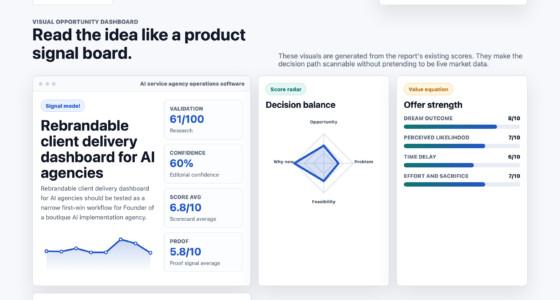

📊 Full opportunity report: Best Quiet CPU Coolers for Sustained AI/Compute Loads on ThorstenMeyerAI.com — validation score, market gap, and execution plan.

Get business pricing on monitors, keyboards and dev gear
- Business-only prices and quantity discounts
- Tax-exempt purchasing
- Multiple users, one account, clear invoices
TL;DR
This article reviews the best quiet CPU coolers suited for sustained AI and compute workloads in 2026. It compares air and liquid cooling options based on performance, noise, reliability, and value.
In 2026, the leading CPU coolers for sustained AI and compute workloads are identified, emphasizing quiet operation and reliability for always-on workstations. These choices are crucial for AI researchers and professionals running long inference or training tasks without interruption or excessive noise.
The Noctua NH-D15 G2 remains the top choice for maximum cooling with minimal noise, suitable for high-end CPUs in always-on environments. It features a redesigned dual-tower heatsink and 140mm fans, maintaining around 23–24 dBA during sustained loads, comparable to liquid cooling performance.
For budget-conscious builders, the Thermalright Peerless Assassin 120 SE offers roughly 90–95% of flagship cooling performance at a third of the price, handling mainstream and high-end CPUs effectively under continuous load with low noise levels. It includes six heatpipes and two quiet 120mm fans.
For environments where silence is paramount, the be quiet! Dark Rock Pro 5 provides near-inaudible operation at around 23.3 dBA, effectively managing steady loads while maintaining a low acoustic footprint. Its premium build makes it ideal for office or shared spaces.
In liquid cooling, the Arctic Liquid Freezer III Pro 360 stands out as the top AIO option, capable of handling high TDP workloads continuously with stable temperatures and quiet operation. It features a 360mm radiator and a durable pump system designed for long-term reliability.
Fanless options like the Noctua NH-P1 are also gaining attention for completely silent operation, suitable for ultra-quiet environments where even minimal noise is unacceptable. These coolers rely solely on passive heat dissipation, making them ideal for specialized use cases.
Best quiet CPU coolers
for sustained AI loads.
A cooler that’s fine for gaming bursts can run out of headroom on hour three of an inference job. What matters here isn’t peak capacity — it’s holding a steady temperature at a quiet fan speed, all day. Tap your priority in Part 3 to find your pick.
- Mainstream to high-end CPU, power-capped.
- You run it 24/7 — no pump to fail, ever.
- You want zero maintenance for years.
- Quiet matters more than the last few degrees.
- Top-tier CPU under sustained all-core load.
- A big air tower won’t physically fit (multi-GPU case).
- You want maximum sustained thermal headroom.
- You’ll accept a pump as one more moving part.
Why Quiet Cooling Is Critical for AI Workloads
Choosing the right cooler for sustained AI workloads is essential because these tasks generate continuous heat, unlike gaming or bursty workloads. Maintaining steady, low temperatures at low noise levels improves system stability, longevity, and comfort in shared or office environments. Reliable cooling solutions reduce the risk of thermal throttling, hardware failure, and excessive noise that can disrupt focus or collaboration.
As AI models grow larger and training times extend, the importance of efficient, quiet cooling becomes more pronounced. High-performance, always-on workstations depend on cooling solutions that can handle prolonged loads without failure or noise pollution, making these choices vital for professional AI development and research.
As an affiliate, we earn on qualifying purchases.
Evolution of CPU Cooling for AI Workstations
In recent years, CPU cooling has shifted from primarily gaming-focused solutions to specialized options tailored for AI and data science workloads. Traditional air coolers, like the Noctua NH-D15, have been favored for their reliability and low noise, but high TDP CPUs and continuous workloads have pushed the demand for larger heatsinks and more efficient cooling systems.
Liquid cooling, especially 360mm AIOs like the Arctic Liquid Freezer III Pro 360, has gained popularity for its ability to handle sustained high heat output while maintaining quiet operation. Passive coolers such as the Noctua NH-P1 have also entered niche markets, offering completely silent operation for ultra-quiet environments.
As workloads become more demanding, cooling solutions are increasingly evaluated based on their thermal capacity under continuous load, noise levels, and long-term reliability, shaping current recommendations for AI and compute-focused workstations.
"For sustained AI workloads, a cooler's ability to maintain low temperatures quietly over hours is more critical than peak cooling capacity."
— Thorsten Meyer, AI hardware expert
liquid cooling system for high TDP CPUs
As an affiliate, we earn on qualifying purchases.
As an affiliate, we earn on qualifying purchases.
Outstanding Questions About Long-Term Cooler Performance
While current cooling solutions are effective, long-term reliability data for some models, especially passive and liquid coolers, remains limited. It is not yet clear how these coolers perform after years of continuous operation under high heat loads. Additionally, the impact of ongoing maintenance, pump lifespan, and potential failure modes for AIOs are still being evaluated. Further testing and real-world use cases are needed to confirm durability and performance stability over multiple years.
As an affiliate, we earn on qualifying purchases.
Future Developments in AI Cooling Technology
Expect ongoing innovation in passive cooling materials, larger heatsinks, and more efficient fans designed specifically for AI workloads. Manufacturers are likely to develop more reliable, maintenance-free liquid coolers with longer pump lifespans and quieter operation. Additionally, integration of smart thermal management systems that adapt fan speeds and cooling strategies in real-time may further optimize noise and temperature control, supporting the next generation of high-performance AI workstations.
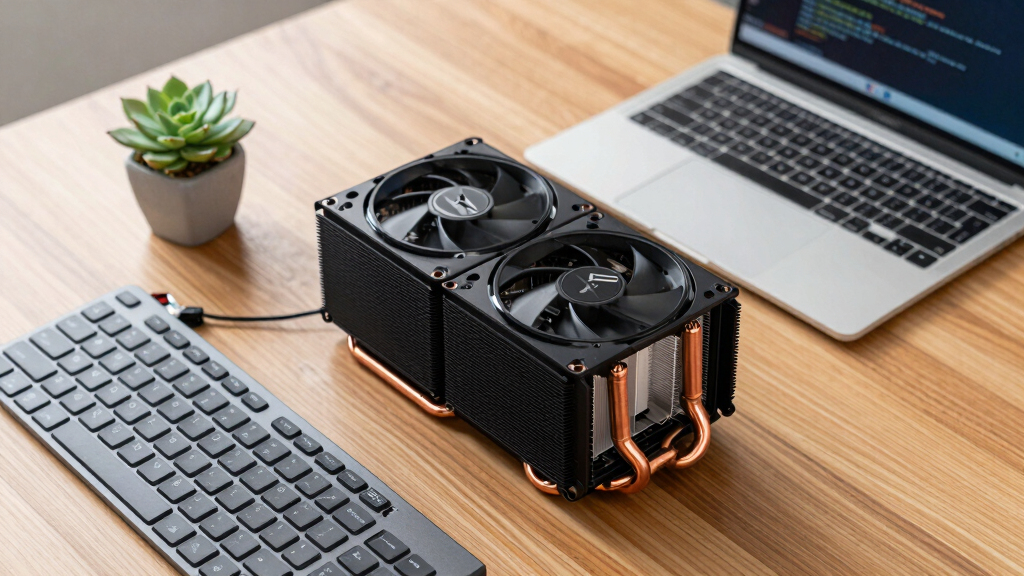
low noise air CPU cooler for continuous use
As an affiliate, we earn on qualifying purchases.
As an affiliate, we earn on qualifying purchases.
Key Questions
Why is quiet cooling more important for AI workloads than gaming?
AI workloads run continuously, generating sustained heat over hours or days, unlike gaming which involves short bursts. Quiet cooling maintains steady temperatures without noise disruption, crucial for professional environments and hardware longevity.
Are liquid coolers better than air coolers for sustained AI tasks?
Liquid coolers, especially 360mm AIOs, generally handle higher sustained loads more effectively and maintain more stable temperatures. However, they involve moving parts that can fail over time, whereas air coolers are more reliable but may struggle under the hottest, longest workloads.
What should I consider when choosing a cooler for a 24/7 AI workstation?
Focus on thermal capacity, noise levels, reliability, and maintenance. Larger heatsinks with slow-spinning fans or passive options are preferred for continuous operation, while ensuring compatibility with your CPU socket and case.
Lower noise levels are essential in shared environments to prevent distractions. Coolers like the be quiet! Dark Rock Pro 5 are designed for near-silent operation, making them suitable for office settings.
Will cooling technology evolve to better support future AI hardware?
Yes, ongoing advancements aim to improve passive materials, larger heatsinks, and smarter thermal management, ensuring cooling solutions keep pace with increasing AI hardware demands.
Source: ThorstenMeyerAI.com
Fall Picks
fall essentials
As an affiliate, we earn on qualifying purchases.