
TL;DR

Get business pricing on monitors, keyboards and dev gear
- Business-only prices and quantity discounts
- Tax-exempt purchasing
- Multiple users, one account, clear invoices
Real World VoiceEQ is a new human-evaluation benchmark for voice AI systems, covering more than 40 models and 60 metrics. It exposes limitations of conventional tests by assessing tone, emotion, and background handling, influencing future AI development and deployment strategies.
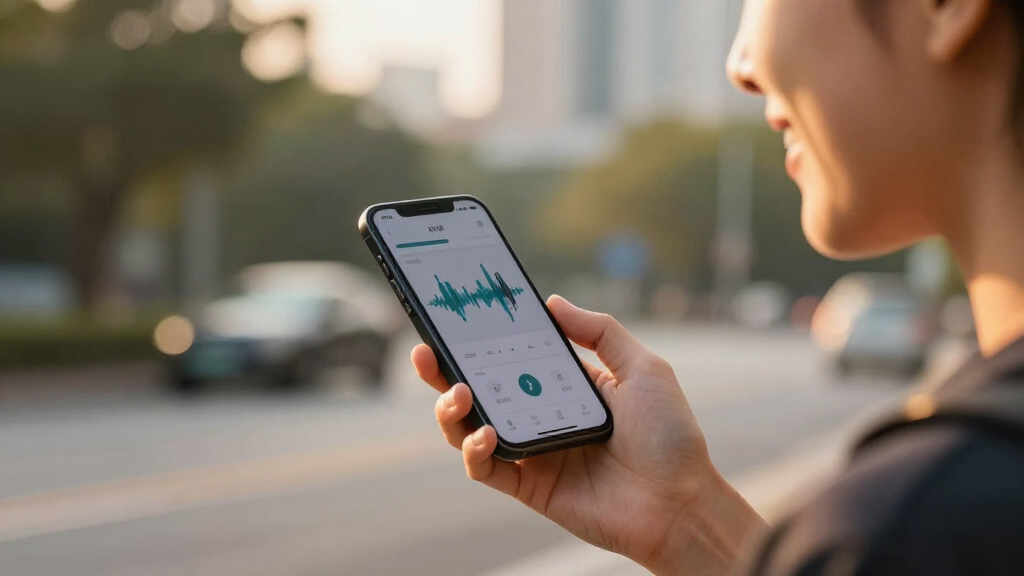
A team publishing on Hugging Face has introduced Real World VoiceEQ, a comprehensive benchmark designed to evaluate voice AI systems on their ability to recognize, generate, and respond to acoustic cues beyond transcripts. The benchmark assesses over 40 models across more than 60 metrics, revealing that current leading systems often excel in some areas but fall short in others, especially under real-world conditions. This development highlights the complexity of creating truly natural and reliable voice AI, as discussed in the original VoiceEQ analysis.
Real World VoiceEQ was developed using over 1 million human ratings collected from diverse demographics, speaking styles, and acoustic environments. You can learn more about the original analysis in this detailed report. It evaluates systems on 15 dimensions, including tone, emotion, speaker identity, background noise, pronunciation, and conversational pacing. Unlike traditional benchmarks focused on word error rate or latency, VoiceEQ emphasizes qualities that influence perceived naturalness and trustworthiness in voice interactions.
The evaluation covers more than 40 proprietary and open-source models. Results show no single model dominates across all capabilities; some excel in precise content recognition, such as pharmaceutical names, while others produce more expressive speech but with weaker accuracy. This suggests organizations should match models to specific operational needs rather than relying on a single overall score.
Implications for Voice AI Development and Usage
This benchmark reveals that current voice AI models often perform well in controlled tests but struggle with real-world acoustic cues like tone, hesitation, and background noise. For users and organizations, this indicates that choosing a voice system requires considering specific use cases; a model optimized for naturalness may not be suitable for precision tasks like banking or healthcare. The findings also suggest that conventional metrics underestimate the challenges of deploying reliable, human-like voice systems in everyday environments.
By exposing these gaps, VoiceEQ encourages developers to improve models’ ability to interpret and produce nuanced speech signals, ultimately leading to more trustworthy and effective voice assistants and communication tools.
As an affiliate, we earn on qualifying purchases.
Limitations of Traditional Speech Evaluation Metrics
Traditional speech recognition and synthesis benchmarks primarily measure word error rate and response latency. While these metrics have improved, they often fail to capture nonverbal cues such as tone, emotion, and speaker intent, which are critical for natural interactions. The developers of VoiceEQ argue that these limitations have led to overestimations of model readiness for real-world deployment.
Previous research has shown that models tend to perform worse when faced with background noise, overlapping speakers, or emotional speech. For example, transcription error rates can be four times higher in noisy environments, yet standard tests may not reflect this discrepancy. VoiceEQ aims to address these gaps by providing a more holistic evaluation framework.
“Voice models have become better at speaking than actually listening.”
— Thorsten Meyer, lead researcher
voice recognition microphones for AI
As an affiliate, we earn on qualifying purchases.
As an affiliate, we earn on qualifying purchases.
Uncertainties About Benchmark Validation and Updates
It is not yet clear how often VoiceEQ will be updated or whether results will be independently verified beyond the initial publication. The full ranking of models and detailed methodology are not publicly available, raising questions about reproducibility and transparency. Additionally, it remains uncertain whether participating vendors had access to test data, which could influence results.
Further research is needed to confirm whether newer models will improve on tone and emotional cues and how the benchmark performs across different deployment scenarios.
noise-canceling microphones for voice AI
As an affiliate, we earn on qualifying purchases.
As an affiliate, we earn on qualifying purchases.
Next Steps for Researchers and Developers
Future efforts will focus on reproducing results independently, expanding the benchmark to include newer models, and refining evaluation metrics to better capture emotional and contextual understanding. Researchers will also examine how models can better utilize audio cues like tone and hesitation, moving beyond transcript-based assessments.
Expect updates from the VoiceEQ team, including full model rankings and detailed methodology, which will enable broader validation and adoption in industry and academia.
emotion recognition voice assistant
As an affiliate, we earn on qualifying purchases.
As an affiliate, we earn on qualifying purchases.
Key Questions
What is Real World VoiceEQ?
It is a human-evaluation benchmark designed to measure how well voice AI systems recognize, generate, and respond to acoustic and conversational cues beyond transcripts, covering over 60 metrics across 40+ models.
How does VoiceEQ differ from traditional benchmarks?
Unlike standard tests focused on word accuracy and response speed, VoiceEQ assesses qualities like tone, emotion, background noise resilience, and speaker identity, which are critical for natural and trustworthy interactions.
Did the benchmark identify a single best voice model?
No, results show no model excels across all capabilities. Different models perform better in specific areas, suggesting a need for tailored solutions based on operational requirements.
What are the limitations of this benchmark?
The full methodology and detailed rankings are not yet publicly available, and it is unclear how often the benchmark will be updated or how results will be independently verified.
Why is focusing on nonverbal cues important?
Nonverbal cues like tone, hesitation, and emphasis significantly influence how natural, confident, or emotional a voice interaction feels, impacting user trust and system effectiveness.
Source: ThorstenMeyerAI.com
Halloween Picks
halloween
As an affiliate, we earn on qualifying purchases.