
📊 Full opportunity report: Track Your Brand’s Citations Across AI Search Results on IdeaNavigator AI — validation score, market gap, and execution plan.

Get business pricing on monitors, keyboards and dev gear
- Business-only prices and quantity discounts
- Tax-exempt purchasing
- Multiple users, one account, clear invoices
TL;DR
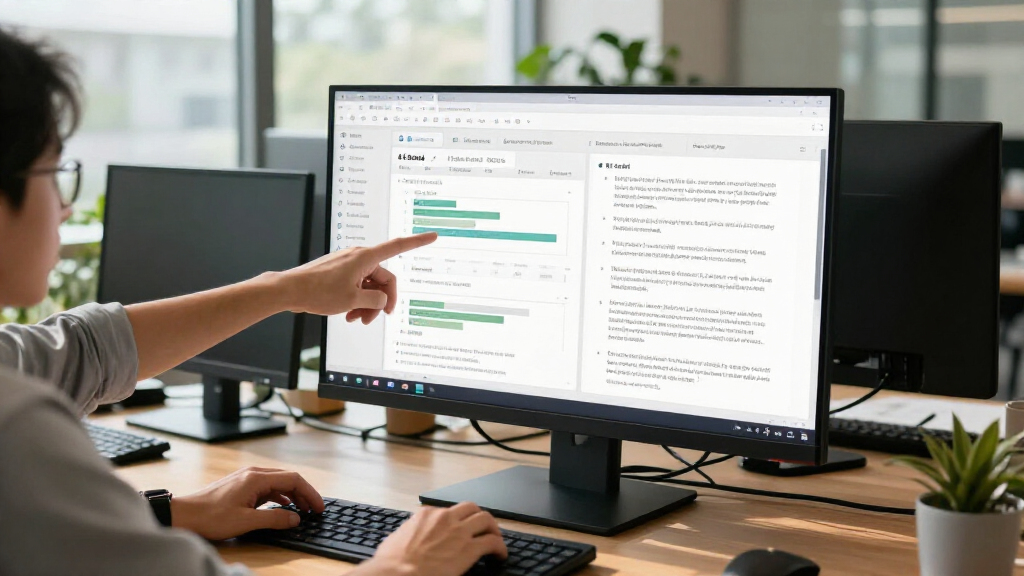
IdeaNavigator AI has outlined a proposed citation-tracking service for B2B brands that want to see which pages AI search tools cite for buying queries. The suggested product would report on 50 queries weekly, but its performance, customer demand and ability to recover traffic have not been demonstrated.
IdeaNavigator AI has proposed a citation-tracking service for B2B brands whose pages may be losing visibility in AI search results. The suggested weekly report would run a brand’s 50 top buying queries through major AI engines, record cited URLs and identify where competitors appear instead; the proposal does not establish that the service has launched or that it can recover traffic.
The proposed tool is aimed at content and SEO leaders at B2B companies that believe organic referrals are shifting toward AI assistants. Its central function would be to compare cited competitor pages with the brand’s own pages for the same commercial queries, then organize possible content updates into a prioritized list.
IdeaNavigator AI describes the product as a weekly report, rather than a broader marketing platform. The report would extract each cited URL and rank rewrite suggestions by estimated traffic recovered. That estimate is part of the proposed workflow; no methodology, accuracy data or measured traffic results were supplied.
The suggested business model is a monthly subscription per brand domain, with an agency tier for reporting across multiple clients. To test demand, the proposal calls for manually preparing citation-gap reports for 10 brands in one industry, charging for the pilot and checking whether cited-page counts change within eight weeks after customers make revisions.
Track Your Brand’s Citations Across AI Search Results
IdeaNavigator AI has proposed a weekly service to track which pages AI search tools cite for B2B buying queries. Its performance, customer demand and ability to recover traffic remain unproven.
What the service would track
The proposed report compares cited competitor pages with a brand’s own pages for commercial queries.
Check the brand’s priority queries in major AI engines.
Identify which brand and competitor pages appear in responses.
Organize possible content updates into a ranked list.
Why citation gaps matter
Knowing which pages AI answers cite could give marketing teams a concrete place to investigate visibility concerns.
- See when competitor pages appear for buying queries.
- Use citation records to guide content review.
- A citation does not necessarily produce a visit, lead or sale.
- Changed citations alone do not prove a rewrite caused the change.
Test demand and movement
The proposal recommends a small paid pilot to see whether businesses value the reports and whether cited-page counts move after revisions.
Open measurement questions
The proposal does not provide answers needed to judge report reliability or business value.
- Which AI engines would be included, and how would queries be selected?
- How would reports handle answers that vary by time, location, account or wording?
- How would citation gaps translate into a traffic-recovery estimate?
- Would a comparison group separate rewrite effects from broader changes?
- No launch, customers, sample report or performance results are provided.
Why Citation Gaps Matter to B2B Teams
If AI search products answer a buyer’s question using a competitor’s page, the unmentioned brand may lose a chance to influence research before a prospective customer reaches its website. A structured record of which URLs appear could give marketing teams a more specific starting point than general claims about AI visibility.
The proposed service also turns a broad concern into a testable content workflow: identify queries, inspect citations, compare pages and decide whether a rewrite is warranted. For teams asked to explain changes in organic referrals, such reporting could offer an additional view of how their material appears in AI-generated answers.
However, citation counts are not the same as visits, leads or sales. A citation may not produce a click, and a change in citations after an edit would not by itself prove the edit caused it. The proposal’s commercial case depends on whether teams will pay for the reports and whether the information supports useful decisions, not simply on whether the tool can collect URLs.
Popular right now

Vitamix Touch & Go Advance 32-Ounce Bar Blender, White

Dyson V8 Cyclone Cordless Vacuum

Ninja DualZone Air Fryer 10 Qt Smart 6-in-1 Grey
As an affiliate, we earn on qualifying purchases.
The Proposed Eight-Week Pilot
IdeaNavigator AI frames the opportunity around marketing teams facing questions about visibility in AI assistants and AI Overviews, while lacking dedicated tooling. It says these systems intercept a measurable share of commercial searches, but the proposal provides no figures, dates or named studies to quantify that share. The scale of the shift should therefore be treated as a stated rationale, not a measurement established by the proposal.
The proposed validation plan is deliberately small: hand-build reports for 10 brands in one vertical, charge for the work and observe cited-page counts over eight weeks after content changes. This would test whether companies will pay for the analysis and whether tracked citations move following rewrites. It would not, on its own, establish that the service restores organic traffic or improves revenue.
The scope is narrower than a full search-visibility product. It focuses on a brand’s priority buying queries and URLs cited in responses from major AI engines. The proposal does not name those engines, define how queries would be selected, or explain whether results would be collected under consistent settings.
Open Questions on Measurement and Demand
The proposal does not say whether a product is in development, whether any brands have signed up, or whether a paid pilot has begun. No customer interviews, pricing, sample report or performance data are provided. It is also unclear which AI engines would be included and how the service would handle responses that vary by time, location, account or query wording.
There is no stated method for converting citation gaps into an estimate of traffic recovered. That forecast would require assumptions about whether citations lead to clicks and whether a rewrite changes a result. The suggested eight-week test would track cited-page counts, but the proposal does not specify a comparison group or other way to separate the effects of content edits from changes in AI systems and search behavior.
The phrase “major AI engines” is not defined, and the proposal does not describe how it would verify that extracted citations are complete or accurate. Until those details and pilot outcomes are available, the service’s reliability and business value remain unconfirmed.
Paid Tests Would Set the Next Milestone
The next step in IdeaNavigator AI’s outline is to prepare citation-gap reports manually for 10 businesses in a single vertical and charge for the pilot. If that test proceeds, the proposed eight-week follow-up would compare cited-page counts after participating brands revise content.
Useful results would need to address more than whether citations changed. Buyers would need to know how consistently reports capture AI answers, how rewrite priorities are calculated and whether observed citation movement corresponds with meaningful website visits or business outcomes. No launch schedule, pilot participants or findings have been announced in the material provided.
Source: IdeaNavigator AI
Key Questions
What is the proposed AI search citation tracker?
It is a proposed reporting service that would check a brand’s buying queries in AI search tools, collect cited URLs and compare competitor citations with the brand’s pages.
How often would the report run?
The outline proposes a weekly report covering a brand’s 50 top buying queries. It does not specify which AI engines would be included.
Has the tracker launched or proven it can recover traffic?
No launch or performance results are given. Traffic recovery is an intended estimate in the proposed product, not a demonstrated outcome.
How would IdeaNavigator AI test the idea?
The suggested test is to create paid, manual reports for 10 brands in one vertical and track whether their cited-page counts change within eight weeks of content rewrites.
Source: IdeaNavigator AI