
To map value exchange beyond money, start by identifying the relationships, trust, and shared resources within your network. Visualize these connections with diagrams or social network maps that highlight collaboration, reputation, and social capital. Focus on recurring interactions, skills, and goodwill exchanged over time. Recognizing these patterns helps you understand how value flows through social ties. Keep exploring methods, and you’ll discover ways to strengthen and expand your community’s mutual benefits.

Get business pricing on monitors, keyboards and dev gear
- Business-only prices and quantity discounts
- Tax-exempt purchasing
- Multiple users, one account, clear invoices
Key Takeaways
- Identify and categorize non-monetary exchanges such as skills, services, and shared resources within the community or network.
- Visualize relationships and interactions using social network mapping tools to highlight trust and cooperation pathways.
- Track recurring exchanges to measure the strength and depth of social capital fostering mutual benefit.
- Recognize intangible assets like reputation, trust, and social ties as valuable components in the exchange network.
- Incorporate technology platforms that facilitate sharing knowledge, services, and community-driven initiatives beyond monetary transactions.
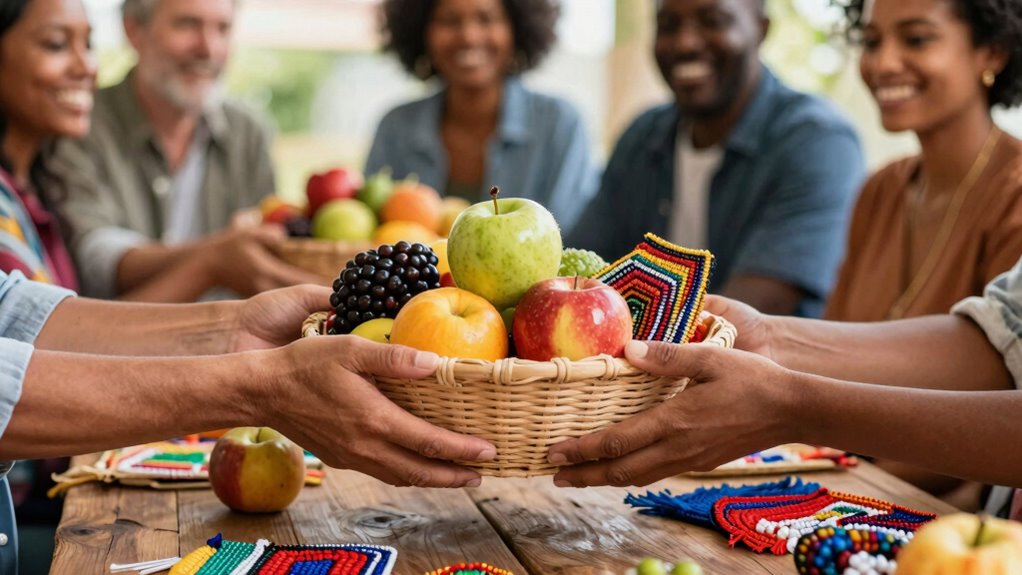
Have you ever wondered how businesses and customers create mutually beneficial relationships? It’s not just about exchanging money; it’s about building trust, reputation, and social capital that extend beyond simple transactions. When you look beyond monetary exchanges, you see a web of value that’s rooted in relationships, shared resources, and community ties. Social capital, in particular, plays a crucial role here. It’s the network of relationships, trust, and cooperation that fuels exchanges of all kinds. You might not always see it, but it’s the foundation that allows businesses to thrive through loyalty and collaboration rather than just sales figures. Recognizing this shifts your focus from purely monetary value to the intangible benefits that come from strong connections and shared interests. This perspective aligns with the concept of Free Floating, where value isn’t confined to traditional boundaries but exists in the fluid exchanges within communities. Understanding the importance of social networks enhances your ability to map these value exchanges effectively. Barter systems offer an early example of valuing exchange beyond money. They demonstrate that value isn’t always measured in currency but can be in goods, services, or skills exchanged directly. When you participate in a barter system, you’re leveraging social capital—your reputation, trustworthiness, and relationships—to facilitate exchanges. These systems depend heavily on mutual understanding and reputation, which are cultivated through repeated interactions. When you build trust in such exchanges, you’re essentially increasing your social capital, making future exchanges smoother and more advantageous. This form of value exchange emphasizes the importance of community and relationships, which can be more resilient than financial transactions alone. Recognizing the role of technology in facilitating these exchanges further expands our understanding of how social capital is maintained and strengthened. Mapping value beyond currency involves recognizing and nurturing these relationships and social networks. It means seeing the worth in shared knowledge, skills, and goodwill that can be exchanged in various ways. For example, offering your expertise in a community project or exchanging services with a local business creates value that’s not immediately quantifiable in dollars but is essential for long-term success. By understanding these exchanges, you can foster deeper collaborations and create a network where trust and reciprocity thrive. Ultimately, you realize that value exchange isn’t just about the immediate transaction but about cultivating ongoing relationships that generate social capital. These relationships can lead to new opportunities, support systems, and innovations that money alone can’t buy. Mapping this kind of exchange requires you to be attentive to the social fabric around you—identifying where trust, reputation, and shared interests can create a cycle of mutual benefit. When you see value through this lens, you unlock a richer, more sustainable approach to building relationships and growing communities.
As an affiliate, we earn on qualifying purchases.
Frequently Asked Questions
How Do I Measure Non-Monetary Value Exchanges Effectively?
You can measure non-monetary value exchanges effectively through clear value articulation, which highlights the benefits and impacts beyond cash. Engage stakeholders actively to understand their perspectives and gather qualitative insights. Use tools like surveys or interviews to capture intangible assets, relationships, and social impacts. Tracking these elements over time helps you quantify and improve the real value created, fostering stronger stakeholder engagement and a more all-encompassing understanding of your value exchange.
What Are Common Challenges in Mapping Value Exchange Beyond Money?
You might face challenges like understanding the true scope of value reciprocity and fostering genuine relationship building. It can be hard to quantify intangible benefits or recognize subtle exchanges that strengthen bonds. Sometimes, people overlook the importance of ongoing communication, leading to gaps in trust. Overcoming these hurdles requires active listening, clear definitions of value, and a commitment to nurturing long-term relationships, ensuring every exchange feels meaningful and mutually beneficial.
How Can I Identify Hidden or Indirect Value Exchanges?
You can identify hidden or indirect value exchanges by observing social reciprocity and hidden incentives. Pay attention to subtle cues like gestures, favors, or supportive behaviors that aren’t explicitly tied to monetary transactions. Ask yourself what others might gain from their actions beyond immediate benefits. Mapping these interactions reveals the underlying social dynamics and unspoken exchanges that often drive relationship building and value creation beyond direct payments.
What Tools Assist in Tracking Non-Monetary Value Flows?
You can use tools like social impact dashboards, community engagement platforms, and stakeholder mapping software to track non-monetary value flows. These tools help you visualize how community engagement fosters social impact, revealing indirect value exchanges. By monitoring participation, feedback, and collaborative efforts, you gain insights into the intangible benefits, ensuring you’re capturing the full scope of value beyond just financial metrics.
How Do Cultural Differences Impact Value Exchange Perceptions?
Cultural nuances considerably shape your perception of value exchange, as what’s valued in one culture might differ in another. These differences can lead to perception shifts, influencing how you interpret gestures, reciprocity, and trust. By understanding diverse cultural norms, you improve communication and foster stronger relationships. Recognizing these variations helps you adapt your approach, ensuring your value exchanges are respectful and meaningful across different cultural contexts.
trust and reputation tracking software
As an affiliate, we earn on qualifying purchases.
As an affiliate, we earn on qualifying purchases.
Conclusion
Remember, you don’t always have to exchange money to create value. Whether it’s sharing skills, time, or connections, these exchanges build stronger relationships and foster mutual growth. Think of it as a two-way street—you give, you receive, and everyone benefits. As the saying goes, “It’s not just what you give, but how you give it.” Keep exploring diverse ways to exchange value beyond money, and you’ll discover richer, more meaningful connections along the way.
community resource sharing platform
As an affiliate, we earn on qualifying purchases.
As an affiliate, we earn on qualifying purchases.
non-monetary exchange management tools
As an affiliate, we earn on qualifying purchases.
As an affiliate, we earn on qualifying purchases.
Fall Picks
fall essentials
As an affiliate, we earn on qualifying purchases.