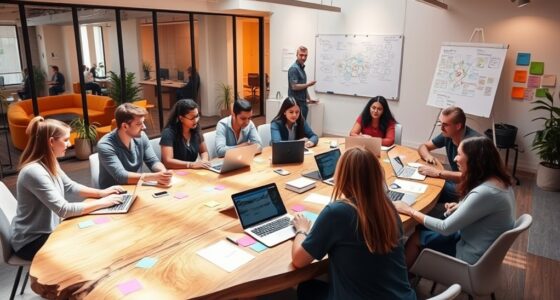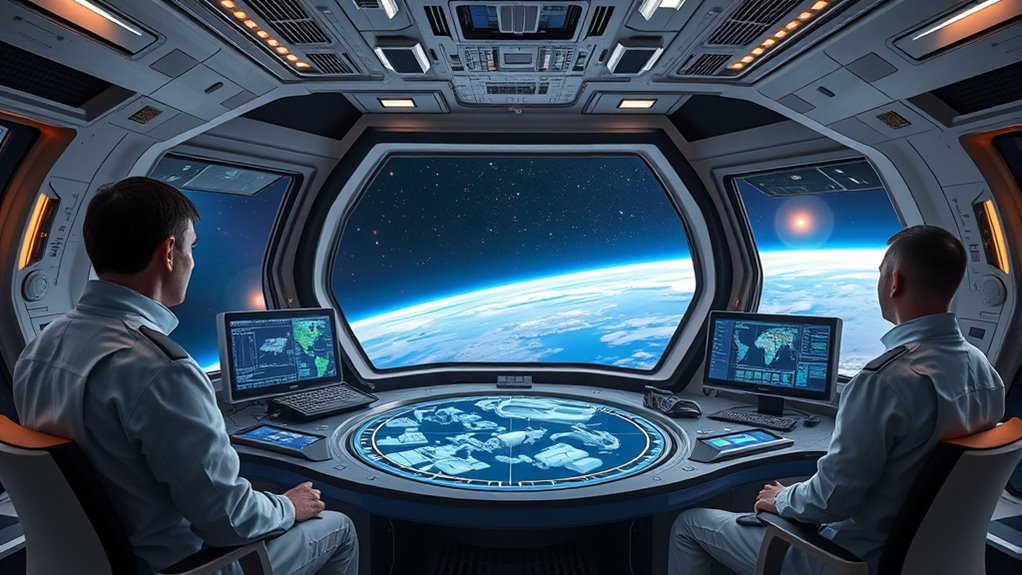

Design thinking in space exploration puts humans at the center of innovation, turning complex technical challenges into solutions that prioritize astronauts’ needs and well-being. It blends creativity, problem-solving, and user-focused design to develop habitats that support comfort, safety, and psychological health during long missions. By emphasizing empathy, iteration, and prototyping, this approach transforms space environments into functional, human-centered spaces. If you want to discover how this approach shapes future missions, keep exploring.
Listen free for 30 days with Audible
Thousands of audiobooks and originals — cancel anytime.
As an affiliate, we earn on qualifying purchases.
Key Takeaways
- Design thinking integrates creativity and human-centered principles to address challenges of long-term space missions and habitat design.
- It emphasizes understanding astronauts’ needs, routines, and physical limitations to create functional, ergonomic environments.
- Iterative prototyping and testing refine solutions, transforming technical challenges into user-friendly, adaptable habitat features.
- Incorporating smart technologies and environment controls enhances comfort, safety, and mental well-being during extended missions.
- A human-centered approach empowers astronauts to thrive by prioritizing their emotional, physical, and psychological needs in habitat design.

Have you ever wondered how innovative solutions in space exploration are created? It’s a fascinating process that combines creativity, problem-solving, and human-centered design principles to tackle some of the most challenging aspects of venturing into space. One of the key areas where design thinking plays a crucial role is in developing interplanetary habitats—spaces designed to sustain humans during long-term missions beyond Earth. When creating these habitats, you need to take into account not just the technical and environmental requirements, but also how astronauts will interact with their surroundings daily. This is where astronaut ergonomics comes into play, ensuring that every aspect of the habitat promotes comfort, safety, and efficiency.
Using design thinking, you start by empathizing with astronauts’ needs, understanding their routines, physical limitations, and psychological stresses. This human-centered approach helps you identify pain points and design solutions that improve their quality of life during extended stays on other planets. For instance, you might rethink the layout of living quarters to maximize space while minimizing clutter, or incorporate adjustable furniture that adapts to different tasks and individual preferences. When designing interplanetary habitats, you must balance the constraints of weight, energy consumption, and resource availability with the comfort and well-being of the crew. This often involves iterative prototyping and testing, where you gather feedback from astronauts and refine the designs accordingly.
Designing space habitats with empathy, iterative testing, and adaptable solutions to enhance astronauts’ well-being during long missions.
In terms of astronaut ergonomics, you consider everything from the positioning of controls and workstations to the design of sleeping areas and exercise equipment. Every detail matters because it can impact their health, productivity, and mental state. For example, ensuring that controls are within easy reach reduces fatigue, while ergonomic beds help prevent muscle strain during long missions. By applying design thinking, you also integrate smart technologies that adapt to personal needs, such as adjustable lighting or climate controls, making the environment more livable and personalized. Additionally, understanding the psychological and neurological aspects of dreaming can inform how environments are designed to support mental well-being during long missions.
Ultimately, the goal is to create space habitats that are not only functional but also feel human-centered. This approach recognizes that astronauts are more than just crew members—they’re individuals with physical and emotional needs that must be addressed to ensure mission success. As you develop these solutions, you’re not just designing structures; you’re crafting environments that empower humans to thrive in the most extreme settings imaginable. Through empathy, iteration, and innovation, design thinking transforms space exploration from a technical challenge into a deeply human endeavor.
ergonomic space habitat furniture
As an affiliate, we earn on qualifying purchases.
As an affiliate, we earn on qualifying purchases.
Frequently Asked Questions
How Does Design Thinking Improve Astronaut Safety?
Design thinking improves your safety by focusing on ergonomic design, making your environment more comfortable and reducing physical strain. It also enhances psychological resilience by addressing your mental well-being through user-centered solutions that promote stress management and teamwork. By actively involving you in the design process, it creates safer, more supportive spaces that adapt to your needs, ultimately minimizing risks and ensuring you’re well-prepared for space missions.
What Are Examples of Human-Centered Solutions in Space Habitats?
You see human-centered solutions in space habitats through modular habitats that adapt to your needs, offering customizable living spaces. Life support systems are designed with your comfort and safety in mind, ensuring clean air, water, and waste management. These innovations focus on your experience, making long missions more sustainable and comfortable, while also allowing easy repairs and upgrades, directly addressing your day-to-day challenges in space.
How Is User Feedback Incorporated Into Space Mission Design?
You incorporate user feedback into space mission design through feedback integration, ensuring astronauts’ experiences shape the plans. By actively listening to their needs and challenges, you adapt the environment using user-centered design principles. This iterative process involves regular communication, testing prototypes, and refining solutions based on real-time input. As a result, the mission becomes safer, more efficient, and better tailored to astronauts, enhancing overall mission success and crew well-being.
What Challenges Exist in Applying Design Thinking to Space Tech?
Ever wonder what makes applying design thinking to space tech so tough? You face cultural barriers that hinder open collaboration and innovation, along with technical limitations like outdated hardware or complex systems. These challenges slow progress and complicate user-centered solutions. Can you overcome these hurdles by fostering a mindset open to diverse perspectives and embracing new technologies? Tackling these issues is key to advancing human-centered space exploration.
How Does Design Thinking Influence Long-Term Space Colonization Plans?
Design thinking shapes your long-term space colonization plans by emphasizing space architecture that prioritizes human needs and comfort. It helps you develop innovative interplanetary logistics solutions, making life sustainable on other planets. By keeping humans at the core, you create adaptable designs that address unforeseen challenges, ensuring mission success. This approach fosters collaboration, creativity, and resilience, helping you build thriving communities beyond Earth.
smart climate control systems for space habitats
As an affiliate, we earn on qualifying purchases.
As an affiliate, we earn on qualifying purchases.
Conclusion
By embracing design thinking, you’re not just improving space missions—you’re revolutionizing humanity’s future among the stars. This human-centered approach fuels innovation so powerful, it could turn sci-fi into reality overnight. Imagine crafting solutions so groundbreaking, they’ll make our current space tech look like stone tools. If you harness this mindset, you’re not just exploring space; you’re shaping a destiny so bold, it’ll echo through the cosmos for eternity. The universe’s limits are only what you dare to envision!
As an affiliate, we earn on qualifying purchases.
compact exercise equipment for space
As an affiliate, we earn on qualifying purchases.
As an affiliate, we earn on qualifying purchases.
Flea & tick season Picks
flea and tick prevention
As an affiliate, we earn on qualifying purchases.