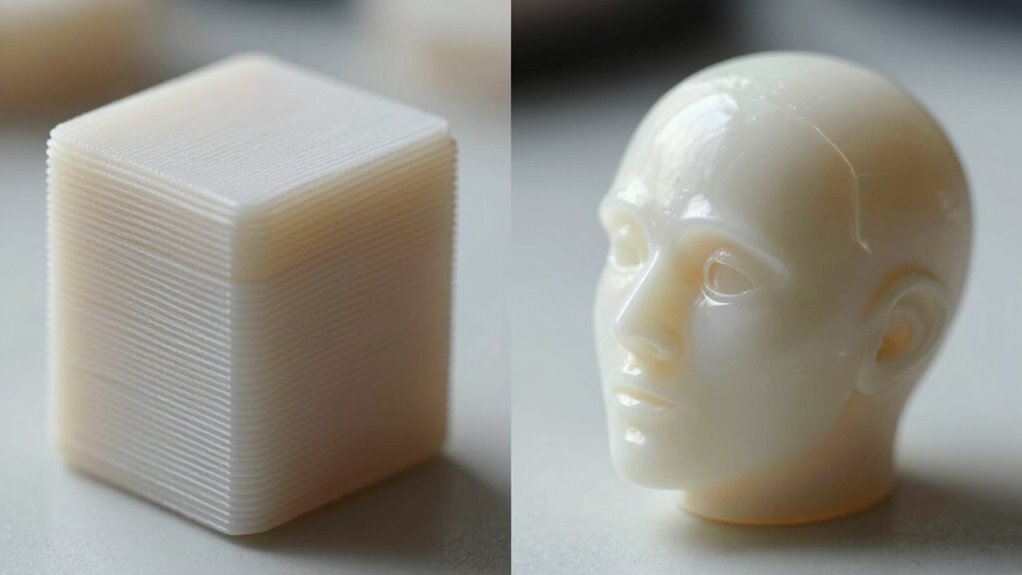

The key question to ask yourself is whether you need durability and speed or high detail and surface quality. If your priority is creating strong, functional prototypes quickly and affordably, FDM is the better choice, thanks to its eco-friendliness and faster turnaround. However, if you want highly detailed, smooth-surfaced models that show intricate features, resin offers superior resolution, though at higher costs. Keep exploring to discover which technology aligns best with your specific project needs.
Get ready for Prime Big Deal Days — try Prime free
Exclusive member deals on October 6–7, plus fast free delivery. Cancel anytime.
As an affiliate, we earn on qualifying purchases.
Key Takeaways
- The primary consideration is whether you prioritize durability and environmental friendliness (FDM) or high detail and surface quality (resin).
- If speed and cost-effectiveness are crucial, FDM is generally the better choice for large or functional prototypes.
- For intricate designs with fine details, resin offers superior resolution and surface finish.
- When handling chemical waste and post-processing complexity matter, FDM is more environmentally and user-friendly.
- The key question is whether your project values strength and sustainability or precision and aesthetic quality.
As an affiliate, we earn on qualifying purchases.
What Are FDM and Resin 3D Printing Technologies?
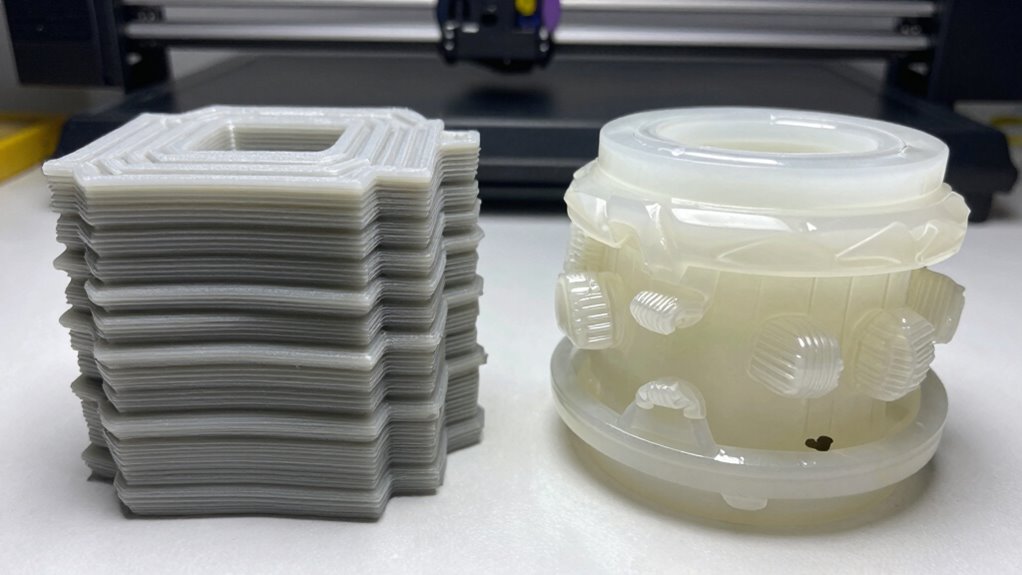
FDM (Fused Deposition Modeling) and resin 3D printing are two popular methods used to create prototypes, each with distinct processes and advantages. FDM works by melting filament and depositing it layer by layer, offering a wide range of color options to match your design needs. It’s generally more accessible and produces parts with a lower environmental impact since some filaments are recyclable. Resin 3D printing, on the other hand, uses liquid resin cured by light to build highly detailed models. While it provides excellent detail and surface finish, resin printing involves more chemical waste, increasing its environmental footprint. Your choice depends on your priorities: FDM for versatility and sustainability, resin for precision and fine detail. Understanding different printing methods helps in selecting the most suitable technology for your project, especially when considering material options and their impact on the environment.
As an affiliate, we earn on qualifying purchases.
How Do Surface Finish and Detail Compare in FDM and Resin?
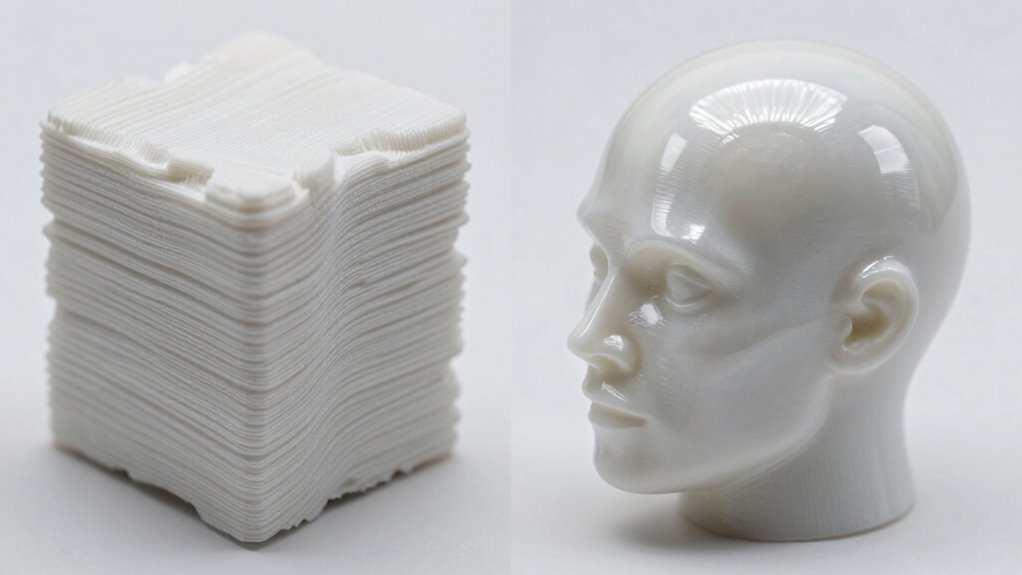
You’ll notice that resin prints generally have a smoother surface finish and higher detail resolution than FDM parts. FDM tends to show layer lines more clearly and may require extra post-processing to achieve a polished look. Consider your project’s needs, as resin often demands more cleanup but delivers finer details. Additionally, surface finish quality can vary significantly between the two methods, impacting the final appearance of your prototypes. The choice between FDM and resin printing can also influence how well your prototypes resist environmental factors like humidity, which is important for maintaining indoor air quality during storage or display. Being aware of factors like visual and auditory cues can help in evaluating the overall quality and suitability of your printed prototypes. For example, understanding the requirements traceability can ensure your prototypes meet all necessary standards and specifications for compliance. Furthermore, considering material properties can guide you toward selecting the best method based on durability and environmental resistance.
Surface Smoothness Differences
Although both FDM and resin-based 3D printing produce detailed prototypes, they differ markedly in surface smoothness and finish quality. FDM parts tend to have higher surface roughness due to layer lines, which can be visible without post-processing. The rough surface can affect the prototype’s appearance and functionality. Resin printing, on the other hand, delivers a much smoother surface with a glossy finish straight out of the build. Its fine layer resolution reduces visible layer lines, creating a more refined, professional look. If surface smoothness is critical, resin printing generally offers superior results. However, FDM’s rougher surface may still be acceptable with some sanding or coating. Your choice depends on how important a glossy, smooth finish is for your prototype’s purpose.
Detail Resolution Capabilities
When it comes to capturing fine details, resin printing generally outperforms FDM due to its higher resolution capabilities. Resin printers can produce smoother surfaces and intricate features with precision down to a few microns. This results in sharper edges, finer textures, and better detail fidelity. FDM, on the other hand, often leaves visible layer lines and struggles with small features. Resin models also offer a wider range of color options, enhancing visual detail. However, resin printing involves a more significant environmental impact, mainly due to resin disposal and post-curing chemicals. To visualize the difference:
- Resin creates ultra-fine details and complex textures
- FDM often shows layer lines and less sharpness
- Resin offers more vibrant, varied color options
- FDM is generally more eco-friendly and easier to handle environmentally
Post-Processing Requirements
Surface finish and detail quality in 3D printing don’t just depend on the printer’s resolution; they also hinge on post-processing steps. FDM parts often require minimal cleanup, like removing support structures and smoothing layer lines, but these steps can be straightforward or time-consuming depending on the print. Resin prints, however, involve more complex post-processing, including cleaning off excess resin with alcohol and curing under UV light. Post processing complexity is higher for resin, but it yields smoother surfaces and finer details. Additionally, scientific skepticism about the predictive power of certain post-processing techniques highlights the importance of understanding the specific requirements and limitations of each method. Proper handling of resin safety precautions is crucial to prevent health risks during cleaning and curing processes. Cleanup procedures for resin are more delicate and require careful handling to avoid damage or safety issues. The cost and time investment for resin post-processing can be significantly higher, but the quality improvements often justify this extra effort. For instance, layer adhesion plays a critical role in determining the overall finish quality, especially in resin prints. Furthermore, understanding the material properties of each type of resin helps optimize post-processing for better results. Overall, resin’s post-processing demands are greater, but the resulting surface finish and detail are considerably improved compared to FDM prototypes.
As an affiliate, we earn on qualifying purchases.
Which Method Is More Durable and Strong?
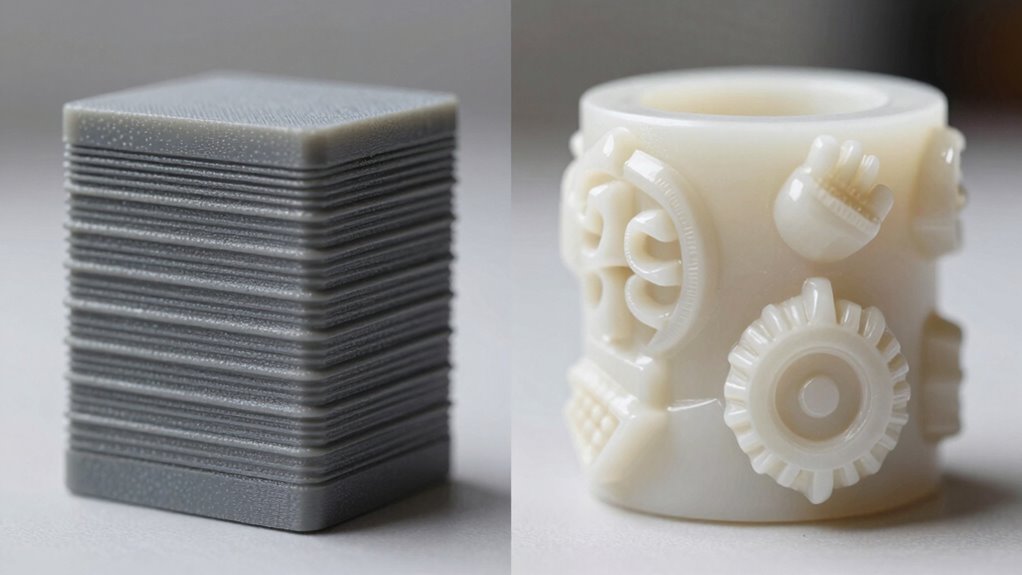
When comparing durability and strength, you’ll find that FDM parts often handle stress better due to their layered filament structure, but resin prototypes can be more brittle under impact. Material strength varies between the two, with FDM offering more flexibility and resin providing higher detail but less resilience. Consider your prototype’s stress environment to determine which method delivers the durability you need. Additionally, understanding the production process of wood pellets can inform choices about material strength and environmental impact. Recognizing the properties of different materials can help in selecting the most suitable method for your specific application.
Material Strength Comparison
Both FDM and resin-based 3D printing methods produce prototypes with distinct strength characteristics, but generally, resin prints tend to be more durable and resistant to impact. Resin parts typically offer higher material flexibility, allowing them to absorb shocks better without cracking. They also boast superior thermal resistance, making them suitable for environments with temperature fluctuations. FDM parts, on the other hand, are often more brittle and less flexible, which can lead to breakage under stress. To visualize, consider:
- Resin’s high impact strength and flexibility
- FDM’s lower impact resistance
- Resin’s ability to withstand higher temperatures
- FDM’s susceptibility to warping under heat
This comparison helps you understand which material offers the strength properties best suited for your prototype’s intended use.
Durability Under Stress
Ever wonder which 3D printing method delivers greater durability under stress? When you perform stress testing, FDM parts often show better resilience due to their layered filament structure, which can absorb and distribute forces more evenly. Resin prints, while highly detailed, tend to be more susceptible to material fatigue over repeated stress cycles. This makes them less ideal for prototypes subjected to continuous or heavy load stress. FDM’s thicker layers and tougher filaments generally withstand stress testing better, reducing the risk of cracking or failure. If durability under repeated stress is your priority, FDM offers a clear advantage. Resin’s strength lies in precision and surface finish, but for stress resistance, FDM proves more robust over time.
FDM filament for durable prototypes
As an affiliate, we earn on qualifying purchases.
As an affiliate, we earn on qualifying purchases.
Cost, Speed, and Material Choices: Which Is Better for Your Prototype?
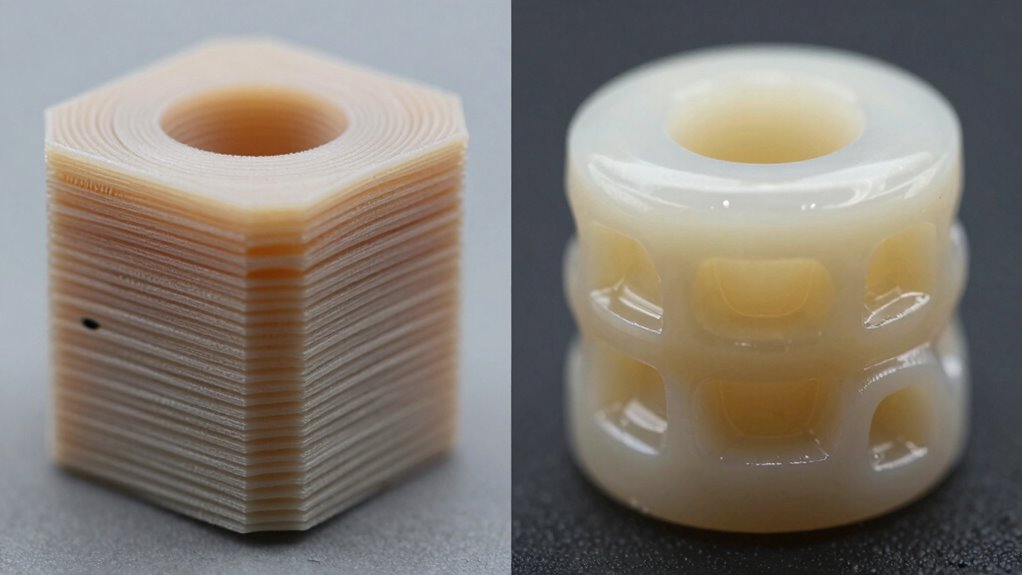
Choosing between FDM and resin printing often hinges on cost, speed, and material options, which directly impact your project’s efficiency and budget. FDM typically offers lower material costs and faster production, making it suitable for quick, large prototypes. Resin printing provides higher detail and precision but can be more expensive and slower. Consider these factors:
- Design flexibility: Resin excels in producing intricate, detailed parts.
- Speed: FDM generally prints faster for bulk prototypes.
- Material choices: FDM offers a broad range of filaments with varied properties.
- Environmental impact: Resin prints produce more waste and require careful disposal, while FDM uses less material and is more eco-friendly.
- Additionally, innovations such as sustainable textile care techniques are increasingly influencing 3D printing practices, encouraging more environmentally conscious manufacturing.
Key Factors to Consider When Choosing Between FDM and Resin 3D Printing
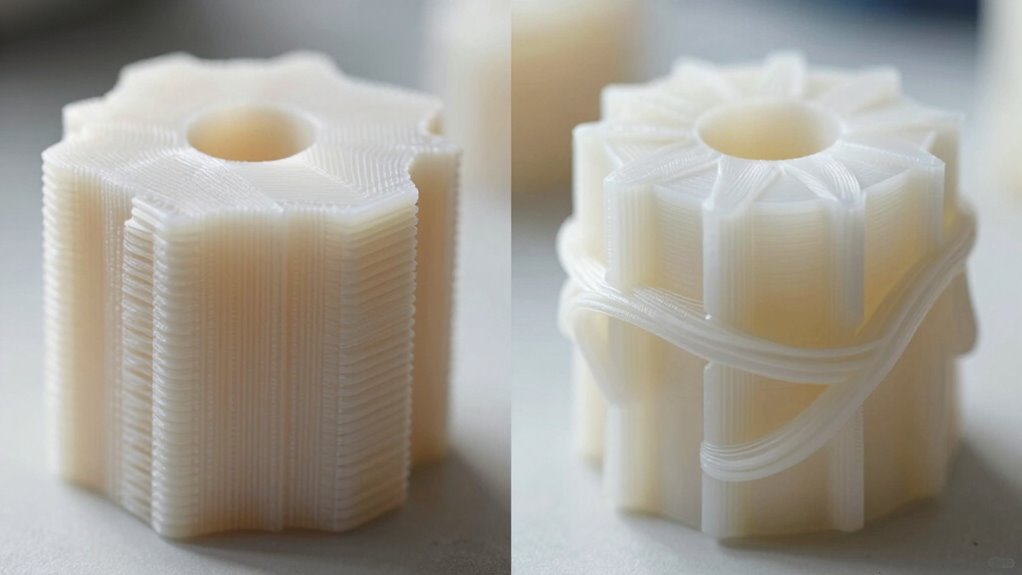
When deciding between FDM and resin 3D printing, understanding the key factors that influence your choice is essential. One major consideration is color options; FDM offers a broader range of filament colors and easier post-processing for multi-color prints. Resin printing typically results in more uniform, detailed colors, but color variety is more limited. Environmental impact also plays a role—FDM uses thermoplastics that are often recyclable and produce less waste, whereas resin printing involves chemicals that require careful handling and disposal. If sustainability matters, FDM might be preferable. Additionally, consider your priorities for finish quality and complexity. Both technologies have strengths, but weighing color versatility and Environmental impact helps you select the best method for your prototype needs. Incorporating biohacking techniques or environmentally conscious practices can further influence your choice depending on your sustainability and health goals. Moreover, advances in sustainable materials are increasingly making resin options more eco-friendly, which could shift considerations over time. For example, the development of biodegradable resins is an emerging trend that may bridge the gap between quality and sustainability in resin printing.
Matching Your Prototype Needs to the Right 3D Printing Method

Matching your prototype needs to the right 3D printing method requires evaluating your specific project requirements. Consider what matters most for your prototype: Is color accuracy essential for visual appeal? Do you need detailed surface quality or rapid production? Think about environmental impact—are eco-friendly materials a priority? Your choices might look like this:
Choosing the right 3D printing method depends on your project’s focus—detail, speed, color, or eco-friendliness.
- FDM offers durability, faster turnaround, and lower environmental impact with recyclable filaments.
- Resin printing provides high detail and superior color accuracy for realistic prototypes.
- FDM’s affordability suits rough prototypes or functional testing.
- Resin’s fine resolution is perfect for intricate designs and visual models.
Frequently Asked Questions
Which 3D Printing Method Is Better for Large-Scale Production?
For large-scale production, FDM printing is better because it offers greater material versatility and cost efficiency. You can use a wide range of materials, from plastics to composites, and produce large volumes more affordably. Resin printing, while highly detailed, tends to be slower and more expensive per piece, making it less suitable for high-volume manufacturing. So, if you need efficiency and versatility, FDM is your best choice.
How Eco-Friendly Are FDM and Resin Printing Processes?
You’re skating on thin ice with eco-friendliness in 3D printing. FDM using biodegradable filaments is generally greener, as it produces less harmful waste and can decompose faster. Resin printing, however, often involves hazardous chemicals, but some companies now offer resin recycling options. Overall, FDM tends to be more eco-conscious, but both methods have room for improvement—think of it as walking a tightrope between innovation and sustainability.
Can FDM or Resin Printing Produce Functional, End-Use Parts?
Yes, both FDM and resin printing can produce functional, end-use parts, but their suitability depends on your needs. FDM parts typically offer better material durability, making them ideal for load-bearing applications. Resin prints often provide a superior surface finish, which is essential for detailed or aesthetic parts. Consider the required surface quality and durability to choose the best method for your end-use parts.
What Are the Safety Concerns Associated With Resin Printing?
When working with resin printers, you face safety concerns like toxic fumes, skin irritation, and potential chemical burns. You need to ventilate your workspace properly, wear gloves and protective eyewear, and handle uncured resin with care. Always wash your hands thoroughly after handling resin, and store chemicals safely away from children and pets. Staying cautious helps you prevent health issues and enjoy the benefits of resin printing safely.
How Do Post-Processing Requirements Differ Between FDM and Resin?
You’ll find that post-processing differs considerably between FDM and resin printing. Resin prints require thorough cleaning with alcohol to remove uncured resin, followed by UV curing, which enhances material durability and improves surface finish. FDM prints typically need support removal and sanding for a smoother surface, but they generally require less extensive post-processing. Resin offers a superior surface finish but demands more careful handling and finishing steps for maximum durability.
Conclusion
Ultimately, choosing between FDM and resin 3D printing boils down to your priorities—whether you need speed, detail, strength, or cost-effectiveness. If you seek durability, go for FDM; if you crave precision, opt for resin. Consider your project’s requirements, your budget, and your timeline. By aligning your needs with each technology’s strengths, you’ll make a confident decision that brings your prototype to life—accurately, efficiently, and exactly how you envision it.
NFL season / tailgating Picks
team gear
As an affiliate, we earn on qualifying purchases.