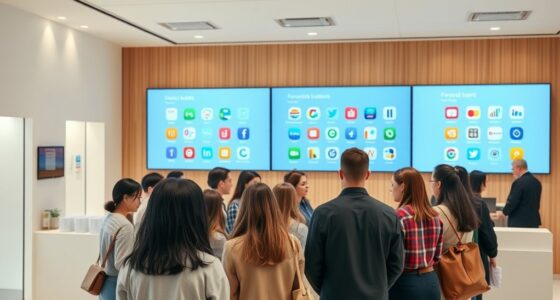
Many theme parks excel at guiding you intuitively through immersive environments, using visual cues, landmarks, and themed décor to lead you naturally to attractions without feeling lost. They combine interactive signage and digital tools to provide real-time updates while shaping anticipation with stunning scenery and strategic layouts. These thoughtful designs keep you engaged and enthusiastic to explore every corner. If you keep exploring, you’ll discover how these parks turn navigation into an exciting part of the adventure.
Key Takeaways
- Integrate interactive digital signage with mobile apps for real-time directions and updates.
- Use immersive design and thematic cues to naturally guide visitors without overt signage.
- Strategically place landmarks and visual markers to build anticipation and curiosity.
- Combine visual cues with environmental design to create seamless, intuitive navigation.
- Enhance overall experience by blending clarity with immersive storytelling, reducing stress and increasing excitement.
Exploring a theme park can feel overwhelming, but effective wayfinding strategies turn confusion into excitement. When you step into a bustling park, the sheer scale and variety of attractions can make navigation seem intimidating. That’s where the park’s clever use of interactive signage comes into play. These signs aren’t just static maps; they are dynamic tools that respond to your needs, guiding you with real-time directions, updates on wait times, and personalized suggestions. By engaging with interactive signage, you gain immediate clarity, reducing frustration and enhancing your overall experience. You can quickly locate rides, dining options, or restrooms without feeling lost, allowing you to focus more on fun than on figuring out where to go next. Additionally, digital mapping systems often integrate with mobile apps, providing seamless navigation on your personal device. This integration leverages technology to create a more connected and intuitive experience. Moreover, user-centered design ensures that navigation tools are tailored to different visitors’ preferences and needs, making the experience even more accessible. These thoughtful design elements help visitors feel more confident in their exploration, further elevating the park experience.
Interactive signage provides real-time directions and updates, making park navigation clear and enhancing your overall experience.
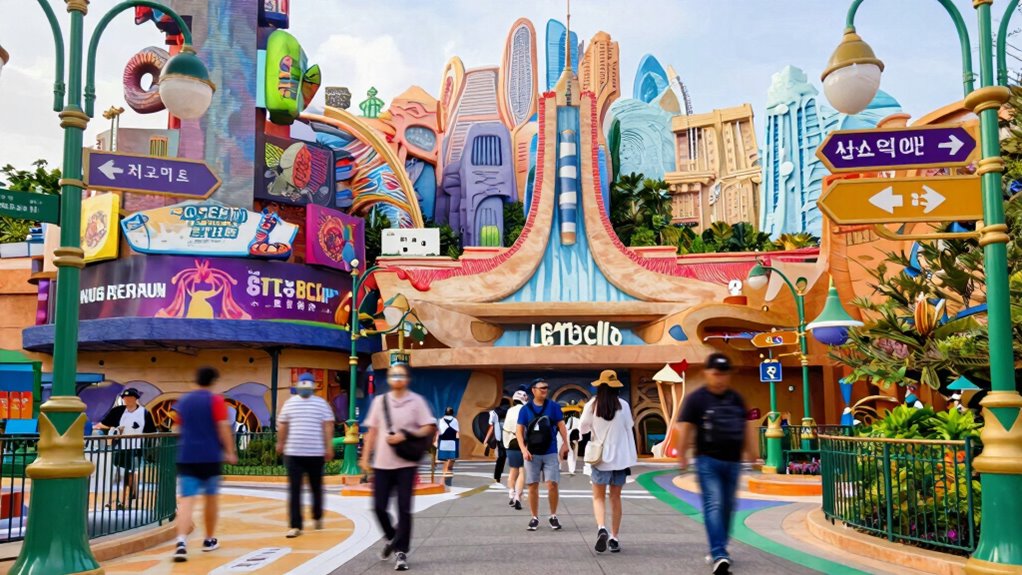
Beyond signage, immersive design plays a vital role in wayfinding. Parks craft their environments to subtly guide visitors through visual cues, thematic elements, and spatial layouts that naturally lead you along desired paths. For example, a well-designed area might feature a distinctive arch or themed decor that signals the approach of a particular zone or attraction. These immersive design elements create a sense of place and help you intuitively understand where you are and where you want to go. It’s like the park itself is speaking your language, making navigation feel seamless and integrated into the experience. When you walk through a vividly themed area, you’re not just following signs—you’re immersed in the environment, which guides your movement without overt instructions. Incorporating visual cues and spatial layout enhances natural navigation and reduces reliance on signage.
Theme parks also excel at creating anticipation through their strategic placement of landmarks and visual cues. You might see a towering roller coaster in the distance or a uniquely themed building that hints at an upcoming adventure. These visual markers build excitement and curiosity, motivating you to explore further. The park’s design ensures that as you move from one area to another, you’re constantly teased with new sights, sounds, and experiences, maintaining your engagement and anticipation. This combination of thoughtful wayfinding and immersive design turns what could be a confusing maze into a thrilling journey. Instead of feeling overwhelmed, you’re drawn deeper into the adventure, excited to discover what’s around the next bend.
In essence, theme parks get it right by making navigation an integral part of the experience rather than an obstacle. They use interactive signage to provide clarity and real-time information, while immersive design creates intuitive pathways and builds excitement through visual cues. This synergy transforms what might be a stressful process into an engaging, anticipatory voyage, making every visitor feel confident, excited, and eager to explore every corner of the park. The careful integration of wayfinding strategies ensures that visitors remain engaged and eager to discover the park’s many surprises.

Santek EZ Sign 4.2" Small E-Paper Digital Signage | Tri-Color Display with USB Update via Windows App | Custom Message Board for Business, QR code sign (Black, Pack of 1)
Customize Messages Easily: Update text or images with the Santek EZ Sign App (Windows only) via USB-C connection….
As an affiliate, we earn on qualifying purchases.
As an affiliate, we earn on qualifying purchases.
Frequently Asked Questions
How Do Theme Parks Adapt Wayfinding for Diverse Visitor Groups?
You’ll notice theme parks adapt wayfinding by using multilingual signage to guide diverse visitor groups effectively. They also design accessible pathways, ensuring everyone can navigate comfortably, regardless of mobility. By combining clear visuals, intuitive layouts, and language options, parks create an inclusive environment. This approach helps visitors feel confident and excited, reducing confusion and anticipation, so they can focus on enjoying the attractions without unnecessary stress.
What Technology Enhances Anticipation Beyond Physical Cues?
Augmented reality (AR) and personalized navigation greatly enhance anticipation by creating immersive, tailored experiences. For example, a theme park could use AR glasses to overlay real-time cues and upcoming attractions on your view, building excitement before you arrive. This tech engages visitors actively, making them enthusiastic for what’s next. By customizing routes and providing interactive hints, AR transforms mere wayfinding into a compelling journey, heightening anticipation naturally.
How Do Seasonal Changes Impact Park Navigation Strategies?
Seasonal changes impact your park navigation by prompting updates in seasonal signage and weather adaptations. You’ll notice clearer signs during busy seasons to guide crowds, and weather-related adjustments like shaded areas or waterproof pathways. During winter or rainy days, the park may reroute foot traffic to safer, less slippery areas. These strategies help you move smoothly, ensuring your experience remains enjoyable despite changing weather and seasonal crowds.
What Role Do Staff Members Play in Wayfinding Support?
Think of staff members as friendly lighthouse keepers guiding ships through foggy waters. They support guest assistance by offering clear directions and reassurance. Their presence enhances signage clarity, making navigation smoother and less stressful. When you’re unsure, a staff member’s knowledge and approachable attitude serve as a beacon, helping you find your way effortlessly. Their proactive support turns wandering into an enjoyable adventure, ensuring everyone feels confident and cared for throughout the park.
How Is Feedback Used to Improve Future Wayfinding Designs?
You see feedback as a crucial tool for improving wayfinding designs. By collecting visitor insights, parks refine interactive signage and sensory cues, making navigation clearer and more engaging. When guests share their experiences, you identify which signs or cues work best and where confusion occurs. This ongoing input allows you to adapt and enhance wayfinding, creating a smoother, more intuitive experience that anticipates guests’ needs and reduces frustration.

MBand+ Turquoise Interacts with Park Attractions – Theme Park Gift
PARK INTERACTION: Interactive wristband that connects with Disney theme park attractions via Bluetooth and NFC technology for an…
As an affiliate, we earn on qualifying purchases.
As an affiliate, we earn on qualifying purchases.
Conclusion
By mastering wayfinding and anticipation, theme parks turn chaos into clarity, making every visitor’s journey smooth and exciting. Imagine walking into a park where clear signs and strategic cues lead you effortlessly to your favorite ride, building anticipation at every turn. For example, Disney’s use of themed paths and visual cues keeps guests engaged and enthusiastic, transforming a simple visit into an unforgettable adventure. When you get these elements right, you create magic that keeps guests coming back.

TOMPOP 3 Pcs Back to School Decor Wooden Tiered Tray Signs, Rustic Firework Math English Science Table Decor First Day of School Tabletop Centerpiece for Classroom Teacher Desk Shelf Display
Back to School Tiered Tray Decor: Celebrate the school season with this 3-piece wooden sign set featuring bold…
As an affiliate, we earn on qualifying purchases.
As an affiliate, we earn on qualifying purchases.
Bouncie GPS Tracker for Vehicles with Real-Time Location, Route History, Speed Monitoring, Geo-Fence & Accident Notifications – for Fleets & Family – Cancel Anytime
Real-Time GPS Tracker Device for Vehicles — Ideal for personal use or fleet management, this car GPS tracker…
As an affiliate, we earn on qualifying purchases.
As an affiliate, we earn on qualifying purchases.