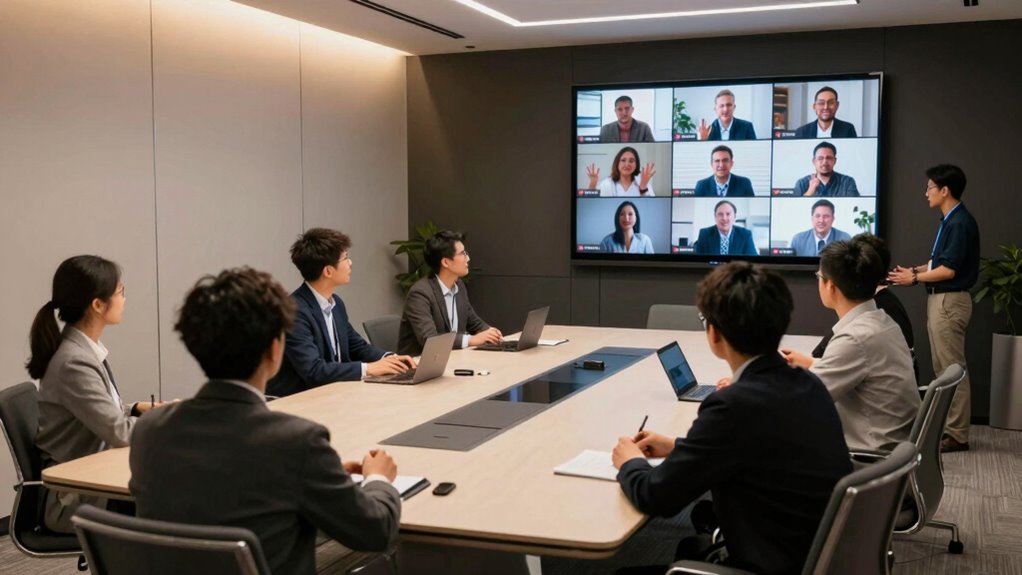

To guarantee remote participants don’t feel like second-class attendees, you should design your space and tech setup for equal engagement. Use quality cameras, microphones, and stable internet, and create clear participation guidelines. Incorporate interactive tools like polls and chat, and actively acknowledge remote voices. Foster inclusive meeting routines and gather feedback to make continuous improvements. If you want to master these strategies and create genuine inclusion, there’s more to explore beyond this.

Get business pricing on monitors, keyboards and dev gear
- Business-only prices and quantity discounts
- Tax-exempt purchasing
- Multiple users, one account, clear invoices
Key Takeaways
- Ensure equal speaking opportunities by actively inviting remote participants to share their insights.
- Use high-quality, reliable technology to provide clear audio and visuals for remote attendees.
- Incorporate interactive tools like polls, chat, and virtual breakout rooms to engage remote participants actively.
- Acknowledge and recognize contributions from remote attendees during discussions to foster inclusion.
- Design meeting agendas and schedules that consider different time zones, ensuring everyone can participate comfortably.
high quality webcam for video conferencing
As an affiliate, we earn on qualifying purchases.
As an affiliate, we earn on qualifying purchases.
Why Remote Participants Often Feel Left Out
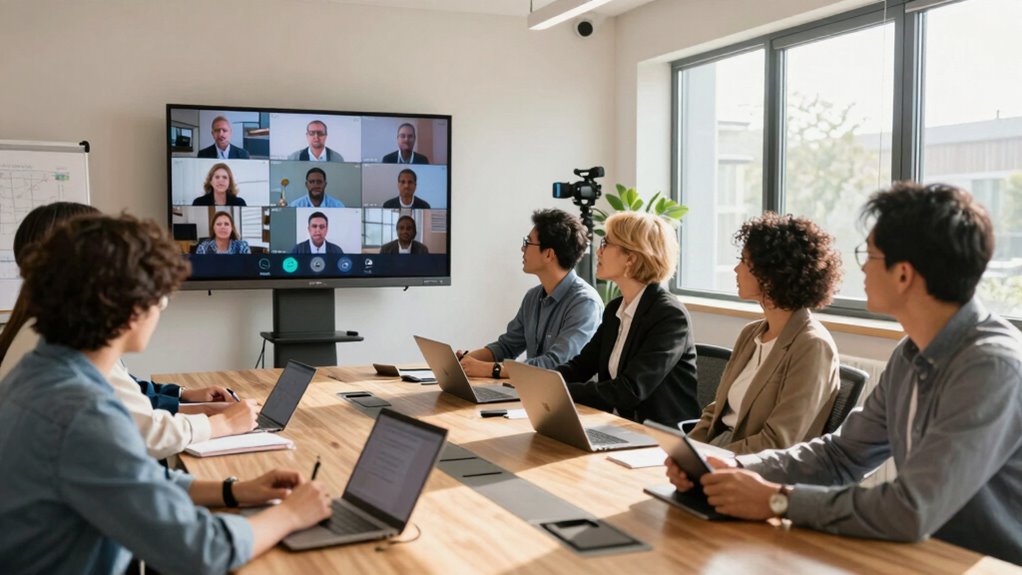
Have you ever wondered why remote participants often feel left out during meetings? It’s usually because of how the physical space layout and virtual icebreakers are handled. When the room is set up mainly for in-person attendees, remote participants can feel disconnected, overlooked, or just less engaged. Without intentional effort, they miss out on spontaneous interactions that happen in the room. Virtual icebreakers can help bridge this gap by encouraging everyone to participate equally, whether they’re in person or remote. But if the space isn’t arranged to include remote attendees—like overlooking their view or audio needs—they’ll feel excluded. Recognizing these factors helps you create a more inclusive environment, ensuring remote team members feel just as valued as those physically present. Incorporating proper technology setup can significantly enhance the experience for remote participants, especially when considering audio and visual clarity to make virtual attendees feel more connected. Additionally, paying attention to space design can foster better engagement and prevent feelings of marginalization. Ensuring the room layout accommodates cabling solutions to support clear and reliable connections is essential for seamless communication. Moreover, addressing virtual setup can further improve the overall experience by minimizing technical issues and ensuring smooth interactions.
professional microphone for meetings
As an affiliate, we earn on qualifying purchases.
As an affiliate, we earn on qualifying purchases.
Set Up Your Tech for Equal Meeting Participation
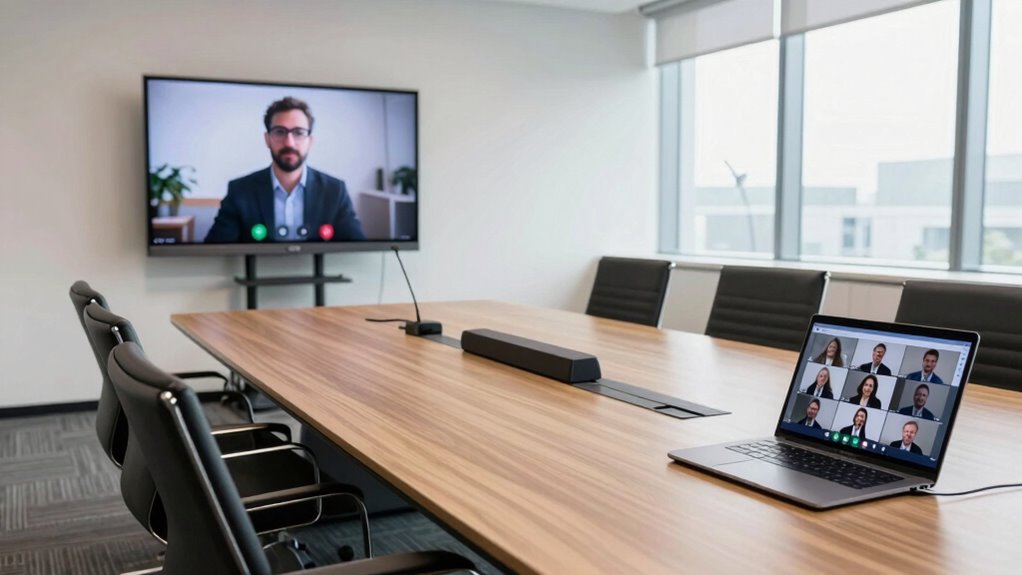
Getting your technology right is the key to guaranteeing remote participants feel just as engaged as those in the room. To do this, set up your tech for seamless virtual presence and quick tech troubleshooting. Use high-quality microphones and cameras so everyone’s voice and face are clear. Test your equipment beforehand to prevent disruptions. Keep a checklist handy for common issues like audio delays or connection drops. Here’s a quick reference:
| Equipment | Tips |
|---|---|
| Microphone | Use a good-quality mic, test sound levels. |
| Camera | Position at eye level, ensure clear view. |
| Internet | Reliable connection, consider wired if possible. |
| Speakers | Clear audio, minimal echo. |
| Backup Tech | Spare cables, extra devices for troubleshooting. |
This setup guarantees everyone feels equally included and minimizes tech hiccups. For optimal results, understanding projector image quality and how to enhance it can also contribute to a more engaging and professional meeting environment. Additionally, being aware of audio clarity and how it impacts virtual communication can significantly improve overall engagement. Ensuring a stable internet connection is essential for smooth virtual interactions and to prevent lag or disconnections. Moreover, implementing video conferencing best practices, such as proper lighting and background management, can further elevate the quality of remote participation. Incorporating proper audio setup can also make a noticeable difference in communication clarity and participant experience.
reliable internet router for remote work
As an affiliate, we earn on qualifying purchases.
As an affiliate, we earn on qualifying purchases.
Design Inclusive Meeting Structures and Protocols
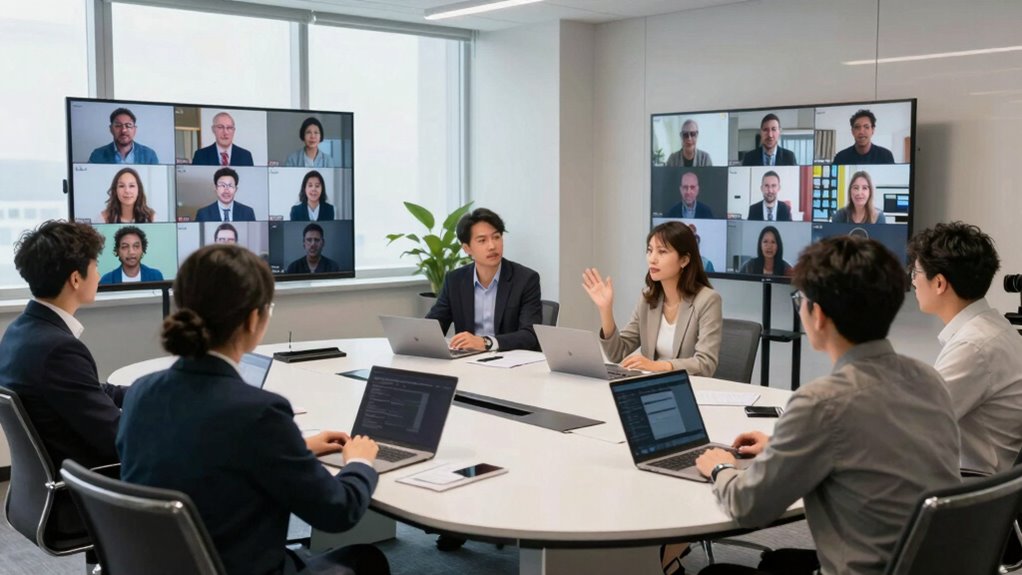
Designing inclusive meeting structures and protocols guarantees remote participants feel genuinely involved rather than sidelined. To foster effective virtual collaboration, establish clear guidelines that prioritize equal voice and participation for everyone. Use a consistent agenda, allocate specific times for remote attendees to contribute, and encourage inclusive facilitation techniques that invite input across all locations. Incorporate tools like shared documents or real-time polls to engage remote participants actively. Make sure the meeting format accommodates different time zones and minimizes distractions, so everyone can focus. Additionally, considering engagement strategies can help ensure remote attendees remain attentive and involved throughout the discussion. Incorporating visual cues and elegant decor, such as luxury wallpapers, can also set a sophisticated tone that encourages attentiveness and engagement. Recognizing the importance of sound healing science in creating a calm and focused environment, ensuring clear audio quality is vital for remote participants. By intentionally structuring meetings with inclusivity in mind, you create an environment where remote attendees feel valued and empowered to participate fully, strengthening team cohesion and ensuring no one feels like a second-class attendee. Including inclusive communication practices can further enhance engagement and ensure all voices are heard.
interactive virtual meeting tools
As an affiliate, we earn on qualifying purchases.
As an affiliate, we earn on qualifying purchases.
Engagement Techniques to Involve Everyone
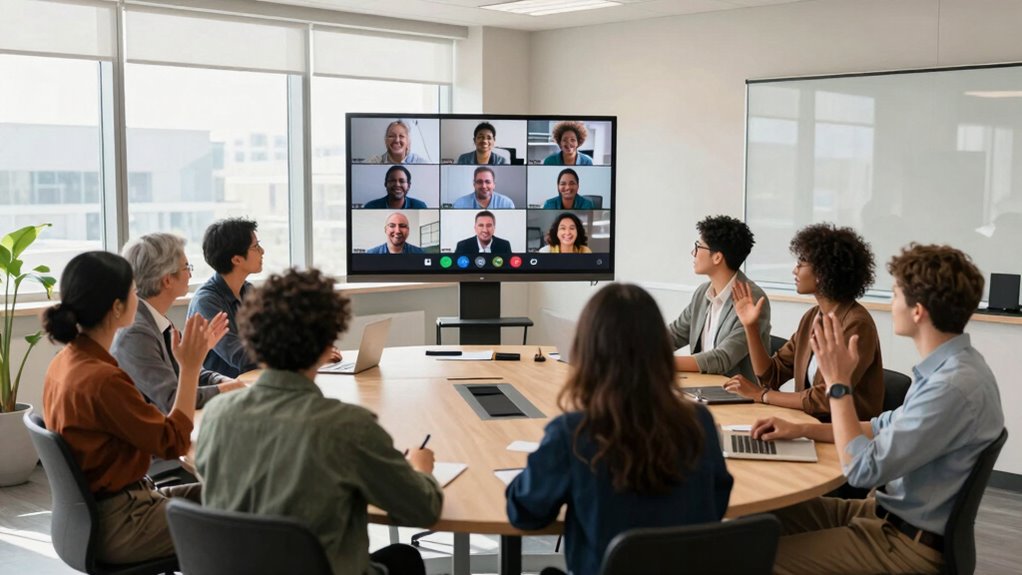
To make sure everyone stays engaged, use equal participation strategies that give remote attendees equal airtime. Incorporate interactive technology tools like polls, chat, or shared screens to foster real-time involvement. These methods help create a more inclusive environment where every voice matters. Additionally, consider discussing security and compliance to reassure participants that their contributions are protected and valued. Ensuring accessible communication can further support participation from all attendees, regardless of their location or needs. Incorporating engagement techniques can also help maintain everyone’s interest and foster a collaborative atmosphere. Using remote engagement tools can further enhance interaction and ensure no participant feels overlooked. Incorporating technology integration enhances the overall experience and keeps remote attendees actively involved.
Equal Participation Strategies
Ensuring everyone participates equally can be challenging, especially in hybrid meetings where remote attendees might feel sidelined. To promote fairness, consider these strategies:
- Start with icebreaker activities that involve both in-room and remote participants, helping everyone feel comfortable and engaged from the start.
- Use informal networking moments, like small breakout groups, to foster genuine connections among all attendees.
- During discussions, directly invite remote participants to share their thoughts, making sure they’re not overlooked or silent.
- Incorporate cultural content such as shared poetry or expressions to create a more inclusive and relatable atmosphere that resonates with diverse participants.
These techniques create a balanced environment where everyone feels valued. By actively involving all attendees through inclusive activities and direct questions, you ensure remote participants aren’t second-class, but integral to the conversation.
Interactive Technology Tools
Interactive technology tools have become essential for engaging remote participants effectively. They foster inclusion by enabling virtual networking and making sessions more dynamic. Use tools like polling apps, chat functions, and breakout rooms to encourage active involvement. Gamification strategies, such as quizzes or leaderboards, boost motivation and participation. These tools break down barriers, making remote attendees feel connected and valued. To maximize impact, select platforms with real-time interaction features that suit your session goals. Incorporate features like reaction icons or virtual hand raises to facilitate seamless communication. Here’s a quick overview:
| Tool Type | Purpose | Example Features |
|---|---|---|
| Polling & Quizzes | Gather instant feedback | Multiple-choice, live results |
| Chat & Q&A | Enable real-time conversations | Text chat, moderated Q&A |
| Breakout Rooms | Facilitate small group discussions | Random assignment, shared whiteboards |
| Virtual Networking | Promote peer connections | Speed networking, profiles |
| Gamification Strategies | Increase engagement | Leaderboards, badges |
Additionally, integrating interactive features that support inclusive participation can significantly improve remote engagement. Incorporating engagement techniques that cater to diverse communication preferences also helps ensure everyone feels involved. Implementing accessible technology ensures that participants with different needs can actively participate in sessions.
Use Tools and Features to Connect Virtual Attendees
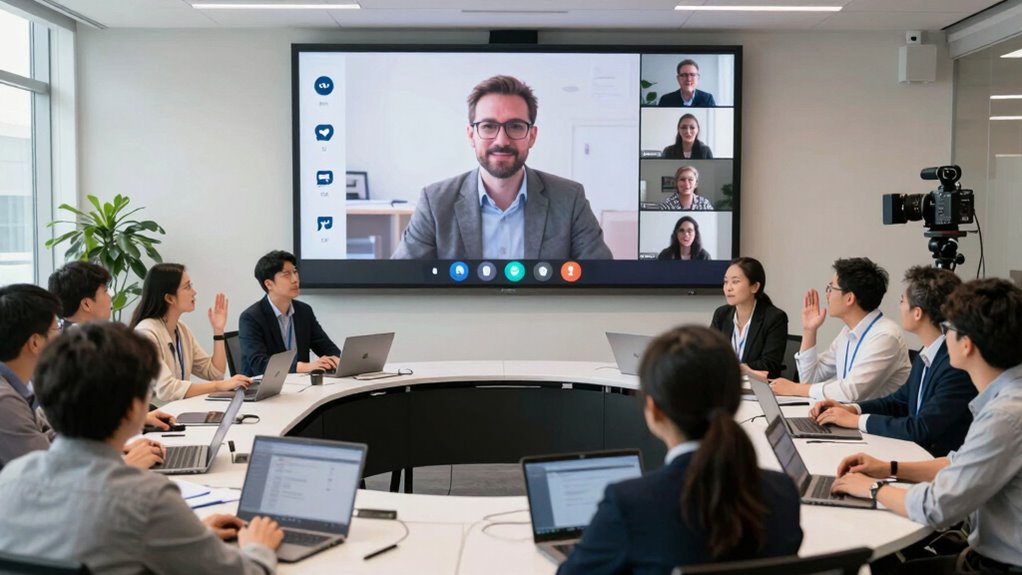
Leveraging the right tools and features is essential for making virtual attendees feel truly included. These tools facilitate virtual networking and help with tech troubleshooting, guaranteeing everyone stays connected. Imagine virtual breakout rooms where participants can chat freely, fostering personal connections. Visual aids like shared screens or interactive polls keep remote attendees engaged and part of the conversation. Real-time chat functions allow quick questions or comments, bridging the gap between in-person and virtual audiences. Additionally, using reliable platform features minimizes tech issues, making smooth transitions. By intentionally utilizing these tools, you create an environment where virtual attendees feel valued and engaged, not sidelined. Incorporating elements of golf heritage can also add a unique, engaging touch that resonates with attendees. This proactive approach guarantees that everyone can participate fully, regardless of location, and cultivates a more inclusive event experience.
Encourage Active Listening and Recognition
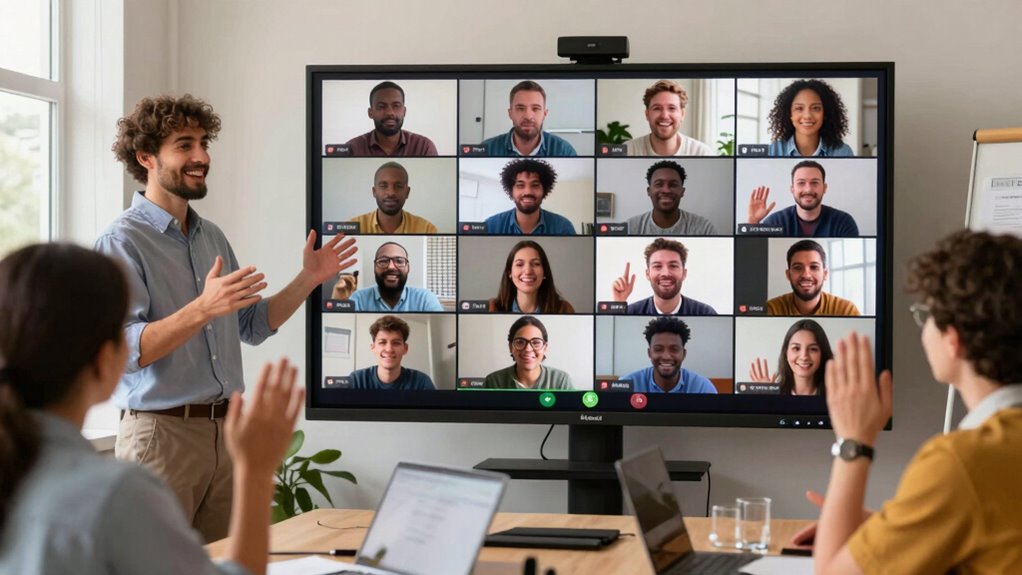
Encouraging active listening and recognition is essential for making virtual participants feel truly valued. When you focus on active listening, you show that you’re genuinely engaged with their contributions. Use recognition techniques like calling out specific insights or thanking participants for their input, which reinforces their importance. Encourage everyone to listen attentively by setting expectations at the start of the meeting and modeling good listening habits yourself. During discussions, pause to acknowledge remote attendees’ ideas, making sure they’re included in the conversation. Recognizing their efforts boosts confidence and fosters a sense of belonging. By actively listening and consistently recognizing contributions, you create an inclusive environment where remote participants feel seen, heard, and appreciated as equal members of the team.
Keep Improving With Feedback and Adjustments
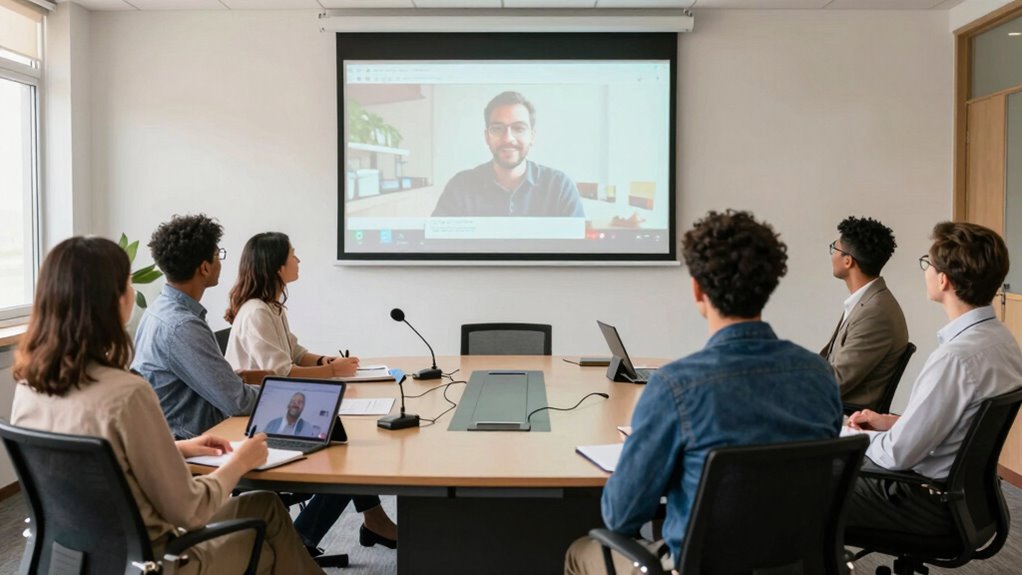
Regular check-ins give you a clear view of remote participants’ experiences, so you can identify what works and what doesn’t. By adapting your approach based on their feedback, you make meetings more inclusive and engaging. Continuous improvement shows that you value everyone’s input and are committed to better collaboration.
Regular Check-Ins
To guarantee remote participants feel valued and engaged, it’s essential to conduct consistent check-ins that invite honest feedback. Regular check-ins help you identify issues early and foster inclusivity. Start by incorporating virtual icebreakers to build rapport and ease nerves. Next, consider time zone considerations—schedule meetings at times that accommodate everyone. During check-ins, ask specific questions like:
- How do you feel about your participation today?
- Are there any barriers preventing your engagement?
- What can we do to improve your experience?
Encourage open dialogue and note suggestions for improvement. These small touches foster trust and show you genuinely care about remote attendees, making them feel less like second-class participants and more like valued team members.
Adapt Based on Input
Listening carefully to remote participants’ feedback allows you to make meaningful adjustments that enhance their experience. If they suggest more engaging virtual icebreakers or express a desire for cultural awareness, take action. Incorporate diverse virtual icebreakers that foster connection and inclusivity, making everyone feel involved. Pay attention to cultural nuances and adapt your approach to respect different backgrounds, ensuring your sessions are welcoming for all. Regularly ask for input and show you value their suggestions, which encourages ongoing participation. Adjust your methods based on feedback, whether that’s tweaking the format or adding new interactive elements. By actively responding to input, you demonstrate that remote attendees are valued equally, strengthening engagement and reducing feelings of second-class treatment.
Frequently Asked Questions
How Can I Ensure Remote Participants Have Equal Speaking Opportunities?
You can guarantee remote participants have equal speaking opportunities by practicing interactive facilitation techniques. Use direct prompts, like asking for their input first, and set clear ground rules for turn-taking. Incorporate tools like chat or polling to encourage engagement, and monitor everyone to prevent dominance by a few. This approach promotes equal participation, making remote attendees feel valued and included in the conversation.
What Are Common Technical Issues That Hinder Remote Engagement?
When remote engagement stalls, technical issues often cause the most frustration. Audio lag and connectivity disruptions are common culprits that can make participants feel out of the loop. To keep everyone on the same page, check your internet connection regularly and use reliable audio equipment. Being proactive prevents tech hiccups from becoming a stumbling block, ensuring smooth communication and keeping remote attendees engaged and feeling valued.
How Do I Handle Time Zone Differences Effectively?
You handle time zone differences by prioritizing time zone coordination, scheduling meetings at inclusive times, and offering asynchronous updates. Use shared calendars to identify overlapping working hours and rotate meeting times to accommodate everyone. Record sessions for those who can’t attend live, and share detailed summaries afterward. This approach guarantees remote participants feel valued and engaged, no matter their location, fostering a more inclusive and collaborative environment.
What Are Best Practices for Virtual Icebreakers?
You should incorporate virtual mingling by using engaging icebreaker games that encourage participation from everyone. Start with simple, inclusive activities like two truths and a lie or virtual bingo, which help break the ice and foster connections. Keep the energy light and fun, and guarantee remote attendees have equal opportunity to share and participate. This approach creates a welcoming atmosphere, making all attendees feel valued and engaged.
How Can Leadership Demonstrate Commitment to Inclusive Meetings?
You can demonstrate your commitment to inclusive meetings by consistently using inclusive language and ensuring accessibility tools are available to all participants. Actively encourage diverse voices and make space for remote attendees to contribute. Use captions, transcripts, and screen readers to enhance accessibility. Show genuine interest in everyone’s input, and regularly ask for feedback on how to improve inclusivity, creating a welcoming environment for all, regardless of location.
Conclusion
By embracing these strategies, you can create a meeting environment where every voice matters, turning the digital divide into a bridge of inclusion. Remember, when remote participants feel genuinely connected, they become woven into the fabric of your team rather than standing on the sidelines. Like a symphony, a well-coordinated meeting harmonizes all voices, making collaboration truly resonate. Keep refining your approach, and watch your meetings transform into spaces of unity and shared purpose.
Fall Picks
fall essentials
As an affiliate, we earn on qualifying purchases.