
TL;DR

Get business pricing on monitors, keyboards and dev gear
- Business-only prices and quantity discounts
- Tax-exempt purchasing
- Multiple users, one account, clear invoices
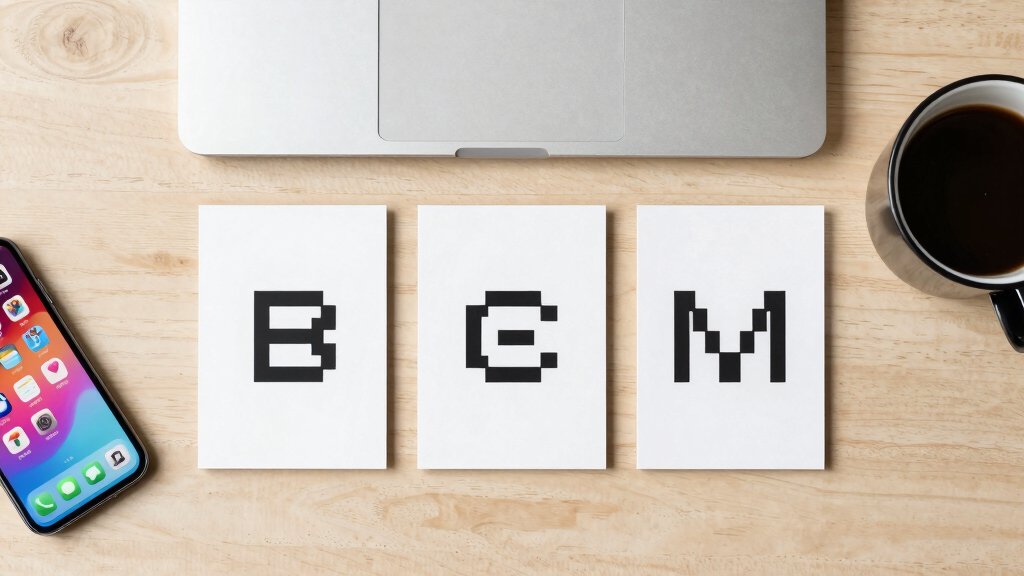
Several modern pixel fonts have been introduced, blending nostalgia with functionality. Notable examples include Analog Mono, Coral Pixels, Two Slice, and Geist Pixel, each addressing common issues in pixel typography.
Recent releases of several modern pixel fonts demonstrate a focus on both aesthetic nostalgia and practical usability, addressing longstanding issues in pixel typography design.
Andrew Gleeson designed Analog Mono to correct common issues found in classic pixel fonts, such as low baselines that pull down descenders, making the text more legible. Coral Pixels, created by Kumiko Yoshida and available on Google Fonts, introduces colorful fringing reminiscent of 1990s and 2000s digital artifacts, serving both nostalgic and visual purposes. Joseph Fatula’s Two Slice is a minimalistic font only two pixels tall, offering a somewhat readable option for ultra-low-resolution contexts.
Most notably, Vercel’s Geist Pixel is positioned as a functional system extension rather than a mere decorative font. According to Vercel, it was designed to address common production issues with pixel fonts, such as scaling problems, metric conflicts, and integration challenges, ensuring that the font maintains visual texture while adhering to typographic standards.
Why It Matters
This development matters because it signals a shift towards creating pixel fonts that are not only visually appealing but also practically usable in modern digital environments. As pixel fonts often face issues like poor scalability and inconsistent metrics, Geist Pixel’s approach could influence future font design, making pixel typography more reliable in production settings.
As an affiliate, we earn on qualifying purchases.
Background
Pixel fonts gained popularity in the 1990s, primarily on hardware like VCRs, TVs, and early computer interfaces. Over time, their use in digital design became more decorative than functional due to scaling and compatibility issues. Recent efforts by designers like Gleeson, Yoshida, Fatula, and Vercel aim to revive and adapt pixel fonts for modern use, balancing nostalgia with technical rigor.
“Analog Mono fixes the crimes of VCR OSD Mono, especially the low baseline issue that pulls down descenders.”
— Andrew Gleeson
“Coral Pixels incorporates colorful fringing to evoke nostalgia and add visual interest.”
— Kumiko Yoshida
“Geist Pixel isn’t a novelty font but a system extension designed for real usage, solving scaling and metric conflicts.”
— Vercel team
modern pixel fonts for designers
As an affiliate, we earn on qualifying purchases.
As an affiliate, we earn on qualifying purchases.
What Remains Unclear
It is not yet clear how widely adopted these fonts will become in production environments or whether they will influence broader font design standards. The long-term impact of Geist Pixel on typographic workflows remains to be seen.
As an affiliate, we earn on qualifying purchases.
What’s Next
Further development and testing of these fonts in real-world applications are expected. Vercel and other developers may release updates or new fonts addressing emerging needs, while industry adoption will determine their influence on digital typography.
pixel font family for digital projects
As an affiliate, we earn on qualifying purchases.
As an affiliate, we earn on qualifying purchases.
Key Questions
What makes Geist Pixel different from other pixel fonts?
According to Vercel, Geist Pixel is designed as a system extension focused on practical use, addressing common issues like scaling, metrics, and compatibility, rather than just visual style.
Are these fonts suitable for web or app development?
Yes, especially Geist Pixel, which is built with production use in mind. The others are primarily designed for aesthetic or nostalgic purposes but can be adapted for digital interfaces.
Will these fonts be compatible with all operating systems?
As vector fonts, they are intended to be installable on modern operating systems, but compatibility may depend on specific platform support and rendering engines.
Can these fonts be used in professional design projects?
Yes, particularly Geist Pixel, which aims to meet typographic standards for production. The others are more experimental or stylistic but can be incorporated into various projects.
Source: Hacker News
Halloween Picks
halloween
As an affiliate, we earn on qualifying purchases.