

Design thinking and systems thinking are actually allies, not foes. As you explore challenges, design thinking helps you focus on human needs through quick prototyping and iteration, while systems thinking guides you to see the bigger picture and understand interconnections. Combining these approaches allows you to develop innovative, sustainable solutions that are both creative and systemic. Keep exploring, and you’ll discover how these methods work together to open smarter problem-solving strategies.
Listen free for 30 days with Audible
Thousands of audiobooks and originals — cancel anytime.
As an affiliate, we earn on qualifying purchases.
Key Takeaways
- Both prioritize iterative processes, fostering continuous refinement and learning in problem-solving.
- Design thinking emphasizes empathy and human-centered innovation, while systems thinking focuses on understanding interconnected system components.
- Combining both approaches uncovers holistic insights and fosters innovative, sustainable solutions.
- Cross-disciplinary collaboration and stakeholder engagement enhance the effectiveness of integrating these methods.
- Together, they enable quick adaptation and comprehensive understanding of complex challenges.
As an affiliate, we earn on qualifying purchases.
Exploring the Core Principles of Design and Systems Thinking
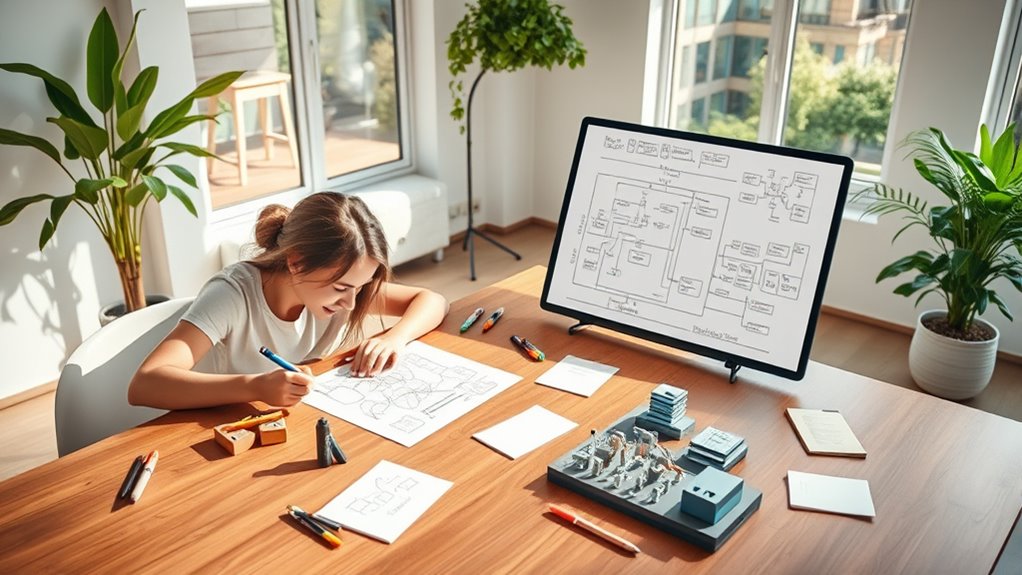
Understanding the core principles of design and systems thinking reveals how each approach tackles complex problems. Both prioritize iterative processes, encouraging continuous refinement through testing and feedback, which helps you adapt solutions effectively. Design thinking emphasizes empathy and human-centered innovation, engaging stakeholders early and often to understand their needs deeply. It promotes rapid prototyping and experimentation, allowing you to learn quickly and improve ideas. Systems thinking, on the other hand, focuses on understanding the bigger picture by analyzing interconnections within a system, recognizing how different elements influence one another. It involves engaging stakeholders to gain diverse perspectives and map complex relationships. Both approaches foster collaboration and learning, but they differ in scope and methodology, offering complementary ways to address intricate challenges.
As an affiliate, we earn on qualifying purchases.
How Each Approach Addresses Complex Challenges
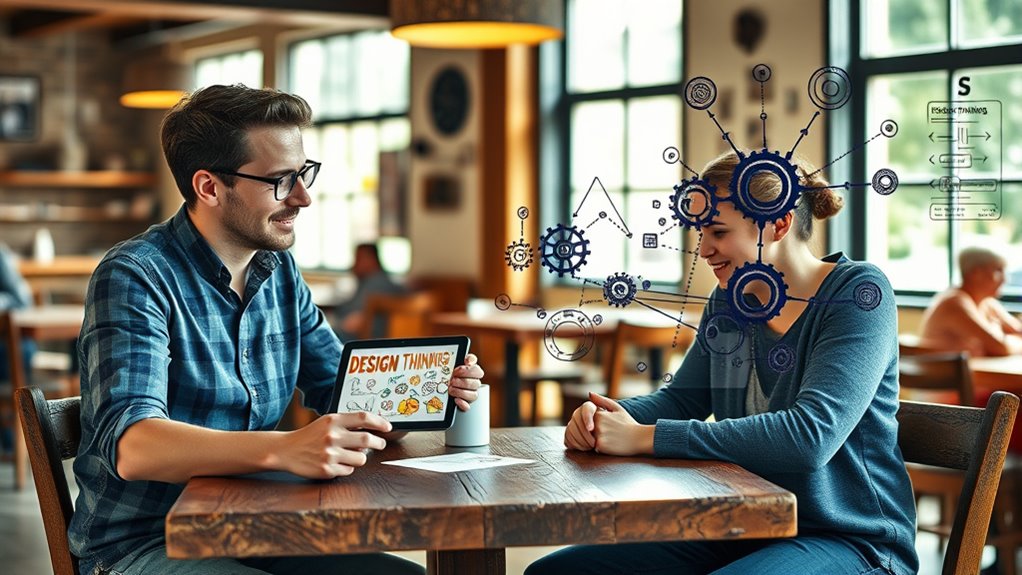
When tackling complex challenges, design and systems thinking offer distinct strengths that can be leveraged effectively. Design thinking emphasizes iterative innovation, encouraging you to test ideas quickly, learn from failures, and refine solutions through repeated cycles. This approach fosters creative problem-solving and user-centered insights. In contrast, systems thinking promotes holistic analysis, helping you see the bigger picture by understanding interconnected components and patterns within the system. It enables you to identify root causes and anticipate ripple effects of your actions. By combining these approaches, you can adapt quickly through iterative innovation while maintaining an all-encompassing view of the system’s dynamics. A thorough understanding of analytical thinking can further enhance your ability to assess complex situations comprehensively. Together, they provide a balanced framework for addressing complexity—driving sustainable, innovative solutions that are both practical and deeply informed.
As an affiliate, we earn on qualifying purchases.
Synergizing Creativity and Systemic Insight

By integrating creativity with systemic insight, you can develop solutions that are both innovative and deeply grounded in the complexities of the problem. This synergy enhances collaborative innovation, allowing diverse perspectives to inform and refine ideas. When you combine creative thinking with holistic analysis, you see the bigger picture, recognizing interdependencies and emergent patterns. It encourages you to challenge assumptions and explore unconventional solutions within a thorough framework. This approach fosters an environment where inventive ideas are tested against systemic realities, increasing their viability. For example, understanding system dynamics can help you anticipate how different elements interact over time. By uniting these two mindsets, you create a dynamic process that harnesses the strengths of both, leading to more adaptable, sustainable, and impactful outcomes. Ultimately, this synergy helps you navigate complexity with confidence and clarity.
As an affiliate, we earn on qualifying purchases.
Practical Examples of Integrated Problem-Solving

Real-world examples of integrated problem-solving demonstrate how combining design thinking and systems thinking leads to more effective solutions. In urban planning, teams use stakeholder engagement to gather diverse perspectives, ensuring solutions meet community needs. They apply iterative refinement, testing small changes and continuously improving based on feedback. This approach helps identify root causes and address interconnected issues holistically. Similarly, in healthcare, organizations redesign patient care pathways by involving staff and patients in the process. They prototype solutions, analyze systemic impacts, and refine strategies through multiple cycles. Considering systemic interactions can further enhance the effectiveness of these strategies. These examples highlight that integrating both approaches fosters a deeper understanding of complex problems. By engaging stakeholders and embracing iterative refinement, you develop innovative, sustainable solutions that truly address the underlying system dynamics.
Strategies for Merging Design and Systems Perspectives

To effectively merge design and systems perspectives, you need to establish a shared understanding of both approaches and create strategies that leverage their strengths. Embracing cross-disciplinary approaches helps break down silos, fostering collaboration among diverse teams. Use iterative processes to refine solutions continuously, allowing insights from both design thinking and systems thinking to inform each cycle. Encourage open communication, ensuring everyone’s perspective is considered and integrated into the problem-solving process. Develop flexible frameworks that accommodate the dynamic nature of complex challenges. Recognizing the importance of bedroom design principles can also enhance the overall effectiveness of your strategy. By aligning goals and methodologies, you create a synergy that enhances innovation and effectiveness. Ultimately, combining these strategies leads to more holistic solutions that address both user needs and systemic factors, turning potential conflicts into powerful complementarities.
Frequently Asked Questions
How Do Design and Systems Thinking Influence Organizational Culture?
You influence organizational culture by embracing design and systems thinking, which foster collaborative innovation and drive cultural transformation. These approaches encourage open communication, diverse perspectives, and iterative problem-solving, creating a more adaptable and inclusive environment. As you adopt these methods, you help break down silos, promote shared goals, and build a culture that values continuous improvement, ultimately leading to a more resilient and innovative organization.
Can These Approaches Be Applied Effectively in Small-Scale Projects?
You might wonder if these approaches work in small projects, especially when facing scaling challenges and resource constraints. The good news is, both design and systems thinking are flexible and can be tailored to fit tight budgets and limited scope. They help you understand complex issues and foster innovative solutions, making them highly effective even on a small scale. With focused effort, you can leverage these methods to deliver impactful results.
What Are Common Pitfalls When Integrating Both Methodologies?
When integrating both methodologies, you often encounter pitfalls like overlapping assumptions that cause confusion and siloed implementation, which hampers collaboration. You might focus too much on one approach, neglecting the other’s strengths. To avoid this, communicate clearly, align goals, and break down silos. By doing so, you guarantee the combined methods complement each other, fostering innovative solutions and more effective project outcomes.
How Do They Impact Stakeholder Engagement and Communication?
Imagine your stakeholder communication becomes clearer when you blend design and systems thinking. By applying engagement strategies that consider both human-centered design and systemic perspectives, you foster deeper understanding and collaboration. This integrated approach helps you identify stakeholder needs more effectively, address concerns proactively, and build trust. Your efforts lead to more meaningful engagement, making your projects smoother and your solutions more sustainable, all through the power of combined thinking methods.
Are There Specific Industries Where One Approach Is Preferred Over the Other?
You might find that industry-specific applications influence your approach. For example, in healthcare, systems thinking helps you understand complex patient care networks, while in tech startups, design thinking accelerates innovation and user-centered solutions. Sector preferences vary; manufacturing may favor systems thinking for process optimization, whereas marketing leans toward design thinking for creative campaigns. Recognizing these industry nuances allows you to choose the most effective approach for your unique challenges.
Conclusion
So, why choose between design thinking and systems thinking when you can blend their strengths? By integrating creativity with systemic insight, you unleash innovative solutions to complex challenges. Imagine approaching problems with both a human-centered focus and a holistic view—doesn’t that sound like the best way to create meaningful change? Embrace both perspectives, and you’ll discover a powerful toolkit that turns obstacles into opportunities for growth and innovation.
NFL season / tailgating Picks
team gear
As an affiliate, we earn on qualifying purchases.