📊 Full opportunity report: How Schools Can Use Job Simulations To Support Career Choices on IdeaNavigator AI — validation score, market gap, and execution plan.

Get business pricing on monitors, keyboards and dev gear
- Business-only prices and quantity discounts
- Tax-exempt purchasing
- Multiple users, one account, clear invoices
TL;DR
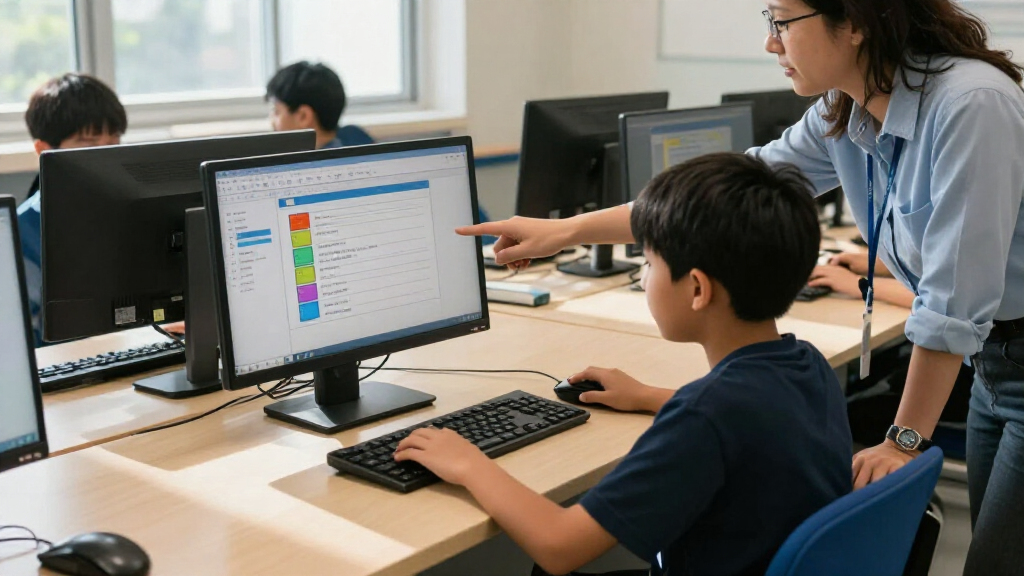
A proposal from IdeaNavigator AI recommends that Indiana districts test employer-reviewed job simulations as a way to expand work-based learning and help students explore careers. The approach is not a confirmed state program: districts would need to pilot simulations and establish whether the hours qualify under diploma requirements.
IdeaNavigator AI has proposed that Indiana school districts test employer-reviewed job simulations to give students career exposure and potentially document work-based-learning hours. The suggested pilot would focus on career and technical education or work-based-learning coordinators, but it is a proposal—not a state-approved program—and whether simulation hours qualify would need to be confirmed by districts and state officials. The proposal is described in IdeaNavigator AI’s student job simulations concept.
According to IdeaNavigator AI’s proposal, the first test would be a one-semester pilot in three Indiana districts that opted into the state’s new diploma early. Each district would offer five simulations, with a local employer reviewing student work through a short live or asynchronous check-in. The proposal recommends tracking student completion, hours accepted toward diploma seals, and whether coordinators would allocate money for the following school year.
If the pilot shows promise, the proposal envisions a larger product with 20 role-specific simulations built around real work tasks and files. Examples listed include medical assistant, HVAC technician, bookkeeper, logistics coordinator and paralegal. Coordinators would receive hour logs, rubric scores and an exportable training plan; paid customization with local employers is suggested as an add-on to an annual district license.
IdeaNavigator AI says the concept addresses two linked constraints: districts may have difficulty finding enough employers to host teenagers, particularly in rural communities and white-collar fields, while students can make education and training choices with little direct experience of the work. The proposal presents simulations as a possible supplement to placements, not proof that students can replace workplace experience with online activities.
How Schools Can Use Job Simulations to Support Career Choices
IdeaNavigator AI proposes a district pilot of employer-reviewed job simulations. The proposal could expand career exploration, but diploma-hour approval remains unconfirmed.
What students and districts could gain
The proposal frames simulations as a supplement to workplace placements, especially where employer access is limited.
Try real work tasks
Explore careers before choosing a major, apprenticeship, or diploma pathway.
Reach more learners
Offer career exposure where local placements are hard to find, including rural communities.
Track learning hours
Use hour logs, rubric scores, and an exportable training plan to support documentation.
How the proposed pilot would work
Each participating district would test simulations with local employer review.
Students complete role-specific activities built around realistic work tasks and files.
A local employer checks the work through a short live or asynchronous interaction.
Districts track completion, accepted diploma-seal hours, and coordinator interest in budgeting for another year.
Career roles in the concept
The proposed larger product would include 20 role-specific simulations.
What must be confirmed
Documentation tools can support a process, but do not establish that simulation hours qualify.
- Indiana diploma seals have work-based-learning hour requirements.
- The proposal says qualifying experiences may include simulations.
- Employer interaction could help connect tasks to industry professionals.
- Which state or district authority approves hours?
- What employer interaction and evidence are sufficient?
- Will the activities meet district workflows and budget needs?
Testing a Route to More Career Exposure
For students, carefully designed simulations could offer a structured chance to try job tasks before choosing a major, apprenticeship or diploma pathway. For districts, they may help reach students who cannot access a local placement and reduce the administrative work of arranging placements and recording hours. These are potential outcomes identified by IdeaNavigator AI’s proposal; the suggested pilot is intended to test them rather than assume them.
The practical question is whether students’ work would meet state and district rules for qualifying work-based learning. IdeaNavigator AI’s proposal describes Indiana’s definition as calling for sustained interaction with industry professionals. That is why the proposed employer review matters: a self-paced video or standalone digital activity may not meet the same standard. If hours are not accepted, a simulation could still support career exploration, but it would not solve the diploma-hour requirement.
For school leaders, the test also has a budget implication. A district would need evidence that students complete the activities, that hours are approved and that the workflow saves staff time or expands access before committing to a recurring license. The measures proposed by IdeaNavigator AI connect educational value to the decisions coordinators and district administrators would face.
Popular right now

Dyson Airsmooth Styling Brush

De'Longhi Magnifica Start Fully Automatic Espresso Machine with Milk Frother, Silver

Shark AI Ultra Robot Vacuum with Matrix Clean Navigation, Self-Empty Base, HEPA Filtration, Pet Hair Friendly, Wi‑Fi, Dark Grey
As an affiliate, we earn on qualifying purchases.
Indiana’s Diploma and Work-Based Learning
Indiana approved a new diploma in December 2024, with requirements applying to the class of 2029 and districts able to opt in beginning in the 2025–26 school year. IdeaNavigator AI’s account says two diploma seals require 75 or 150 hours of work-based learning and that qualifying experiences may include simulations. That wording leaves room for simulation-based hours, but it does not establish that any particular product or activity will be accepted.
IdeaNavigator AI also says Indiana launched a Digital Resource Hub on October 6, 2026, including a training-plan template for students in qualifying work-based learning. The proposed simulation platform would export information in that format. A template can help with documentation, but using it would not by itself confirm that an experience meets the state’s substantive requirements.
Whether Simulated Hours Will Count
No district pilot results are provided in IdeaNavigator AI’s proposal, and it does not identify districts that have agreed to participate. The proposal also does not specify which state or district authority would make the final decision on whether hours from each simulation count toward a diploma seal, or what evidence of employer interaction would be sufficient.
The proposal gives no measured completion rates, accepted-hour totals, pricing, or evidence that a license would reduce coordinators’ workloads. It also does not establish whether employers would be available to review student work regularly. These are questions for a pilot, not confirmed outcomes, and approval could depend on the design of each simulation and how it is supervised.
A District Pilot Would Test the Model
IdeaNavigator AI proposes approaching three early-adopting Indiana districts with a free, one-semester trial of five simulations, each reviewed by a local employer. Districts would then assess completion, the hours accepted toward seals and the coordinator’s willingness to budget for another year. The proposal identifies no launch date or participating districts.
Before students rely on the hours for diploma progress, districts would need to confirm the approval process with the relevant state and local officials. A pilot could also reveal whether the employer check-ins are practical, whether the training-plan export fits district workflows and which career tasks are appropriate for simulation. Until those results are available, the concept remains a proposed way to extend career exploration and potentially document qualifying learning—not a confirmed substitute for employer placements.
Source: IdeaNavigator AI
Key Questions
Are Indiana schools already using this proposed simulation program?
The information available describes a proposal and a suggested pilot, not a confirmed program or list of participating districts.
Could job simulations count toward Indiana diploma hours?
The proposal says two diploma seals require 75 or 150 work-based-learning hours and that qualifying experiences may include simulations. Whether a particular simulation counts would need to be confirmed with the relevant state and district authorities.
What would students do in a job simulation?
The proposed activities would use realistic task files for roles such as medical assistant, HVAC technician, bookkeeper, logistics coordinator or paralegal. A local employer would review student work in a short live or asynchronous check-in.
How would a pilot be evaluated?
The suggested measures are student completion rates, the number of hours districts accept toward diploma seals, and whether coordinators commit budget for the next school year. The proposal reports no results yet.
Source: IdeaNavigator AI