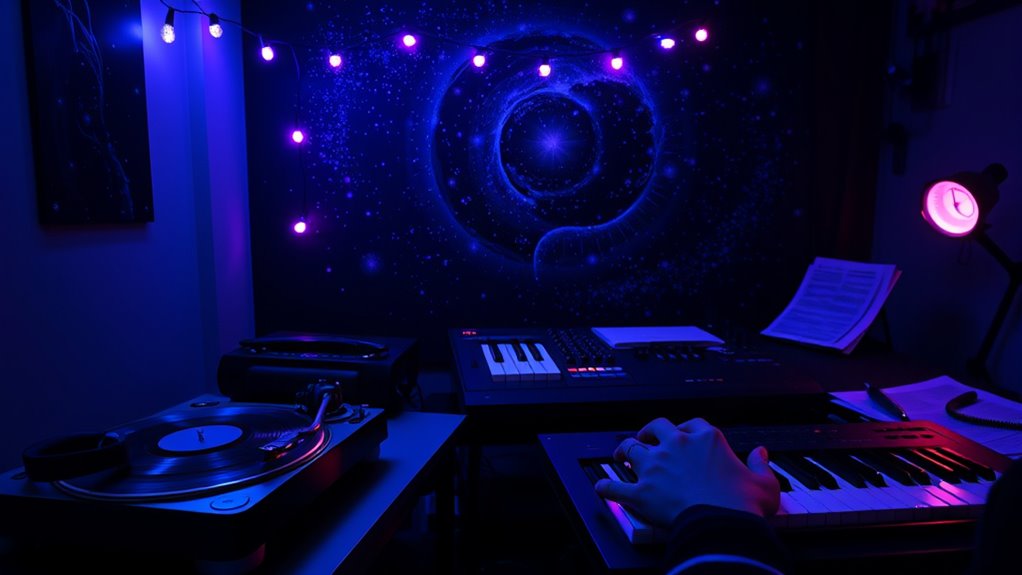

To spark your creativity, create a workspace that combines calming ambient sounds like nature or instrumental music with a clutter-free, well-lit environment. Use natural light and add inspiring touches like plants or artwork to boost mood. Choose sounds and space elements that promote focus and relaxation, helping you stay energized and clear-minded. Keep exploring tips and tricks to craft the perfect creative setting that works for you.

Get business pricing on monitors, keyboards and dev gear
- Business-only prices and quantity discounts
- Tax-exempt purchasing
- Multiple users, one account, clear invoices
Key Takeaways
- Incorporate ambient sounds like nature or minimalist music to create a calming sonic backdrop that enhances focus.
- Design a clutter-free, organized workspace with natural elements and inspiring decor to boost comfort and creativity.
- Use appropriate lighting, combining natural light with calming hues, to improve mood and mental clarity.
- Arrange ergonomic furniture to promote longer, comfortable work sessions and reduce physical distractions.
- Personalize your environment with artwork, plants, or meaningful objects to foster inspiration and a sense of well-being.

Creating the right environment can substantially boost your creative flow, and two powerful tools for achieving this are music and space. When you pay attention to ambient sounds and workspace design, you set the stage for inspiration to flourish. Ambient sounds, like gentle rain, soft wind, or calming instrumental music, can drown out distracting noise and help you focus. These sounds create a sonic backdrop that fosters concentration, making it easier for your mind to plunge into creative tasks without feeling overwhelmed. Experimenting with different ambient tracks allows you to discover what best supports your mood—some might find nature sounds invigorating, while others prefer minimalist melodies that don’t demand too much attention. Incorporating these sounds into your workspace can subtly influence your mental state, promoting a sense of calm and clarity that’s essential for creative thinking. Additionally, choosing appropriate lighting can enhance your mood and energy, further supporting your creative endeavors. Your workspace design plays an equally vital role in setting the mood. A clutter-free, well-organized environment reduces visual distractions and helps you stay on track. Choose a workspace with good natural light, as it boosts your mood and energy levels, making it easier to stay engaged with your projects. Incorporate elements that inspire you, such as artwork, plants, or personal objects, to make the space feel inviting and uniquely yours. The arrangement of your furniture also impacts your mindset; a comfortable chair and an ergonomic desk encourage longer, more productive sessions. Consider the colors you use, too—calming hues like blues and greens can promote relaxation, while brighter tones may energize your mind. The goal is to craft a space that minimizes stress and maximizes focus, making it easier for your creative ideas to flow freely.
As an affiliate, we earn on qualifying purchases.
Frequently Asked Questions
How Does Ambient Lighting Influence Creative Thinking?
Ambient lighting influences your creative thinking by creating lighting effects that boost your mood and focus. When you choose softer, warmer lights, they enhance your mood, making you more open to new ideas. Bright, cool lighting can energize you and stimulate your thinking. By carefully selecting lighting effects, you set an environment that encourages creativity and helps you stay engaged and inspired in your work.
Can Specific Colors Boost Productivity in Creative Spaces?
Yes, specific colors can boost productivity in creative spaces through color psychology and visual stimuli. Bright hues like yellow stimulate optimism and energy, while blue promotes focus and calmness. By carefully selecting colors that align with your creative goals, you influence your mood and motivation. Incorporating these colors into your environment enhances visual stimuli, making it easier to stay inspired and productive during creative tasks.
What Are the Best Types of Music for Brainstorming Sessions?
Ever wonder what music sparks your best ideas? You should try instrumental genres like classical, ambient, or jazz to minimize distractions and enhance focus during brainstorming sessions. Background noise, like gentle melodies or soft electronic beats, creates a calming environment that boosts creativity. Do you notice how these sounds help your thoughts flow more freely? Playing the right instrumental music can transform your session into a productive and innovative experience.
How Does Personalizing a Creative Space Impact Motivation?
Personalizing your creative space with decor that resonates with you boosts motivation by creating a motivational ambiance. When you add personal touches, like meaningful artwork or favorite colors, you feel more connected and inspired. This sense of ownership encourages you to stay engaged and productive. A personalized environment makes your workspace inviting and energizing, fueling your creativity and pushing you to achieve your best work every time you sit down to brainstorm.
Are There Cultural Considerations When Designing Creative Environments?
You definitely need to consider cultural symbolism and design authenticity when creating a space. Ignoring these can turn your environment into a bland, cookie-cutter room that feels more like a border crossing than a creative haven. Embrace cultural symbolism to inspire genuine connection, and prioritize authentic design elements. This way, your space resonates deeply, fueling your creativity and respecting diverse backgrounds, making every project feel more meaningful.
As an affiliate, we earn on qualifying purchases.
Conclusion
So, next time you’re stuck, just blast some tunes and rearrange your space. Who knew that a little music and a fresh setup could unleash your genius? Or maybe it’s just a clever way to avoid actually doing work? Either way, setting the mood isn’t about creativity—it’s about convincing yourself you’re working while secretly daydreaming. So go ahead, turn up that volume and pretend you’re a visionary—until reality calls, of course.
As an affiliate, we earn on qualifying purchases.
As an affiliate, we earn on qualifying purchases.
Halloween Picks
halloween
As an affiliate, we earn on qualifying purchases.