
📊 Full opportunity report: A Practical Guide To Photographing Eczema And Psoriasis Flares on IdeaNavigator AI — validation score, market gap, and execution plan.

Get business pricing on monitors, keyboards and dev gear
- Business-only prices and quantity discounts
- Tax-exempt purchasing
- Multiple users, one account, clear invoices
TL;DR
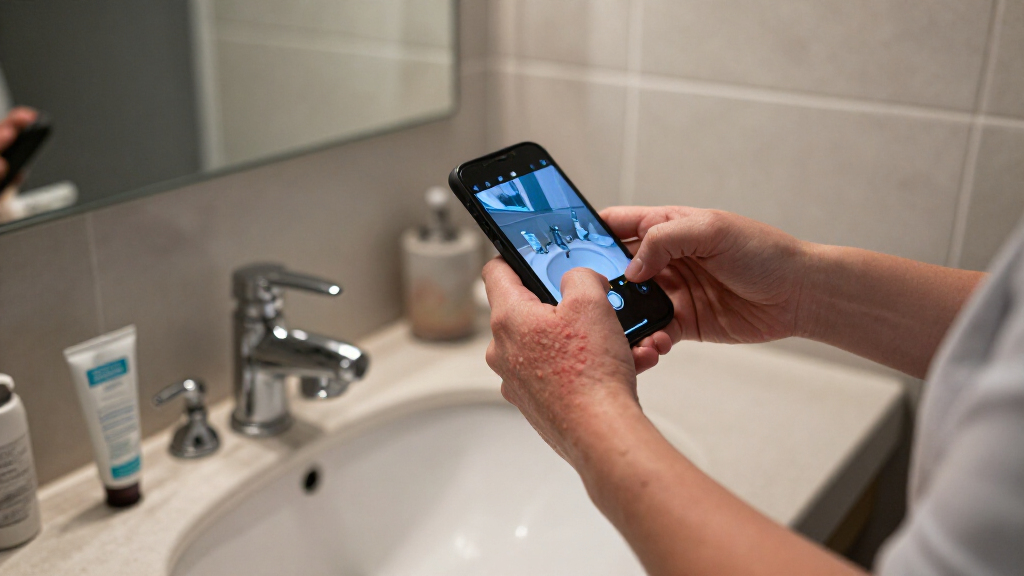
IdeaNavigator AI proposes a weekly photo journal for adults with eczema or psoriasis to record flare images and possible triggers between appointments. The concept has not been tested; the proposal suggests a pilot with 15 people with eczema for one month and asks dermatologists whether the records affected visits.
IdeaNavigator AI has proposed a weekly photo journal for adults with eczema or psoriasis to record flare images and possible triggers between dermatology appointments. In its online proposal, IdeaNavigator AI says the concept aims to give patients and clinicians a dated visual record to discuss. It has not been tested, and the proposal reports no product launch or clinical benefit.
In its proposal, IdeaNavigator AI describes a minimum version that would prompt users to take a photo each week using consistent framing and lighting guidance. Each entry would carry a date and a note about potential triggers, creating a side-by-side timeline of skin changes over time. The proposal does not specify how the app would protect sensitive images or how users would control access to them.
IdeaNavigator AI identifies a common challenge as recalling when a flare began, what may have preceded it, or whether treatment seems to be helping by the time someone sees a dermatologist. The proposal suggests a dated image record could add detail to that conversation, but offers no evidence that it improves diagnosis, treatment decisions, or health outcomes.
The proposal describes a possible subscription offering with unlimited history, image exports, and a visit-preparation summary PDF. To test demand and usefulness, IdeaNavigator AI suggests recruiting 15 people with eczema to log weekly photos for one month, then asking their dermatologists whether the timeline changed the visit and measuring participants’ willingness to pay.
A Record Between Dermatology Visits
A flare journal could address a practical gap between appointments: patients may be asked to describe changes that occurred weeks earlier, while the clinician has limited time and may not have seen the skin during that period. The proposal argues that consistent photographs could offer a dated record for discussion, rather than relying only on recollection.
That potential should not be confused with demonstrated medical value. Photos taken at different distances, under different lighting, or at different stages of a flare can be hard to compare. The prompts described by IdeaNavigator AI seek to make capture more consistent, but whether that consistency would affect care is what the suggested pilot would need to examine. The concept also raises a privacy concern because skin images and notes about health are sensitive personal information.
smartphone skin condition photography kit
As an affiliate, we earn on qualifying purchases.
As an affiliate, we earn on qualifying purchases.
From Phone Photos to Visit Records
IdeaNavigator AI frames the idea for adults managing chronic skin conditions between dermatology visits, not as a diagnostic tool or a replacement for clinical care. Its proposal points to phones’ ability to take and store dated photographs and to the possibility of patients sharing progress images during teledermatology appointments. It does not cite a clinic, medical association, or telehealth provider endorsing the proposed workflow.
The proposal focuses on a narrow first version: weekly capture, guidance on framing and lighting, a timeline, and a trigger note. It also identifies exports and a visit-preparation PDF as possible paid features. These are product suggestions, not reported features of an existing named service; the proposal provides no pricing, security design, or development schedule.
consistent lighting photo app for eczema
As an affiliate, we earn on qualifying purchases.
As an affiliate, we earn on qualifying purchases.
Evidence, Privacy and Pilot Details
No study results are reported in IdeaNavigator AI’s proposal, which does not say that patients or dermatologists have evaluated the concept. The suggested one-month test would involve 15 people with eczema; the proposal does not say whether a comparable test is planned for psoriasis, how participants would be recruited, or what criteria would determine whether the journal changed a visit.
Other open questions include whether weekly images are frequent enough to capture short-lived changes, whether users can reliably reproduce lighting and framing, and how the tool would handle different body areas or skin tones. IdeaNavigator AI does not describe data storage, encryption, retention, deletion, clinician access, or whether images would be used beyond a patient’s own record. Claims of clinical effectiveness or privacy safeguards cannot be assessed from the proposal.
As an affiliate, we earn on qualifying purchases.
Testing the Weekly Photo Workflow
IdeaNavigator AI describes a small feasibility test as the next step: recruit 15 adults with eczema, ask them to record photos weekly for one month, and seek feedback from their dermatologists about whether the timeline changed the appointment. The proposal also calls for measuring willingness to pay for unlimited history, exports, and a visit summary.
The proposal provides no start date, recruitment plan, clinic partners, or results timeline. Until testing is carried out and reported, the photo journal remains a product concept. Any future evaluation would need to clarify how image consistency and data privacy are handled, as well as whether users and clinicians find the record useful in routine care.
Source: IdeaNavigator AI proposal
dermatology photo documentation tools
As an affiliate, we earn on qualifying purchases.
As an affiliate, we earn on qualifying purchases.
Key Questions
Is this a launched app?
No launch is reported. IdeaNavigator AI describes the photo journal as a proposed product concept; its proposal identifies no company, release date, or available app.
How would the proposed journal work?
As described in IdeaNavigator AI’s proposal, it would prompt a weekly photograph with guidance on framing and lighting, then attach a date and a note about possible triggers to build a side-by-side flare timeline.
Has the journal been shown to improve dermatology visits?
No results are reported in the proposal. IdeaNavigator AI suggests a pilot that would ask dermatologists whether the timeline changed visits, but does not report that the test has been completed.
Who would be included in the proposed test?
IdeaNavigator AI suggests an initial test with 15 people with eczema logging photos weekly for one month. Its proposal does not describe a psoriasis pilot.
What privacy protections are planned?
IdeaNavigator AI’s proposal does not specify storage, access controls, retention, or deletion policies. Those details remain unknown.
Source: IdeaNavigator AI
Halloween Picks
halloween
As an affiliate, we earn on qualifying purchases.