
📊 Full opportunity report: Employee handbook change digest for small employers on IdeaNavigator AI — validation score, market gap, and execution plan.

Get business pricing on monitors, keyboards and dev gear
- Business-only prices and quantity discounts
- Tax-exempt purchasing
- Multiple users, one account, clear invoices
TL;DR
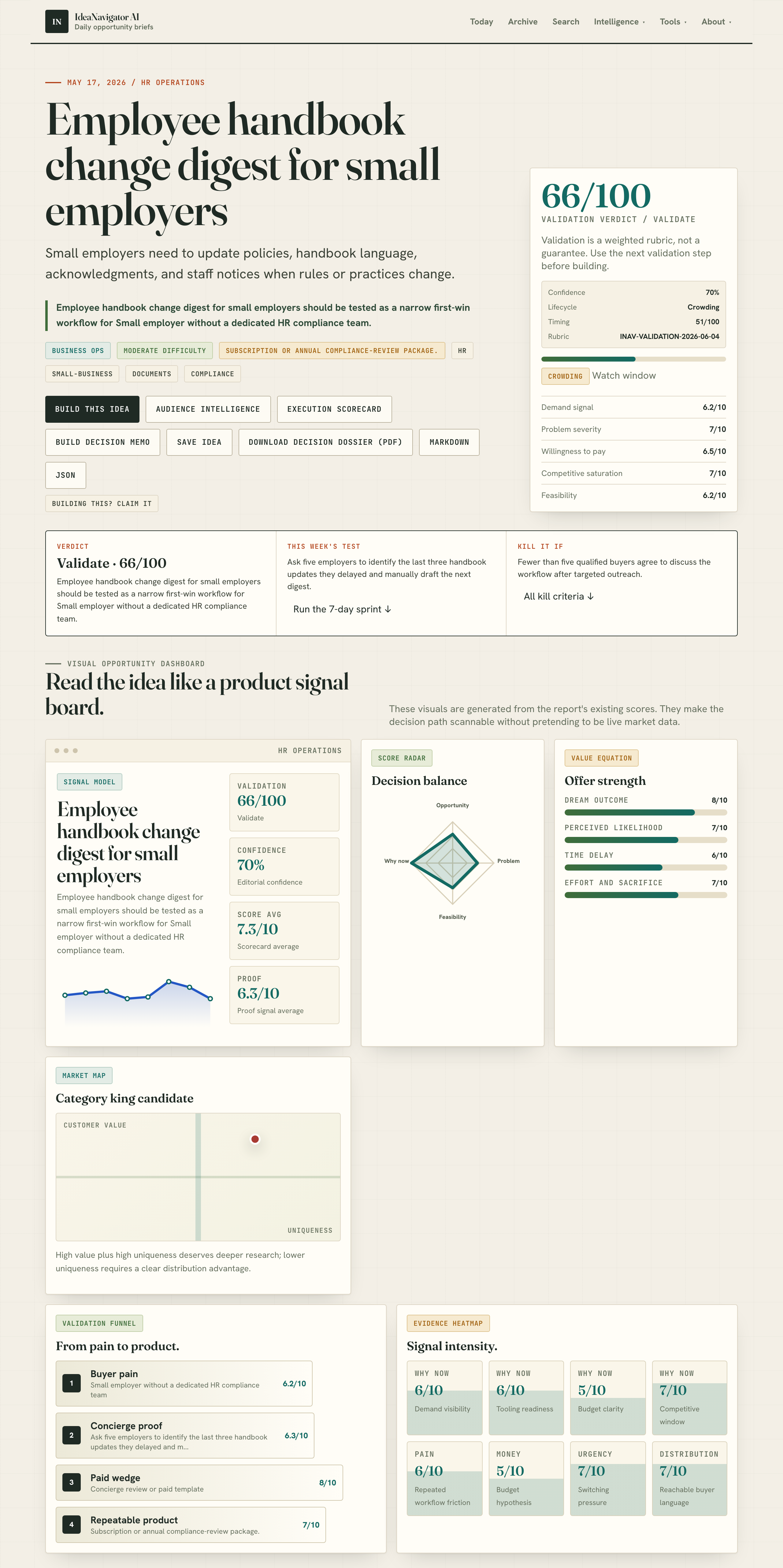
A proposed employee handbook digest workflow aims to help small employers manage policy updates without dedicated HR teams. The initiative is in testing phase, with potential to streamline compliance.
Small employers without dedicated HR compliance teams are testing a new workflow designed to streamline employee handbook updates, addressing increasing policy drift caused by remote work, AI tools, and evolving regulations.
The proposed employee handbook change digest workflow logs policy topics, drafts change notes, and tracks employee acknowledgments. It aims to reduce manual effort and improve compliance management for small businesses.
IdeaNavigator AI is testing this workflow with five small employers, asking them to identify recent handbook updates they delayed and to manually draft upcoming change summaries. The model offers a subscription or annual review package as a revenue model.
Implications for Small Employer HR Compliance
This initiative could significantly ease the compliance burden on small employers lacking dedicated HR staff, helping them stay current with policy changes amid a complex regulatory environment. If successful, it may set a new standard for low-resource HR operations, reducing legal risks and improving employee communication.
Popular right now

Vitamix Touch & Go Advance 32-Ounce Bar Blender, White

Dyson V8 Cyclone Cordless Vacuum

Ninja DualZone Air Fryer 10 Qt Smart 6-in-1 Grey
As an affiliate, we earn on qualifying purchases.
Growing Complexity in Small Employer HR Policies
Small employers face increasing challenges in maintaining up-to-date employee handbooks due to remote work, state-level employment law changes, and the integration of AI tools into workplace policies. Many delay handbook updates, risking non-compliance. The proposed workflow seeks to address these issues by providing a structured, manageable process for policy updates.
“The lack of dedicated HR resources makes small employers particularly vulnerable to policy drift, which this workflow aims to mitigate.”
— an anonymous researcher
Uncertain Effectiveness and Adoption of the Workflow
It is not yet clear how effectively the workflow will improve compliance or whether small employers will adopt it widely. The testing phase is ongoing, and broader validation is needed to confirm its benefits and usability.
Next Steps for Validation and Deployment
IdeaNavigator AI plans to expand testing to more small employers, gather feedback, and refine the workflow. If successful, it could be offered as a scalable, subscription-based service, with potential integration into existing HR platforms.
Key Questions
Who is this workflow intended for?
The workflow is designed for small employers without dedicated HR compliance teams who need to manage frequent policy updates.
How does the digest workflow work?
It logs relevant policy topics, drafts change notes, and tracks employee acknowledgment status to streamline handbook updates.
When will this workflow be available for broader use?
It is currently in testing; broader availability depends on successful validation and feedback from initial users.
What are the potential benefits for small employers?
The workflow could reduce manual effort, improve compliance, and help small businesses stay current with evolving policies without dedicated HR staff.
What remains uncertain about this initiative?
Its effectiveness at scale and the willingness of small employers to adopt the workflow are still unconfirmed.
Source: IdeaNavigator AI