
Frugal innovation is all about solving problems creatively when resources are limited. It focuses on simple, cost-effective solutions that deliver real value while avoiding unnecessary features. By thinking resourcefully and embracing constraints, you can develop affordable products that meet core needs and are easy to use. This approach challenges traditional innovation, proving that less can be more. Keep exploring to discover how resourcefulness and simplicity can unleash impactful solutions even in tight situations.
Key Takeaways
- Frugal innovation emphasizes delivering essential value efficiently by simplifying solutions and removing unnecessary features.
- It encourages resourcefulness and creative problem-solving within constraints, turning limitations into opportunities.
- Using low-cost, sustainable materials and minimal components reduces expenses and speeds up development.
- Engaging local communities ensures culturally relevant, sustainable solutions tailored to resource-scarce environments.
- The approach demonstrates that impactful, affordable products can be created through simplicity and strategic prioritization.
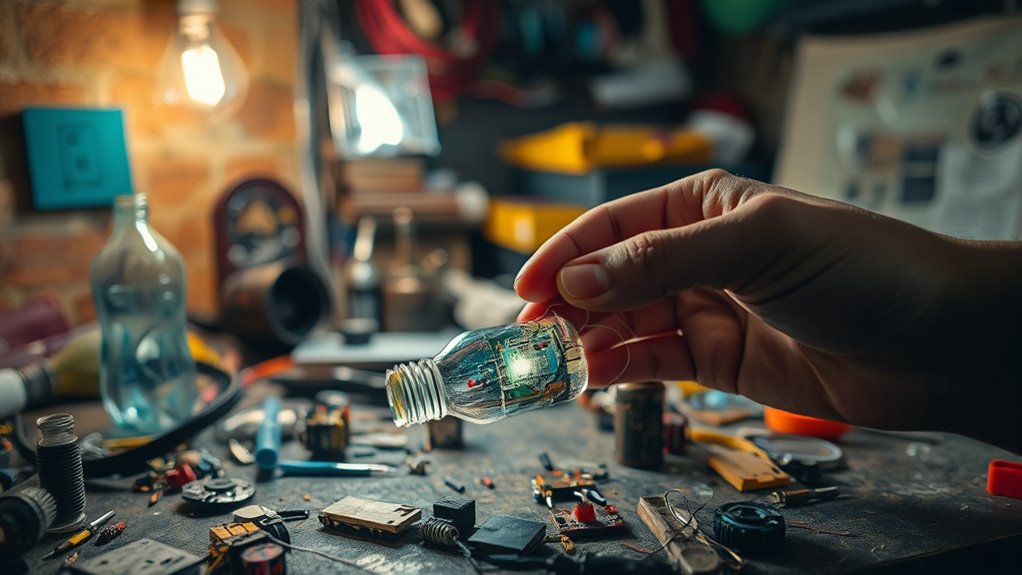
Have you ever wondered how some companies create impactful solutions with limited resources? It’s a fascinating process rooted in frugal innovation, where the goal isn’t to add more features but to deliver value efficiently. One of the key strategies in this approach is leveraging affordable design. Instead of costly, elaborate prototypes, you focus on simple, cost-effective solutions that meet core needs without excess. This doesn’t mean sacrificing quality; rather, it’s about smartly prioritizing features that truly matter. You strip away unnecessary complexities, creating products that are accessible and easy to use, especially for markets with tight budgets or scarce infrastructure.
Minimalist engineering plays a pivotal role here. It’s about designing with constraints in mind—using fewer components, simpler manufacturing processes, and more sustainable materials. By embracing minimalist engineering, you reduce expenses and speed up development, making innovation more scalable and adaptable. This approach encourages you to think creatively about how to achieve the desired outcome with minimal parts, less energy, and fewer resources. It’s about making every element count, ensuring that each piece contributes directly to the product’s purpose. In practice, this might mean rethinking traditional designs to eliminate unnecessary features or combining functions into a single component, cutting down on both cost and complexity.
Frugal innovation thrives on a mindset that values resourcefulness over extravagance. You learn to see constraints as opportunities rather than obstacles. When resources are tight, you’re forced to think outside the box, finding clever solutions that wouldn’t emerge in a resource-rich environment. For instance, instead of importing expensive technology, you might adapt existing solutions or develop new ones that are inherently simpler. This mindset also pushes you to involve local communities in the design process, ensuring that solutions are culturally relevant and easier to maintain. Additionally, incorporating educational toys into local development initiatives can foster problem-solving skills and innovation among children and communities, creating a ripple effect of resourcefulness.
The result is a product or service that’s not only affordable but also sustainable and deeply aligned with user needs. Ultimately, frugal innovation isn’t about settling for less; it’s about doing more with less. By focusing on affordable design and minimalist engineering, you craft solutions that are both effective and efficient. This approach challenges you to rethink traditional notions of innovation, emphasizing value, simplicity, and resourcefulness. It’s a powerful way to create meaningful change, especially when resources are scarce, proving that sometimes, less truly is more.

Thames & Kosmos Structural Engineering: Bridges & Skyscrapers | Science & Engineering Kit | Build 20 Models | Learn about Force, Load, Compression, Tension | Parents' Choice Gold Award Winner, Blue
Build 20 different models that each teach about force, load, compression, tension and more
As an affiliate, we earn on qualifying purchases.
As an affiliate, we earn on qualifying purchases.
Frequently Asked Questions
How Can Small Startups Implement Frugal Innovation Effectively?
You can implement frugal innovation by focusing on cost-effective strategies and resource optimization. Start by identifying essential features and cutting unnecessary expenses, then leverage local resources and partnerships to maximize value. Encourage creative problem-solving within your team, and test solutions on a small scale before expanding. Staying adaptable and continuously refining your approach will help your startup innovate effectively without overspending, ensuring sustainable growth even with limited resources.
What Are Common Challenges Faced During Frugal Innovation Projects?
You’ll often face resource constraints that limit your options and make innovation tough. Stakeholder resistance can also slow your progress, especially if others doubt the new approach. To overcome these challenges, prioritize clear communication and demonstrate how frugal solutions meet key needs. Stay flexible, involve stakeholders early, and keep resource management tight. By doing so, you can navigate these hurdles and successfully implement frugal innovations despite constraints.
How Does Frugal Innovation Differ From Traditional Innovation?
You’ll find that frugal innovation differs from traditional innovation by focusing on cost-effective strategies and resource-efficient design. Instead of prioritizing cutting-edge technology or luxury features, you emphasize simplicity, affordability, and functionality. This approach encourages you to maximize value with minimal resources, often resulting in products or services tailored to underserved markets. Unlike traditional innovation, which may involve high investments, frugal innovation thrives on creative problem-solving within tight constraints.
Are There Specific Industries That Benefit Most From Frugal Innovation?
You’ll find industries like healthcare and agriculture benefit most from frugal innovation. It improves healthcare accessibility by creating low-cost medical devices and solutions, making quality care available to more people. In agriculture, it boosts productivity through affordable technologies that help farmers optimize resources and increase yields. These sectors thrive because frugal innovation addresses their core challenges: resource constraints and the need for affordable, effective solutions.
What Metrics Measure Success in Frugal Innovation Initiatives?
You measure success in frugal innovation initiatives through performance indicators like cost savings, user adoption rates, and scalability. Impact measurement is essential, so track how your solutions improve lives or solve problems efficiently. Focus on metrics that reflect resourcefulness and affordability, such as reduced production costs or increased accessibility. These indicators help you gauge whether your innovation truly delivers value, maximizes resource use, and sustains positive change over time.

Building an Affordable House 2nd Edition: Trade Secrets to High-Value, Low-Cost Construction
As an affiliate, we earn on qualifying purchases.
As an affiliate, we earn on qualifying purchases.
Conclusion
Remember, in the world of frugal innovation, resourcefulness becomes your greatest asset. When you embrace creative problem-solving, you open solutions that seem impossible, proving that limitations often spark the brightest ideas. Don’t see scarcity as a barrier—see it as a catalyst. Like a diamond formed under pressure, your ingenuity shines brightest when resources are tight. So, harness your constraints; they’re the fuel that ignites your most innovative and impactful breakthroughs.

COUOMOXA Magnetic Building Blocks for Toddlers: STEM Educational Toys for 3 4 5+ Years Old Kids – Magnetic Stick Montessori Game for Family for Boys Girls 3-5
【BEGINNER-FRIENDLY POINT-LINE-PLANE】This 42pcs magnetic set uses rods (lines) and balls (points) to help 3-5 year olds easily understand…
As an affiliate, we earn on qualifying purchases.
As an affiliate, we earn on qualifying purchases.

Ouligay Resin Art Palette Makeup Mixing Palette Gold Edge Nail Art Tool Gel Design Nail Art Makeup Mixing Tray DIY (White)
Resin Material: These makeup mixing palette are made of quality resin material, environmentally friendly and durable, easy to…
As an affiliate, we earn on qualifying purchases.
As an affiliate, we earn on qualifying purchases.