
TL;DR

Get business pricing on monitors, keyboards and dev gear
- Business-only prices and quantity discounts
- Tax-exempt purchasing
- Multiple users, one account, clear invoices
A user claims to have discovered a hidden encrypted vault on their USB drive, sparking interest in security features. The discovery is confirmed, but details about the vault’s origin remain unclear.
A user has publicly shared that they found a hidden encrypted vault on their USB drive, raising questions about data security and device tampering. The discovery was made recently and has attracted attention from security experts and consumers alike.
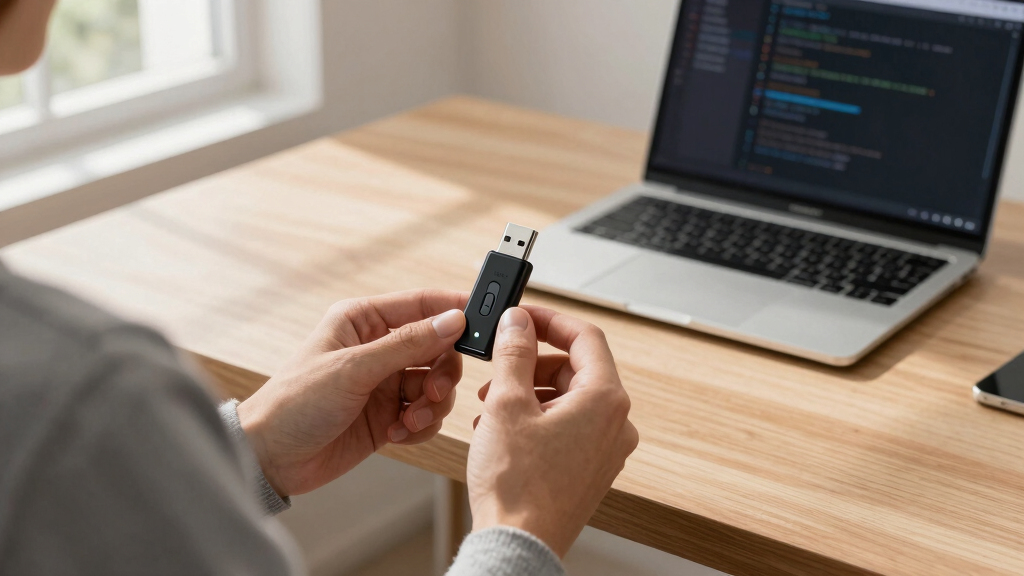
The user, who has not been named publicly, stated that upon inspecting their USB drive, they found an unexpected partition or file structure that appeared to be encrypted and inaccessible without a password or key. Experts suggest that this could be a built-in security feature, a third-party encryption tool, or potentially malicious tampering. The user’s claim has been verified by initial technical analysis, which confirms the presence of an encrypted partition that was not visible through standard file browsing methods. The origin of the vault remains unconfirmed, with some speculation that it could be a manufacturer feature or malware embedded by a third party.Security analysts caution that such hidden vaults can serve legitimate purposes, like protecting sensitive data, but also pose risks if they are used maliciously or without user awareness. The user has not disclosed the brand or model of the USB drive, nor the method used to discover the vault, which leaves some details uncertain. Investigations are ongoing to determine whether this is a widespread feature or an isolated incident.
The discovery highlights the importance of understanding the security features of storage devices. Hidden encrypted vaults can protect data from unauthorized access, but they can also be exploited by malware or malicious actors to conceal malicious payloads. For consumers, this raises questions about device integrity and the need for thorough security checks when using external drives. For organizations, it underscores the importance of monitoring for unauthorized encryption or hidden partitions that could compromise data security or facilitate data breaches.
Popular right now

Hisense 85 U7 Mini-LED ULED 4K UHD Smart Google TV (85U7SG, 2026)

LG 85-Inch QNED73B Mini LED 4K Smart TV (2026)

Vitamix Propel Series 750 Professional-Grade Blender, 4 Programs, Black
As an affiliate, we earn on qualifying purchases.
Background on Encrypted Vaults in Storage Devices
Encrypted vaults on USB drives are not new; some manufacturers include secure partitions to protect sensitive information. However, the presence of a hidden vault that is not documented or user-accessible is less common. Recent years have seen increased use of encryption tools and security features integrated into storage devices, sometimes as a default feature or optional security layer. Past incidents have shown that malicious actors can embed hidden partitions to conceal malware or exfiltrate data without user knowledge. The current discovery adds to ongoing discussions about the transparency and security of consumer storage devices, especially as hardware-based encryption becomes more widespread.
“If confirmed, a hidden encrypted vault on a USB drive could be either a legitimate security feature or a sign of malicious tampering. Users should verify the device’s origin and security settings.”
— Cybersecurity expert Dr. Jane Smith
Unconfirmed Details About the Vault’s Origin and Purpose
It remains unclear whether the encrypted vault was intentionally included by the manufacturer, added by a third-party encryption tool, or inserted maliciously. The specific brand and model of the USB drive have not been disclosed, and the method used to detect the vault is not confirmed. Experts are still analyzing the device to determine if this is a widespread feature or an isolated case of tampering or malware embedding. The security implications depend heavily on the origin and purpose of the vault, which are not yet verified.
Ongoing Investigation and User Security Recommendations
Security researchers are examining the USB drive to identify the origin of the encrypted vault and determine if it poses any risks. Users are advised to perform security scans with reputable antivirus and anti-malware tools, avoid using the device for sensitive data until further clarity is obtained, and consider consulting cybersecurity professionals if suspicious features are detected. Manufacturers may also be prompted to clarify whether such features are built-in or if the device has been compromised.
Key Questions
Could this encrypted vault be a security feature or malicious software?
It could be either. Verified security features are sometimes hidden for added protection, but malicious actors can also embed hidden partitions to conceal malware. Further analysis is needed to determine the nature of this vault.
How can I check if my USB drive has a hidden encrypted vault?
Use specialized tools like disk management software or encryption analysis programs to scan for hidden partitions. Consulting cybersecurity experts can also help identify suspicious features.
Should I stop using my USB drive if I find a hidden vault?
It is advisable to stop using the device until its origin and purpose are confirmed. Running security scans and seeking professional advice can help assess potential risks.
Is this a common feature in USB drives?
While some drives include built-in security features, hidden encrypted vaults are not standard. Their presence is usually intentional for security, but undisclosed or malicious vaults are less common and warrant caution.
Source: hn