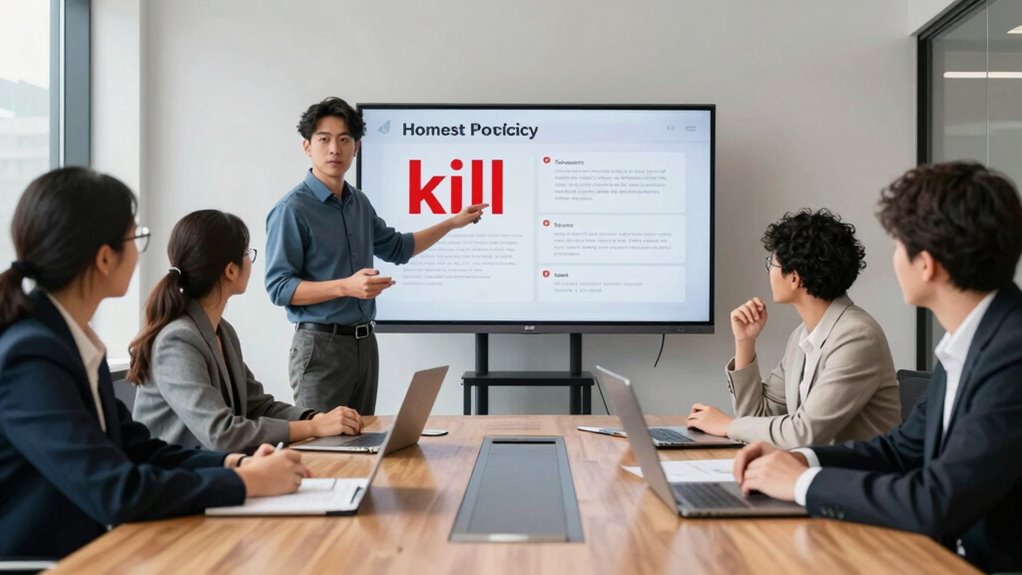

Making honest portfolio kill decisions builds better innovation teams by fostering transparency, discipline, and agility. When you openly evaluate project performance and make tough choices, you encourage trust and motivate your team to learn from setbacks. This approach frees up resources for high-potential ideas and helps your team adapt quickly to changing markets. By embracing honesty, you create a culture that pushes innovation forward—if you want to discover how to implement this effectively, keep exploring the full strategies behind successful decision-making.

Get business pricing on monitors, keyboards and dev gear
- Business-only prices and quantity discounts
- Tax-exempt purchasing
- Multiple users, one account, clear invoices
Key Takeaways
- Honest kill decisions foster trust, encouraging open communication and psychological safety within innovation teams.
- Transparent evaluations promote a culture of continuous learning and improvement.
- Regularly assessing project performance ensures resources are allocated to high-potential ideas, boosting team morale.
- Embracing tough decisions demonstrates strategic discipline, strengthening team resilience.
- Clear criteria for project termination align team efforts with organizational goals and market realities.

Deciding to kill a project or investment in your portfolio isn’t easy, but honesty about its prospects is essential for long-term success. When you’re faced with that tough decision, it’s imperative to evaluate the project’s current performance honestly. Avoid clinging to sunk costs or optimistic assumptions, because these can cloud judgment and hinder your ability to make clear choices. By being truthful about whether a project is worth continuing, you’re actively engaging in risk mitigation, reducing exposure to potential losses, and protecting your overall portfolio health.
Honest evaluation of project performance is key to effective risk management and long-term portfolio success.
Honest portfolio kill decisions serve an indispensable role in optimizing resource allocation. When you identify projects that no longer align with your strategic goals or show declining viability, you free up resources—time, money, talent—that can be redirected toward more promising initiatives. This disciplined approach prevents resource drain on ideas that are unlikely to deliver value, ensuring that your team’s efforts are focused on innovations with the highest potential. In turn, this creates a culture where tough decisions are viewed as part of a strategic process rather than failures, fostering a mindset of continuous improvement.
Moreover, transparency in these decisions encourages team engagement and trust. When you openly communicate the reasons behind killing a project, everyone understands that the goal isn’t to fail but to make smarter choices. This honesty motivates your team to learn from setbacks, refine their approach, and stay committed to the overall mission. It also reduces the stigma of project termination, making it easier to cut losses early when necessary. As a result, you create an environment where innovation is driven by strategic foresight rather than fear of failure. Recognizing the importance of decision-making criteria can help ensure that evaluations are consistent and aligned with your strategic priorities. Being precise about performance metrics can further clarify when a project should be reconsidered or terminated. Incorporating clear communication into your decision process helps maintain alignment and understanding across teams.
In addition, honest kill decisions enable you to maintain agility in a competitive landscape. Markets and technologies evolve rapidly, and sticking with underperforming projects can hamper your ability to adapt. By regularly evaluating and candidly appraising each initiative, you ensure your portfolio remains dynamic and aligned with changing conditions. This proactive stance allows you to pivot quickly, invest in new opportunities, and avoid the trap of outdated projects draining your resources and morale. Recognizing the importance of color accuracy and contrast ratio in project evaluation can help refine decision-making criteria, ensuring visual quality standards are met before continuing investments.
Ultimately, making honest decisions about when to kill a project isn’t about admitting defeat; it’s about making strategic moves that strengthen your innovation team’s resilience. When you prioritize risk mitigation and resource allocation through transparency and discipline, you set the stage for smarter investments and sustained growth. The long-term benefits—more efficient use of resources, a motivated team, and a nimble approach—far outweigh the discomfort of ending a project prematurely. In the end, honesty in portfolio management fosters a culture of strategic clarity and continuous innovation.
As an affiliate, we earn on qualifying purchases.
Frequently Asked Questions
How Do Honest Kill Decisions Impact Team Morale Long-Term?
Honest kill decisions can positively impact your team morale long-term by fostering transparency and trust. When you communicate openly about why projects are stopped, it boosts team resilience because members understand the reasoning and learn from the experience. Although initial morale might dip, honesty builds a culture where setbacks are seen as growth opportunities, encouraging continuous innovation and stronger collaboration, ultimately strengthening your team’s resilience over time.
What Are Common Pitfalls in Making Honest Portfolio Kill Decisions?
Making honest kill decisions is like walking a tightrope—you must balance transparency and sensitivity. A common pitfall is misjudging resource allocation or underestimating risks, which can lead to prematurely cutting promising projects or persisting with failures. Lack of clear criteria or emotional bias can cloud judgment, risking poor risk management. To avoid these, stay objective, prioritize data-driven assessments, and communicate openly, ensuring your team learns and adapts from every decision.
How Can Leadership Foster Transparency in Kill Decision Processes?
You can foster transparency by openly communicating how resource allocation and risk management influence kill decisions. Encourage leaders to share the reasoning behind each decision, highlighting the data and criteria used. Create a culture where team members feel safe discussing concerns and asking questions. Regular updates and clear documentation promote trust and understanding, ensuring everyone recognizes that kill decisions aim to optimize resources and manage risks effectively for the organization’s success.
What Metrics Best Indicate When to Make a Kill Decision?
You should base kill decisions on metrics like resource allocation and risk management indicators. When resource utilization exceeds expectations or potential returns diminish, it signals it’s time to reconsider. Similarly, if risks outweigh benefits or escalate beyond control, making a kill decision helps protect your team’s focus and budget. These metrics guide you to cut losses early, fostering smarter innovation and ensuring your resources are directed toward more promising projects.
How Do Honest Kills Influence Company Innovation Culture?
Honest kills cultivate a culture of courage, clarity, and continuous improvement. By openly stopping projects that no longer serve strategic alignment, you promote risk management and resource reallocation. This transparency encourages innovation by freeing teams from fear of failure, fostering focus on meaningful ideas. Ultimately, honest kills build a resilient, responsible environment where smart risks are taken, and failures become lessons, strengthening your company’s innovative edge.
As an affiliate, we earn on qualifying purchases.
Conclusion
Being honest about killing projects isn’t easy, but it’s essential for building stronger innovation teams. When you make transparent decisions, you free up resources and focus on ideas with the most potential. Did you know that 50% of successful startups pivot or kill projects within their first year? Embracing honesty in portfolio decisions not only saves time and money but also fosters a culture of trust and agility, driving better innovation over the long run.
As an affiliate, we earn on qualifying purchases.
As an affiliate, we earn on qualifying purchases.
Halloween Picks
halloween
As an affiliate, we earn on qualifying purchases.