
🔍 Read the full analysis: Can Bangladesh’s Garment Workers Keep Up With AI And Factory Machines? on ThorstenMeyerAI.com

Get business pricing on monitors, keyboards and dev gear
- Business-only prices and quantity discounts
- Tax-exempt purchasing
- Multiple users, one account, clear invoices
TL;DR
Bangladesh garment workers are demanding a higher minimum wage as negotiations stall and protests disrupt factories around Dhaka. The wage board is due to meet again on November 23, but employers have not formally stated their offer; automation and shifting job patterns add pressure to the sector.
Bangladesh’s garment-worker wage talks have stalled after a scheduled November 16 meeting was postponed, and protests over pay have disrupted factories and roads around Dhaka. Workers’ representatives have formally proposed a monthly minimum of 32,000 taka, while the current minimum is 12,500 taka; employers have not submitted a formal figure, and the board is due to meet again on November 23.
The Bangladesh Garment Manufacturers and Exporters Association and Bangladesh Knitwear Manufacturers and Exporters Association said in a joint statement that the meeting was called off after workers’ representative Anwar Hossain fell ill and was hospitalized. The associations said employers were prepared to present a proposal and asked for a new meeting date. Five labour alliances representing 55 worker organisations warned that the delay could send workers the wrong message.
Protests spread on November 17 across Gazipur, Savar, Ashulia and Mirpur. Reports differ on the number of affected factories: the Associated Press cited sources putting the figure at about 500 of the country’s 4,500 garment factories; a BGMEA vice-president told The Daily Star that production had stopped at nearly 450. The Daily Star’s correspondents cited at least 250 closures in parts of Savar and Ashulia and another 60 in Gazipur. Those figures refer to different reports and should not be treated as a single verified count.
Authorities deployed 42 Border Guard Bangladesh platoons across industrial areas in Dhaka, Gazipur and Narayanganj, according to the force’s spokesperson. Police used tear gas, stun grenades and batons during demonstrations, including a November 18 protest in Savar that AP said involved around 20,000 workers from one factory. The report said the number of people injured was not immediately clear. In a separate account, a Savar police officer said 117 people had been arrested since October 31; he also alleged that banned groups had infiltrated the movement, but the report provided no evidence for that allegation.
Pay Pressures Reach Factory Floors
The dispute concerns the pay of workers in an export industry that supports about four million jobs, according to the source material. The difference between the existing 12,500-taka minimum and the workers’ 32,000-taka proposal is substantial. Protesters have also called for 30,000 taka, roughly a 140 percent rise from the current rate. Those amounts are demands, not an agreed wage.
The disagreement has immediate consequences for workers and production. The source reports that some factories were closed under the Labour Act’s “no work, no pay” provision, while others suspended operations. Owners say a sharp wage increase could weaken Bangladesh’s cost position against competitors such as India and Vietnam; they also cite buyer prices and rising energy costs. These are employers’ arguments, not an independently established assessment of how a final wage would affect competitiveness.
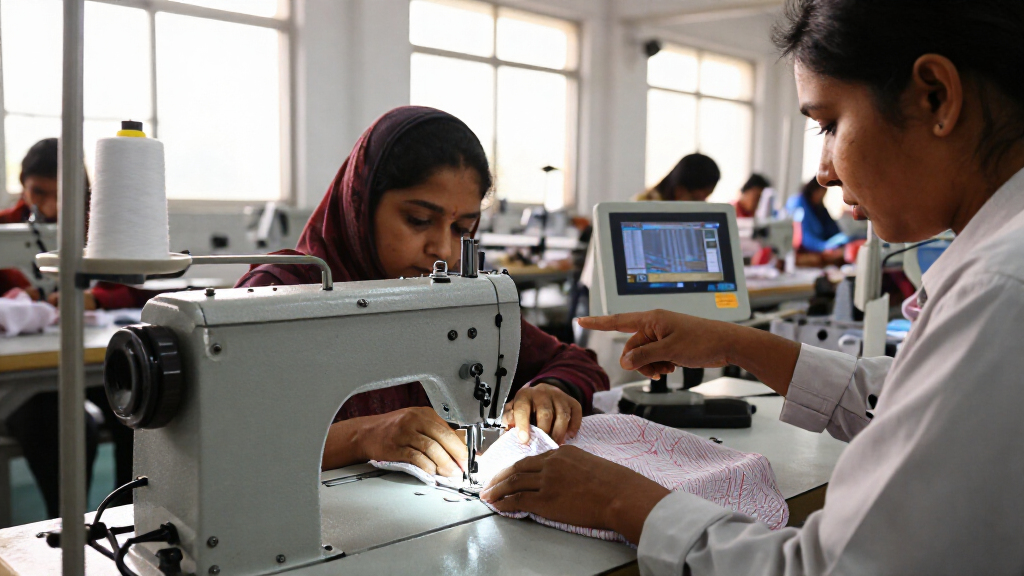
Automation adds another pressure, though it does not settle the wage question. A 2024 study of factories around Dhaka found that automated production lines used 30.58 percent fewer workers, mostly helpers. A separate ILO working paper calculated that women’s share of apparel employment fell from 46.2 percent in 2016–17 to 35.2 percent in 2024. The findings point to job changes within the sector, but do not by themselves show how many workers lost jobs specifically because of automation or how the trends relate to the current protests.
Popular right now

Bose QuietComfort True Wireless Earbuds with Active Noise Cancellation, Bluetooth 5.3, USB-C Charging, IPX4, Black

Ninja Foodi Smart Dual Heat Air Fry Oven, 13-in-1, Silver, SP351

Vitamix 5-Speed Immersion Blender, 625-Watt, Stainless Steel/Black
As an affiliate, we earn on qualifying purchases.
Wage Board Sets the Next Date
The current garment-industry minimum wage of 12,500 taka a month took effect on December 1, 2023. Workers’ representatives on the board have proposed 32,000 taka; protesters have called for 30,000. Before the postponed November 16 meeting, employers had discussed a figure of around 15,000 taka, The Financial Express reported, but that was not a formal offer to the board.
The board’s chairman has said the new wage will take effect on December 1, regardless of the final amount, and workers are expected to receive it with their January 2027 pay. The November 23 meeting is the next scheduled step. The protests and disruptions had already been reported before the meeting was postponed: police in Savar said arrests had been made since October 31.
““We want to return to our machines.””
— A 28-year-old garment worker, speaking to AFP
Offer and Disruption Counts Unsettled
The employers have not yet presented a formal wage figure to the board. The reported figure of around 15,000 taka was discussed before the meeting, according to The Financial Express, and may not represent the associations’ final position. It is also not clear whether the workers’ side would accept any amount below its formal proposal.
Factory-closure counts vary by source and location, and the full effect on production remains uncertain. AP reported that it was not immediately clear how many people were injured in the November 18 confrontation. The source material says no deaths had been reported in the coverage reviewed as of 07:00 UTC on November 19, but that is not a complete official accounting of every protest. No international buyer had commented on this round of wage talks in the reports cited.
November 23 Wage Talks
The wage board is scheduled to reconvene on November 23. Its chairman has said the new minimum will take effect on December 1, with workers receiving the revised amount in January 2027 pay. The board’s decision, the employers’ formal proposal and the response from workers’ representatives will show whether the parties can narrow the gap.
In the meantime, the scale of factory disruption and any further protests remain developing issues. The reports cited do not establish whether operations have resumed at factories that closed or whether international buyers will respond to the wage dispute. The next confirmed milestone is the board meeting; its outcome and the implementation details remain pending.
Key Questions
What wage are Bangladesh garment workers seeking?
The workers’ representatives formally proposed a 32,000-taka monthly minimum. Protesters have also demanded 30,000 taka. Neither figure has been adopted by the wage board.
What is the current minimum wage?
The current garment-industry minimum is 12,500 taka a month, in force since December 1, 2023.
When will the wage board meet again?
The next meeting is scheduled for November 23, 2026. The employers’ formal offer was still outstanding as of November 19.
Why are automation and factory machines part of the story?
A 2024 study of factories around Dhaka found automated lines used 30.58 percent fewer workers, mostly helpers. That finding indicates pressure on some roles, but does not establish how many jobs automation has eliminated across the industry.
Have the protests caused injuries or deaths?
AP reported that the number injured in the November 18 Savar protest was not immediately clear. The source material reported no deaths in the coverage reviewed as of 07:00 UTC on November 19; it did not provide a complete official tally of injuries.
Source: ThorstenMeyerAI.com