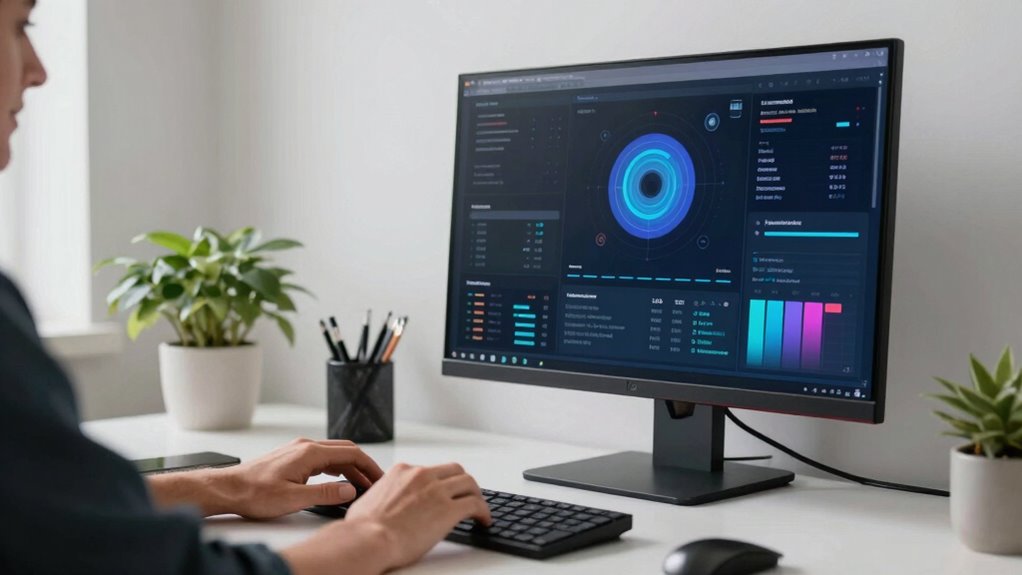

To develop a better mindset for working with AI outputs, view AI as a creative partner rather than a black box or replacement. Use your intuition to guide, interpret, and refine suggestions, remembering that AI complements your human judgment. Embrace failures as opportunities to explore further and optimize results. By shifting from passive to active collaboration, you’ll access new possibilities and foster innovation. Keep exploring this mindset to fully harness AI’s potential as a catalyst for your creativity and growth.
Listen free for 30 days with Audible
Thousands of audiobooks and originals — cancel anytime.
As an affiliate, we earn on qualifying purchases.
Key Takeaways
- View AI as a collaborative partner that enhances human creativity, not a replacement or black box.
- Use intuition to select, refine, and combine AI outputs for best results.
- Reframe imperfections as opportunities for further exploration and innovation.
- Actively guide and question AI outputs to foster continuous improvement and insight.
- Balance leveraging AI’s power with maintaining human judgment to unlock new creative possibilities.

Working with AI outputs requires more than just accepting the results; it demands a shift in mindset. Instead of viewing AI as a black box that simply spits out answers, see it as a tool that amplifies your human intuition and enhances your creative collaboration. AI can process vast amounts of data quickly, but it lacks the nuanced understanding that comes from human experience and judgment. When you approach AI with this perspective, you begin to see it as a partner rather than a replacement. Your intuition guides you in recognizing which outputs are relevant, which need refinement, and where your unique insights can add value. This mindset encourages you to actively interpret and question AI suggestions rather than passively accepting them.
Working with AI means actively guiding and refining its outputs through your human intuition and creative judgment.
By integrating human intuition into your workflow, you can identify subtle cues and patterns that AI might miss. For instance, if an AI generates multiple options for a project, your instinct helps you select the most fitting one or combine elements from different outputs to craft a more refined result. This process transforms AI from a mere generator of ideas into a collaborator that sparks your creativity. Instead of feeling overwhelmed by the volume of suggestions, you engage in a dynamic dance—filtering, editing, and reimagining outputs through your personal lens. This creative collaboration becomes a continuous cycle where your intuition guides the AI, and the AI’s outputs stimulate your creative thinking.
Adopting this mindset also shifts how you perceive failures or less-than-perfect results. Instead of seeing them as setbacks, recognize them as opportunities for further exploration. Your intuitive judgment helps you understand when a particular output is close to what you need, or when it requires more brainstorming. Recognizing the importance of content formats can help you adapt and optimize AI outputs for different mediums and audiences. Incorporating color accuracy and other technical factors allows you to better evaluate the quality of AI-generated content. Additionally, understanding comparative advantage can help you identify areas where AI can optimize your workflow and focus your human effort on more strategic tasks. Over time, this approach builds a more harmonious relationship with AI—one where it’s a catalyst for your creativity and decision-making rather than a crutch or obstacle.
In essence, working effectively with AI outputs hinges on embracing your human intuition and fostering creative collaboration. It’s about shifting from a passive recipient of machine-generated data to an active participant who guides, refines, and elevates AI’s contributions. This mindset unlocks new possibilities, allowing you to harness AI’s power while maintaining the uniquely human qualities that drive innovation and originality.
AI collaboration tools for creativity
As an affiliate, we earn on qualifying purchases.
As an affiliate, we earn on qualifying purchases.
Frequently Asked Questions
How Can I Identify Bias in AI Outputs Effectively?
To identify bias in AI outputs, start by questioning the sources of your data and looking for signs of algorithm bias. Check if the results favor certain groups or perspectives, which indicates data fairness issues. Compare outputs across diverse inputs, and stay alert for skewed patterns. Engaging with varied datasets and understanding potential biases helps you recognize hidden biases, ensuring more accurate and fair AI performance.
What Skills Are Essential for Collaborating With AI Tools?
To collaborate effectively with AI tools, you need creative thinking to adapt and leverage technology innovatively. Emotional intelligence helps you interpret AI outputs accurately and communicate insights clearly. You should also develop critical thinking to evaluate AI suggestions, problem-solving skills to address challenges, and tech literacy to understand how AI systems work. Combining these skills allows you to work seamlessly with AI, enhancing productivity and fostering successful human-AI partnerships.
How Do I Ensure Ethical Use of Ai-Generated Content?
You realize that ensuring ethical AI use often feels like catching a coincidence—unexpected but essential. To stay on the right side, prioritize AI transparency and follow ethical guidelines. Regularly review the AI’s outputs, question biases, and maintain human oversight. By actively engaging with these practices, you keep your work responsible, trustworthy, and aligned with ethical standards, turning coincidences into opportunities for integrity and fairness in AI collaboration.
What Are Common Mistakes When Interpreting AI Outputs?
You often mistake AI outputs by relying solely on them without human oversight, which can lead to misunderstandings. Remember, AI lacks full contextual awareness, so you must critically analyze its responses. Common mistakes include accepting information at face value and ignoring nuanced details. To prevent these errors, always review AI-generated content carefully, incorporate human judgment, and consider the broader context to guarantee accurate and ethical interpretations.
How Can I Improve the Accuracy of AI Responses?
You can improve AI response accuracy by trusting your human intuition and applying creative thinking. Don’t take outputs at face value; instead, refine prompts, ask clarifying questions, and cross-check information. Think outside the box to guide AI toward better answers. Remember, you hold the key to steering responses in the right direction—sometimes, a fresh perspective can turn a good response into a great one.
As an affiliate, we earn on qualifying purchases.
Conclusion
By shifting your mindset, you unveil AI’s true potential like a key opening a treasure chest. Remember, you’re not just a passive receiver but an active partner in the creative process. Embrace curiosity, question outputs, and refine your inputs—this dance with AI becomes more harmonious. With patience and a growth mindset, you’ll find that working with AI isn’t just a task, but an adventure where your ideas can truly take flight.
As an affiliate, we earn on qualifying purchases.
As an affiliate, we earn on qualifying purchases.
NFL season / tailgating Picks
team gear
As an affiliate, we earn on qualifying purchases.