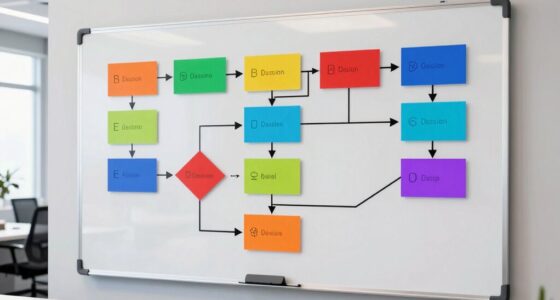

Parallel prototyping lets you run multiple experiments at once, helping you compare different ideas quickly and gather diverse feedback. This approach speeds up learning by identifying the strongest concepts early, saving time and resources. You can refine multiple options simultaneously, making better data-driven decisions faster. By embracing this method, you’ll improve your product development process. Keep exploring to discover how to balance effort and resources effectively while maximizing your results.
Open a free Amazon Business account
Business pricing, bulk buying and tax-exempt orders.
As an affiliate, we earn on qualifying purchases.
Key Takeaways
- Parallel prototyping accelerates learning by simultaneously testing multiple concepts, enabling quicker identification of effective solutions.
- It facilitates rapid feedback from stakeholders and users, improving design refinement across prototypes.
- Careful resource management ensures efficient allocation and prioritization of promising prototypes for faster results.
- Incorporating system knowledge, like thermal management, enhances prototypes’ effectiveness and troubleshooting.
- Clear goals and evaluation criteria help maximize insights, reducing cycle time from concept to market.

Parallel prototyping is a powerful method that accelerates product development by creating multiple prototypes simultaneously. Instead of waiting for one prototype to be refined before starting another, you develop several options at once. This approach allows you to gather diverse insights quickly, enabling you to make informed decisions faster. By testing multiple concepts side-by-side, you can identify strengths and weaknesses more effectively, reducing the overall time to reach a viable solution.
One of the key advantages of parallel prototyping is how it facilitates iterative feedback. When you have multiple prototypes, you can present each to stakeholders or potential users and gather their input on different aspects of the designs. This iterative feedback process is vital because it helps you understand what works and what doesn’t across various options, rather than relying on a single, potentially flawed prototype. The rapid cycle of feedback and revision helps you fine-tune your solutions more swiftly, ultimately leading to a more refined end product.
Parallel prototyping enables quick, iterative feedback from stakeholders, refining multiple ideas simultaneously for a stronger final product.
Additionally, understanding the refrigeration cycle enhances your ability to troubleshoot and improve system performance, which is crucial when developing prototypes that involve thermal management or cooling components. However, running multiple prototypes simultaneously requires careful resource allocation. You need to balance the effort, time, and budget dedicated to each prototype to guarantee you’re not spreading yourself too thin. Effective resource management means prioritizing the most promising concepts and knowing when to cut losses on less viable options. This approach prevents unnecessary expenditure and keeps your project on track. It also involves defining clear goals for each prototype, so you know what specific feedback or data you’re aiming to collect.
Managing multiple prototypes might seem intimidating at first, but with strategic planning, it becomes a powerful way to de-risk your development process. By allocating resources wisely and focusing on a diverse set of ideas, you increase your chances of discovering innovative solutions quickly. This method also encourages a culture of experimentation, where failure is seen as a valuable learning step rather than a setback.
In practice, parallel prototyping demands discipline and clarity about your objectives. You need to establish criteria for evaluating each prototype, ensuring that feedback is meaningful and actionable. As you iterate, you’ll find that you make smarter choices faster, reducing the cycle time from concept to market. This accelerated learning process ultimately gives you a competitive edge, allowing you to respond to user needs and market trends more effectively. Overall, embracing parallel prototyping transforms product development into a dynamic, iterative journey that fosters innovation and efficiency.
prototyping tools for product design
As an affiliate, we earn on qualifying purchases.
As an affiliate, we earn on qualifying purchases.
Frequently Asked Questions
How Do I Prioritize Which Experiments to Run Simultaneously?
You should prioritize experiments based on potential impact and feasibility, balancing your resources effectively. Start by evaluating which experiments address the most critical uncertainties or opportunities, then consider resource demands and timelines. Use experiment prioritization frameworks like scoring models or cost-benefit analyses to make informed decisions. By aligning high-impact experiments with available resources, you guarantee efficient resource balancing and accelerate learning without overextending your team.
What Tools Facilitate Effective Parallel Prototyping?
You can use collaborative tools like Trello, Jira, or Asana to facilitate effective parallel prototyping. These platforms help you organize and track experiments seamlessly, ensuring your team stays aligned. Experiment management features allow you to prioritize, assign tasks, and monitor progress in real-time. By integrating these tools into your workflow, you foster collaboration, streamline decision-making, and accelerate learning through efficient, simultaneous experimentation.
How Do I Manage Resource Allocation Across Experiments?
You manage resource allocation by balancing resource trade-offs and optimizing experiment scheduling. Prioritize experiments based on potential impact and required resources, ensuring high-value tests get enough support. Use project management tools to schedule experiments efficiently, avoiding overlaps that strain resources. Regularly review progress, adjust allocations as needed, and communicate clearly with your team to prevent bottlenecks. This approach helps maximize learning while minimizing wasted effort and resource constraints.
What Are Common Pitfalls in Running Multiple Prototypes?
You should watch out for prototype fatigue and experimental overlap when running multiple prototypes. Prototype fatigue can cause team burnout or rushing, reducing quality. Experimental overlap might lead to confusing results or skewed data, making it hard to determine which prototype performs best. To avoid these pitfalls, clearly define goals for each prototype, schedule experiments carefully, and guarantee your team stays focused without overextending resources.
How Do I Analyze Data From Parallel Experiments Efficiently?
To analyze data from parallel experiments efficiently, you should leverage statistical analysis to identify significant differences and trends quickly. Use data visualization tools like charts and dashboards to spot patterns and outliers at a glance. Automate data collection and analysis whenever possible, ensuring your team can interpret results swiftly. This approach helps you make informed decisions faster, optimizing your parallel prototyping process and accelerating learning.
As an affiliate, we earn on qualifying purchases.
Conclusion
By running multiple experiments simultaneously, you can accelerate your learning curve and make smarter decisions faster. Studies show that teams practicing parallel prototyping see a 30% reduction in development time, allowing you to iterate quickly and refine your ideas more effectively. Embracing this approach means you’ll uncover insights sooner and stay ahead of the competition. So, start experimenting in parallel today—your faster innovation journey awaits!
feedback collection devices for prototypes
As an affiliate, we earn on qualifying purchases.
As an affiliate, we earn on qualifying purchases.
thermal management testing equipment
As an affiliate, we earn on qualifying purchases.
As an affiliate, we earn on qualifying purchases.
Flea & tick season Picks
flea and tick prevention
As an affiliate, we earn on qualifying purchases.