📊 Full opportunity report: Comparing Youth Training Form With Pro Athlete Benchmarks on IdeaNavigator AI — validation score, market gap, and execution plan.

Get business pricing on monitors, keyboards and dev gear
- Business-only prices and quantity discounts
- Tax-exempt purchasing
- Multiple users, one account, clear invoices
TL;DR
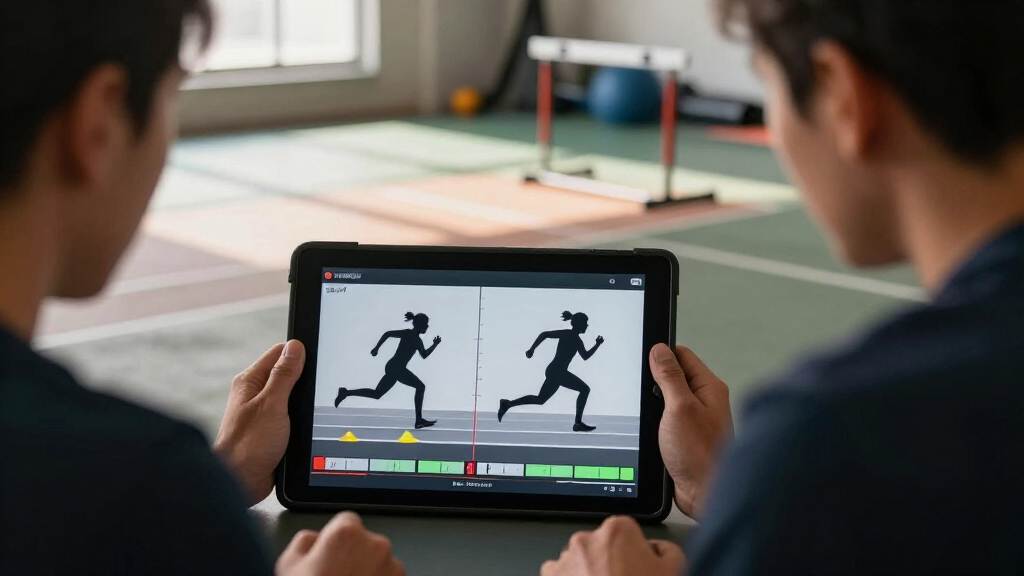
IdeaNavigator AI proposes testing a phone-based app that compares young athletes’ movements with pro-derived reference mechanics and suggests a drill. The proposed first test is a baseball-hitting pilot involving 100 children, with certified coaches checking the app’s grades; no pilot results or product performance data are provided.
IdeaNavigator AI has proposed a phone-based form-grading app for young athletes, with an initial baseball-hitting pilot involving 100 children to test whether the app’s assessments align with certified coaches. The proposal describes a potential product and a way to validate it; it does not report that an app has been built, tested or shown to improve performance or reduce injuries.
The proposed app would let a young athlete film a practice repetition, then compare the athlete’s movement with pro-derived reference mechanics for that skill. It would grade selected checkpoints, such as hip rotation, release angle and stride, and recommend one drill aimed at the largest identified gap. The proposal frames the product for parents whose children practice without a private coach.
IdeaNavigator AI identifies the first validation step as a pilot focused on baseball hitting. Certified coaches would review the app’s grades against their own assessments for 100 children. That comparison could provide an initial check on agreement between the tool and coaches, but the proposal gives no pilot results, test protocol, or definition of how close the grades would need to be to count as a match.
The suggested business model is a family subscription for each sport, with a separate coach tier intended for team use. These are proposed pricing and customer plans, not evidence of current sales, subscriptions or adoption. The idea also argues that phone-based pose-estimation models may make this kind of feedback accessible at a free tier, but it provides no named model, accuracy figures or device-specific test data.
Testing Access to Sports Coaching
The concept targets a practical gap for families: children may repeat sports movements during practice without receiving immediate technical feedback. If an app can reliably identify a limited number of movement differences and turn them into useful drills, it could offer parents another practice aid when regular private coaching is unavailable. That possibility matters most as a testable service proposition, not as a proven replacement for a coach.
IdeaNavigator AI says private coaching can cost $75 to $150 per session, presenting expense as one reason families might seek an alternative. The proposal does not specify the location, sport, or source behind that price range, so it should be treated as a stated estimate rather than a universal rate. Nor does it establish that a subscription would cost less overall or deliver equivalent instruction.
The proposed coach comparison also matters because a numerical grade can appear more authoritative than the evidence warrants. Testing across 100 children could reveal whether app assessments generally track coaches’ judgments in one setting. It would not by itself establish that feedback works equally well across different ages, bodies, skill levels, sports or phone setups, or that following it improves outcomes.
youth sports training form analysis app
As an affiliate, we earn on qualifying purchases.
As an affiliate, we earn on qualifying purchases.
A Baseball Pilot Comes First
The product plan narrows a broad youth-sports opportunity to a specific first customer: a parent of a young athlete practicing without a private coach. It also narrows the proposed first use to baseball hitting rather than attempting to grade swings, throws and running mechanics across many sports at launch. That focus gives the concept a more concrete question to test: can the app’s grades for a defined skill agree with assessments made by certified coaches?
The proposed workflow has three parts: film a repetition, compare the movement with a reference profile, and give a drill targeting one gap. The reference is described as pro-derived mechanics, but the proposal does not explain how those reference movements would be chosen or adjusted for a child’s age, body size, experience or individual technique. Those details would affect what a comparison means in practice.
The pitch links the timing to pose-estimation models running on phones and says their accuracy is sufficient for comparisons with reference motion profiles. However, it offers no technical evaluation or performance figures to support that claim. No product name, developer, release date, coaching partner or completed study is identified, and the proposal should not be read as an announcement of an available app.
baseball hitting training aid for kids
As an affiliate, we earn on qualifying purchases.
As an affiliate, we earn on qualifying purchases.
Accuracy and Safety Still Need Testing
The proposal does not report whether the app exists as a working product, how its grading system would be built, or how the planned coach audit would be conducted. It gives no accuracy results, error ranges or coach-agreement threshold, and no evidence that the suggested drills improve technique, performance or safety. The proposed 100-child test is a plan, not a completed study.
It is also unclear how the app would account for differences in age, growth, experience and individual movement patterns. Comparing a child with professional mechanics could identify a difference without showing that the child should copy that movement exactly. The proposal does not describe how feedback would distinguish a meaningful technical issue from ordinary variation, or how it would handle a poor camera angle or a movement the phone cannot reliably track.
The injury-risk concern is part of the product rationale, but no injury data or injury-prevention findings are supplied. No subscription prices, privacy practices, data-retention rules, supported devices or launch plans are included. These questions remain open and would need answers before families could judge the product’s reliability, suitability and cost.
sports motion analysis smartphone app
As an affiliate, we earn on qualifying purchases.
As an affiliate, we earn on qualifying purchases.
Coach Review Is the Proposed Test
The next step described by IdeaNavigator AI is a baseball-hitting pilot with 100 children, in which certified coaches audit app grades against their own assessments. No dates, participating coaches, recruitment details or study procedures have been announced in the proposal. It is not clear whether the pilot will proceed.
If conducted, the comparison could offer an early indication of how consistently the app identifies selected mechanics in that specific group and setting. Readers would still need details on how children are selected, which checkpoints are scored, whether coaches review the same video, and how disagreements are measured. A single-sport audit would not establish performance in other sports or show that app-guided practice changes results over time.
Further developments to watch for are a working product, published pilot methods and findings, and clear information about how reference mechanics and child-specific feedback are handled. Until those are available, the app remains a proposed training concept rather than a validated coaching tool.
Source: IdeaNavigator AI
youth athletic performance coaching tool
As an affiliate, we earn on qualifying purchases.
As an affiliate, we earn on qualifying purchases.
Key Questions
Is the youth form-grading app available now?
The proposal does not say that a working app has launched. It describes a product concept and a possible validation plan.
What would the proposed app do?
A young athlete would film a repetition. The app would compare movement with pro-derived reference mechanics, grade selected checkpoints and suggest one drill aimed at a movement gap.
How would the concept be tested?
IdeaNavigator AI proposes a baseball-hitting pilot involving 100 children, with certified coaches comparing their assessments with the app’s grades. No results or schedule are provided.
Has the app been shown to prevent injuries or improve performance?
No. The proposal raises injury risk as part of the problem it aims to address, but reports no injury-prevention or performance findings.
Source: IdeaNavigator AI
Halloween Picks
halloween
As an affiliate, we earn on qualifying purchases.