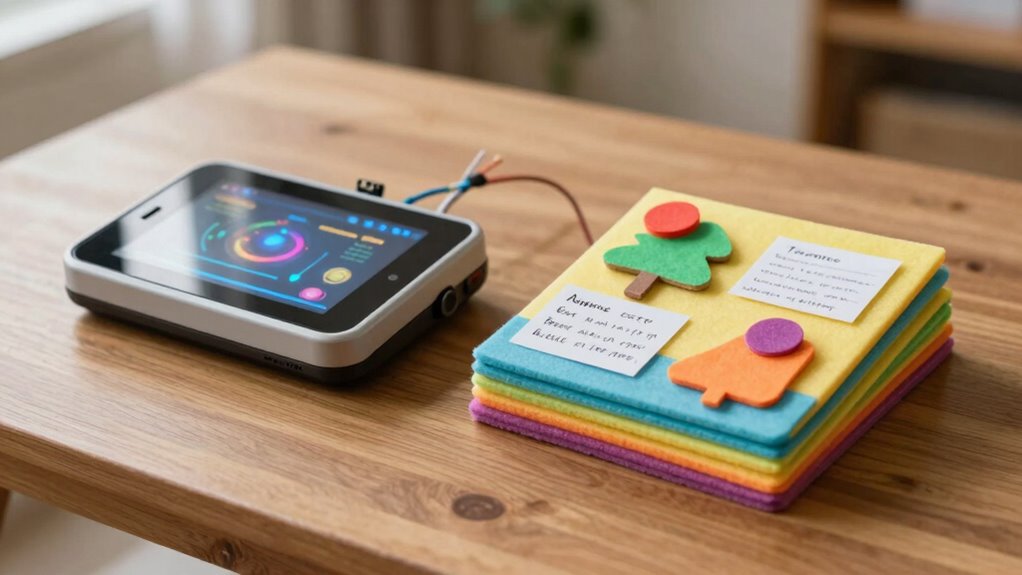

Demo artifacts showcase your product or features in real time, capturing immediate interest with concise, visually appealing demonstrations of functionality. In contrast, learning artifacts document lessons, processes, and insights, supporting long-term understanding and ongoing improvement. While demos emphasize engaging stakeholders quickly, learning artifacts focus on internal knowledge transfer and reflection. By understanding their differences, you’ll better decide how to use each effectively—if you want to uncover more details, keep exploring.

Get business pricing on monitors, keyboards and dev gear
- Business-only prices and quantity discounts
- Tax-exempt purchasing
- Multiple users, one account, clear invoices
Key Takeaways
- Demo artifacts showcase current products or features to engage audiences quickly, while learning artifacts provide detailed explanations for understanding and knowledge transfer.
- Demo artifacts are concise, visually appealing, and transient; learning artifacts are comprehensive, organized, and intended for long-term use.
- Demo artifacts focus on demonstrating functionality and progress; learning artifacts emphasize documenting lessons, processes, and insights.
- Demo artifacts support real-time engagement during ongoing development; learning artifacts facilitate ongoing learning and organizational knowledge growth.
- Demo artifacts are part of an iterative lifecycle, whereas learning artifacts support continuous review and educational purposes.

Ever wondered how demo artifacts differ from learning artifacts in a project? The key lies in their purpose and how they influence user engagement and the artifact lifecycle. When you create a demo artifact, you’re primarily aiming to showcase a product, feature, or functionality. It’s designed to engage your audience by demonstrating real-time capabilities or the current state of a project. These artifacts often serve as a visual proof of concept, helping stakeholders understand what has been built and how it works. Because of their focus on demonstration, demo artifacts tend to be concise and polished, aiming to capture interest quickly and effectively. They are usually part of a larger artifact lifecycle, where development and refinement are ongoing, and their primary goal is to maintain user engagement by providing a clear, compelling snapshot of progress. Digital content strategies also influence how these artifacts are designed and utilized to maximize impact.
On the other hand, learning artifacts are more about education and knowledge transfer. They are created to document lessons, processes, or insights gained during a project or training session. Your goal with learning artifacts is to facilitate understanding, so they often contain detailed explanations, annotations, or references that help users grasp complex concepts. User engagement with learning artifacts tends to be more reflective; you want your audience to internalize information, which means these artifacts need to be accessible, well-organized, and conducive to review or study. Unlike demo artifacts, which are often transient and meant for immediate impact, learning artifacts have a longer lifecycle—they’re meant to be revisited and built upon over time. This extended lifespan supports ongoing learning and continuous improvement within your project or organization.
As an affiliate, we earn on qualifying purchases.
Frequently Asked Questions
How Do I Determine Which Artifact to Create First?
Start by evaluating your goals and audience needs to guide artifact prioritization. Create a rough plan for creation sequencing based on which artifact will deliver immediate value or inform the next steps. Typically, a learning artifact should come first to build foundational understanding, followed by a demo artifact to showcase practical application. This approach ensures your efforts are aligned, efficient, and strategically timed for maximum impact.
Can a Single Artifact Serve as Both a Demo and a Learning Tool?
Imagine holding an artifact that sparks curiosity, like a versatile tool in your hand. Yes, a single artifact can serve as both a demo and a learning tool, showcasing its versatility. By integrating learning elements into your demo, you enhance artifact versatility and promote learning retention. This seamless learning integration makes your artifact more impactful, allowing users to explore, understand, and apply the content effectively, all from one engaging resource.
What Tools Are Best for Developing Demo Artifacts?
You should consider tools like Adobe XD, Figma, or Canva for developing demo artifacts, as they excel in visual design and interactive storytelling. These platforms allow you to create engaging, visually appealing prototypes that showcase functionality effectively. They also support collaboration, so you can refine your demo with feedback. Focus on tools that emphasize interactivity and visual storytelling to make your demo compelling and easy to understand.
How Do Stakeholders Typically Evaluate Demo Artifacts?
You typically evaluate demo artifacts by observing the user experience firsthand, noting how intuitive and engaging the demo is. Stakeholders give feedback based on clarity, functionality, and how well it aligns with project goals. They look for areas that need improvement, ask questions, and suggest modifications. Your role is to gather this stakeholder feedback effectively, ensuring the demo clearly demonstrates the intended features and benefits to meet everyone’s expectations.
What Common Mistakes Should I Avoid When Creating Learning Artifacts?
Did you know that 60% of learners disengage due to poorly designed materials? When creating learning artifacts, avoid common mistakes like neglecting pedagogical strategies and design principles. Don’t make them overly complex or irrelevant—keep content clear and focused. Incorporate interactive elements that cater to different learning styles, and test your materials beforehand. This guarantees your artifacts engage learners effectively and support their understanding, making your efforts truly impactful.
learning artifact documentation tools
As an affiliate, we earn on qualifying purchases.
As an affiliate, we earn on qualifying purchases.
Conclusion
Now, picture yourself standing at a crossroads, with a polished demo artifact gleaming like a lighthouse guiding your way, showcasing the product’s brilliance. Nearby, a learning artifact rests like a weathered map, filled with notes and insights, ready to lead you through uncharted territories. Both are essential on your journey—one shining brightly for others, the other whispering secrets of growth. Embrace both, and you’ll navigate your path with confidence and clarity.
As an affiliate, we earn on qualifying purchases.
educational knowledge transfer materials
As an affiliate, we earn on qualifying purchases.
As an affiliate, we earn on qualifying purchases.
Halloween Picks
halloween
As an affiliate, we earn on qualifying purchases.