📊 Full opportunity report: Make Sense Of Punch Metrics During Home Boxing Sessions on IdeaNavigator AI — validation score, market gap, and execution plan.

Get business pricing on monitors, keyboards and dev gear
- Business-only prices and quantity discounts
- Tax-exempt purchasing
- Multiple users, one account, clear invoices
TL;DR
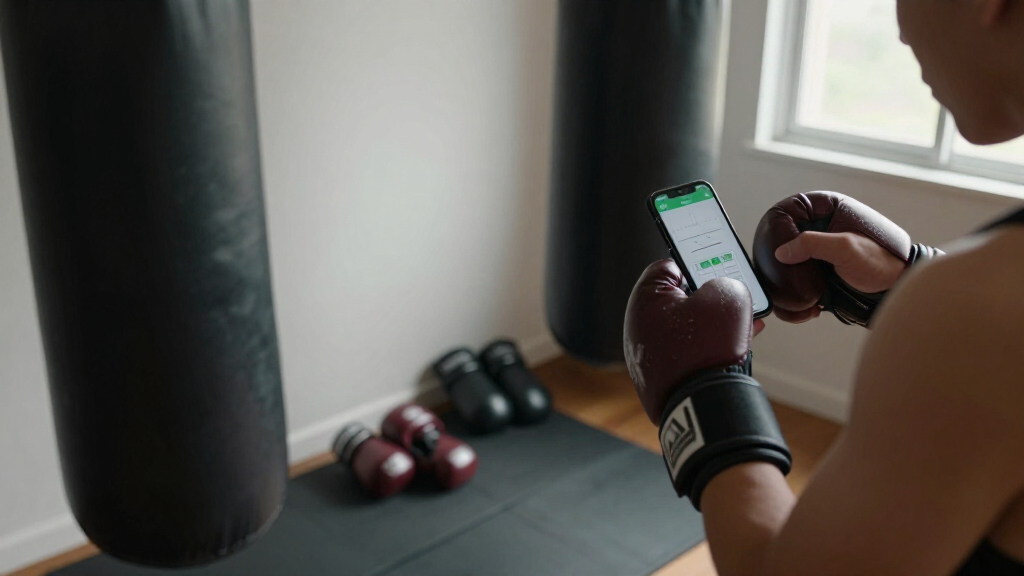
IdeaNavigator AI has outlined a proposed app that would use a phone camera to score home boxing rounds, track punch types and speed, and flag drops in a user’s guard. The concept is an early product proposal, not evidence that the technology or business model has been tested successfully.
IdeaNavigator AI has proposed a phone-camera app that would score boxing rounds and offer feedback to people training at home without a coach or gym. The proposal centers on punch counts by type, speed estimates and guard-position alerts, but no app launch, accuracy results or user-retention data were provided.
The concept targets a specific audience: home boxers training alone. In its proposal, IdeaNavigator AI describes the problem as a lack of feedback during shadowboxing, where a trainee may have no record of punch volume, speed or defensive position and little way to track progress across sessions. Those points describe the proposal’s view of the user problem, not findings from a published user study.
IdeaNavigator AI’s suggested minimum product would let a person prop up a phone and follow scored rounds and coached combinations. The app would attempt to identify punch types, estimate speed, detect guard drops and retain benchmarks from one session to the next. The proposal says phone-camera pose tracking could support real-time feedback without requiring a wearable or other dedicated hardware; it provides no technical documentation or measurements showing how well that tracking works.
For a business model, the proposal suggests a free tier for scored rounds and a paid subscription for coached combinations. Its proposed validation plan is to soft-launch the scoring feature, compare week-four retention with fitness-app benchmarks and test whether users convert to the coached tier. No benchmark, pricing, conversion target or completed test was specified in the proposal.
Feedback for Solo Boxing Rounds
The idea addresses a practical gap for people who box at home: without a coach watching, it can be hard to tell whether a session is becoming more consistent or whether defensive habits are slipping. If camera-based estimates prove dependable and useful, session-level metrics could give solo trainees a repeatable way to review practice without buying additional equipment.
But the usefulness depends on more than displaying numbers. Punch counts and speed estimates could mislead users if camera placement, lighting, movement or individual technique affect detection. Guard alerts also cannot replace a coach’s broader judgment about balance, timing or safe form. The proposal’s commercial case similarly remains open: retention and subscription conversion are questions to test, not demonstrated outcomes.
As an affiliate, we earn on qualifying purchases.
From Shadowboxing to Scored Sessions
In its proposal, IdeaNavigator AI frames the product as a home-fitness app for people without access to a gym or coach, rather than a tool for competitive fight analysis. Its suggested experience borrows the structure of a scored fitness class: follow a guided session, receive feedback while training and review performance afterward. The comparison is a product concept, not evidence that the app matches any particular fitness platform.
The proposal’s central technical premise is that a phone camera can track body pose well enough to distinguish punches and monitor a user’s guard in real time. The material does not identify a tracking system, describe how the app would handle different camera angles or report tests against human coaches. For now, the clearest development is the proposed product and validation plan, not a verified technical breakthrough.
As an affiliate, we earn on qualifying purchases.
Accuracy and Demand Remain Open
IdeaNavigator AI’s proposal included no prototype results, independent evaluation or user feedback. It is therefore unclear how reliably a phone could distinguish punch types, estimate speed or identify a dropped guard during unscripted home training. The information also does not say whether performance would vary with camera position, room conditions, body size or boxing experience.
The proposal reports no figures for the size of the intended market, likely subscription price, free-to-paid conversion or week-four retention. It recommends comparing retention with fitness-app benchmarks but does not name a benchmark or provide a baseline. Whether users find the metrics accurate enough to change their training remains unestablished.
As an affiliate, we earn on qualifying purchases.
A Soft Launch Would Test Use
IdeaNavigator AI’s proposal identifies a soft launch of scored rounds as the next step, followed by measurement of how many users return in week four. It also proposes a separate test to examine whether access to coached combinations encourages users to move from the free scoring tier to a paid subscription. The proposal gives no release date, test cohort or timetable.
For those tests to clarify the product’s prospects, the team would also need to report how punch and guard detection are evaluated and what comparison standard is used. Until results are available, the app should be treated as a concept for home-training feedback rather than a proven way to measure boxing performance.
Source: IdeaNavigator AI proposal for a shadowboxing scoring app
guard position alert fitness device
As an affiliate, we earn on qualifying purchases.
As an affiliate, we earn on qualifying purchases.
Key Questions
What is the proposed home boxing app?
According to IdeaNavigator AI’s proposal, it is a phone-camera app that would score rounds of shadowboxing and provide punch counts, speed estimates and guard-position feedback.
Has the app been launched or tested?
IdeaNavigator AI’s proposal reports no launch or test results. It describes a possible minimum product and recommends a soft launch to evaluate retention and paid-tier interest.
Would users need special equipment?
The proposal says the user would prop up a phone and that the app would not require a wearable or dedicated hardware. It does not provide technical details confirming how the camera tracking would perform.
How might the app make money?
IdeaNavigator AI suggests a free tier for scored rounds and a paid subscription for coached combinations. Pricing and conversion results have not been reported.
Source: IdeaNavigator AI
Halloween Picks
halloween
As an affiliate, we earn on qualifying purchases.