
📊 Full opportunity report: Field service photo checklist for HVAC teams on IdeaNavigator AI — validation score, market gap, and execution plan.

Get business pricing on monitors, keyboards and dev gear
- Business-only prices and quantity discounts
- Tax-exempt purchasing
- Multiple users, one account, clear invoices
TL;DR
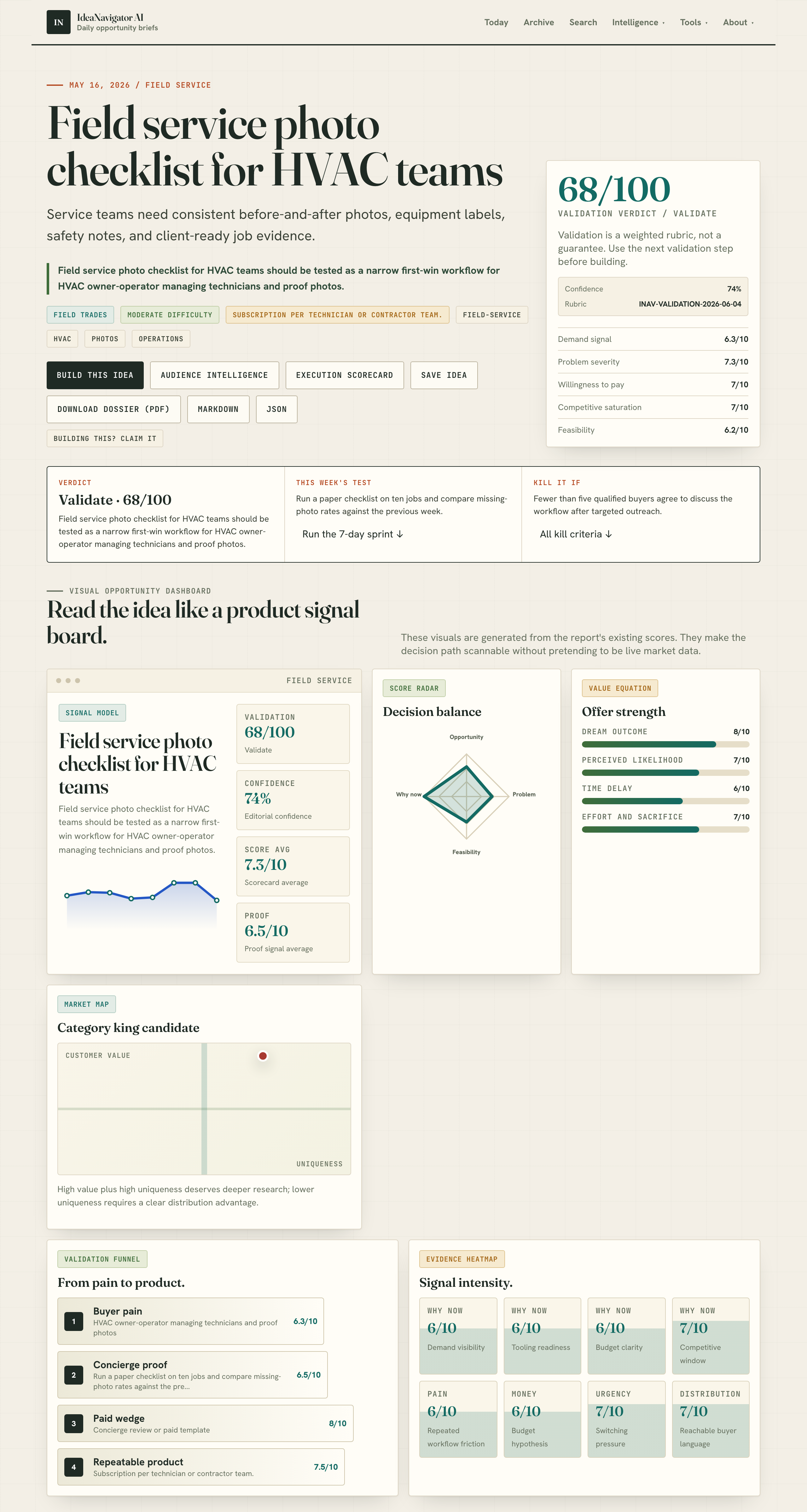
A new mobile photo checklist for HVAC field teams is being tested to ensure consistent documentation of work. The tool aims to replace informal photo methods and improve proof of service for customers. Validation involves comparing photo completeness before and after implementation.
HVAC owner-operators are piloting a mobile field service photo checklist designed to ensure technicians capture consistent before-and-after photos, equipment labels, and safety notes, addressing common documentation gaps in service jobs.
The initiative focuses on creating a streamlined, app-based checklist that prompts technicians to take required photos, label equipment, and compile a customer-ready job summary. This approach aims to replace reliance on informal phone galleries and message threads for proof of completed work.
According to sources involved in the development, the initial validation involves running a paper-based checklist on ten jobs and comparing the rate of missing or incomplete photos against previous weeks. The goal is to demonstrate that the digital checklist improves documentation consistency and reduces errors.
The proposed subscription model charges per technician or team, making it scalable for small and large HVAC contractors. The effort is part of a broader trend toward digitizing field service workflows to meet customer expectations for proof of work and safety compliance.
Why Standardized Photo Documentation Matters in HVAC
This development addresses a key challenge in the HVAC industry: ensuring consistent, reliable documentation of service work. Proper photos serve as proof of completed tasks, support warranty claims, and enhance customer trust. As customer expectations for transparency grow, having a standardized process reduces disputes and liability.
Furthermore, the app-based checklist could improve operational efficiency by reducing time spent on manual photo management and minimizing missed documentation. It also offers potential for quality control and training by providing structured visual evidence of technician performance.
HVAC technician photo checklist app
As an affiliate, we earn on qualifying purchases.
As an affiliate, we earn on qualifying purchases.
Growing Demand for Proof and Digital Workflow Adoption
Many HVAC contractors currently rely on informal methods such as phone galleries and message threads to document jobs, which can lead to incomplete or inconsistent records. Industry trends show increasing customer demand for visible proof of work, especially as digital communication becomes standard.
Previous efforts to standardize documentation included paper checklists and manual photo logs, but these often lacked integration with digital workflows. The move toward mobile apps with guided checklists reflects a broader shift in field service management, emphasizing accuracy, compliance, and customer transparency.
Testing of such tools is in early phases, with validation focused on measuring improvements in photo completeness and workflow efficiency.
“The goal is to create a simple, reliable way for technicians to document their work with consistent photos and notes, reducing errors and disputes.”
— an anonymous researcher
digital job site photo documentation tool
As an affiliate, we earn on qualifying purchases.
As an affiliate, we earn on qualifying purchases.
Unclear Aspects of the Photo Checklist Pilot
It is not yet confirmed how quickly the digital checklist will be adopted across the broader HVAC industry or whether it will significantly outperform existing informal methods in large-scale trials. The long-term impact on documentation accuracy and customer satisfaction remains to be seen, as the pilot is still in early validation stages.
Additionally, details about user interface design, integration with existing systems, and potential challenges in technician adoption are still emerging.
As an affiliate, we earn on qualifying purchases.
Next Steps for Validation and Industry Adoption
The immediate next step involves completing the validation phase by comparing photo completeness rates between paper checklists and the new digital tool. If results are positive, developers plan to refine the app based on technician feedback and prepare for broader rollout.
Further, industry stakeholders will likely monitor the pilot outcomes to assess whether this approach can become a standard part of HVAC service workflows. Additional testing in diverse operational environments may follow, alongside potential integration with other field management systems.
mobile checklist for HVAC technicians
As an affiliate, we earn on qualifying purchases.
As an affiliate, we earn on qualifying purchases.
Key Questions
How does the photo checklist improve over current documentation methods?
The checklist prompts technicians to capture all required photos, label equipment, and compile a comprehensive job summary, reducing the likelihood of missing or incomplete documentation compared to informal methods like phone galleries.
Will this tool be available to all HVAC contractors?
The initial testing targets owner-operators managing technicians, with a subscription model planned. Broader availability will depend on validation results and industry demand.
What are the benefits for customers and contractors?
Customers gain clearer proof of work, which can improve trust and reduce disputes. Contractors benefit from standardized documentation, operational efficiency, and potential legal protections.
When will the digital checklist be widely available?
It is too early to specify a launch date; the focus is on validating the approach through pilot testing before considering wider deployment.
Are there any challenges expected with implementing this checklist?
Potential challenges include technician adoption, app usability, integration with existing systems, and ensuring consistent use across teams. These are being addressed during the pilot phase.
Source: IdeaNavigator AI
Columbus Day / Indigenous Peoples' Day Picks
long weekend sales
As an affiliate, we earn on qualifying purchases.