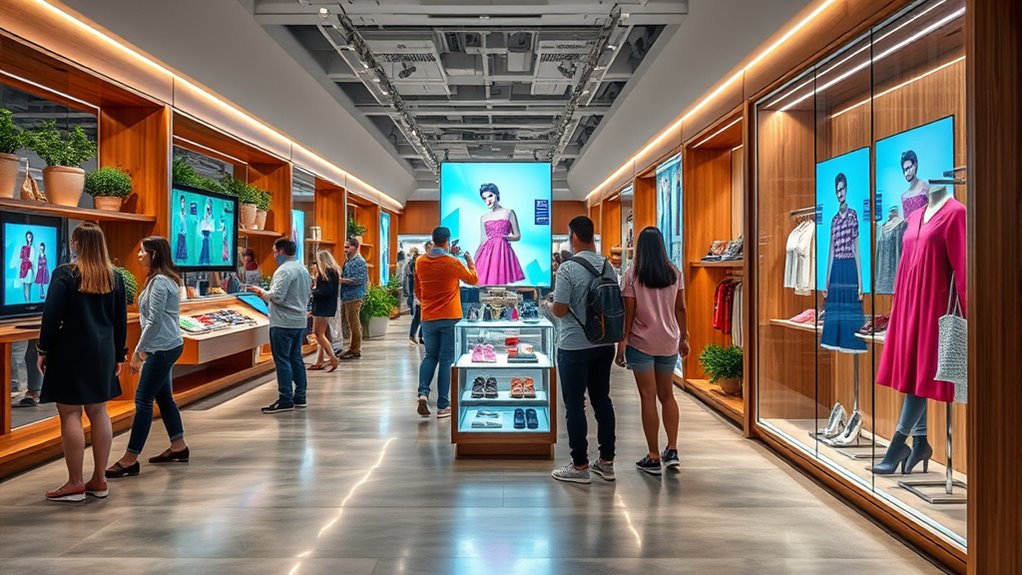

Phygital retail combines your physical shopping experience with digital technology to make shopping more immersive and personalized. Using tools like augmented reality, you can virtually try on clothes or visualize furniture in your space before buying. Stores gather insights about your preferences to offer tailored recommendations and unique experiences. This seamless blend of online and in-store interactions creates a smarter, more engaging way to shop—if you explore further, you’ll discover how these innovations are shaping the future of retail.
Key Takeaways
- Phygital retail merges physical stores with digital technology like AR for immersive, seamless shopping experiences.
- Augmented reality enables virtual try-ons and product visualization, boosting consumer confidence.
- Personalized, data-driven interactions are created through sensors, apps, and tailored staff assistance.
- Integration of online and in-store channels offers consistent, engaging shopping journeys.
- The future focuses on creating an ecosystem that makes shopping more efficient, engaging, and highly customized.
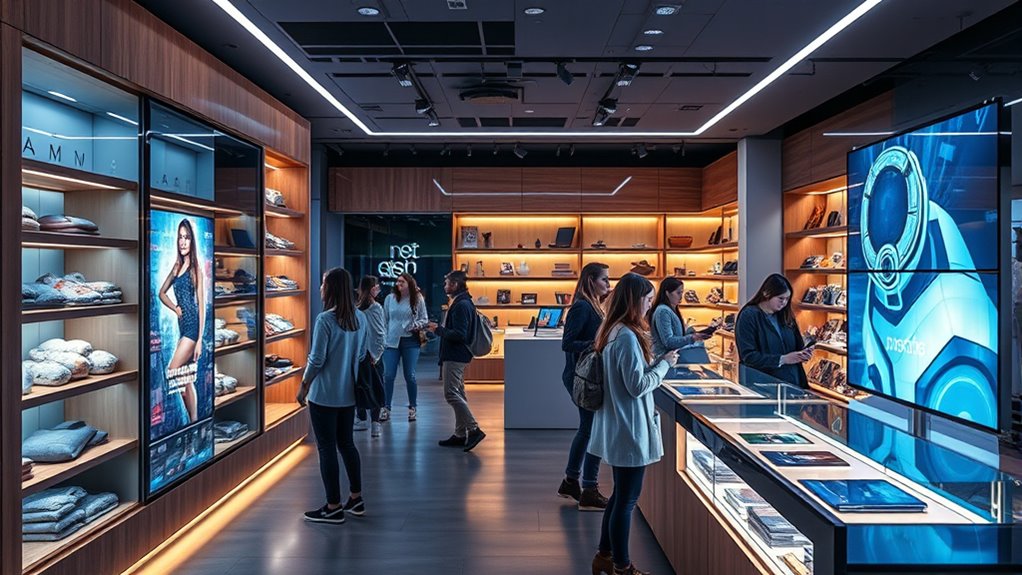
Have you ever wondered how retail experiences are evolving in today’s digital age? The answer lies in the rise of phygital retail, where the lines between physical stores and digital technology blur to create seamless, engaging shopping journeys. This innovative approach transforms the way you interact with brands, making your experience more immersive and tailored to your preferences. One of the key drivers behind this shift is augmented reality (AR). With AR, you can effortlessly visualize products in your real environment before making a purchase. Imagine trying on virtual clothes from your living room or seeing how a piece of furniture would look in your home without leaving your couch. This technology bridges the gap between online convenience and physical tangibility, giving you the confidence to buy with less hesitation.
Phygital retail uses augmented reality to make shopping more immersive and confident.
Phygital retail also focuses heavily on personalized experiences, leveraging data and technology to cater directly to your individual tastes. When you step into a store that uses digital tools, sensors, or mobile apps, you might find that your preferences are already being recognized. Stores can recommend products tailored to your browsing history or previous purchases, making every visit feel unique and relevant. This personalization doesn’t just stop at recommendations; it extends to interactive displays, customized promotions, and tailored assistance from staff equipped with digital devices. The goal is to make you feel understood and valued, turning a simple shopping trip into a memorable experience.
You don’t have to be in a physical store for these innovations to work either. Many brands offer mobile apps that integrate AR features, allowing you to explore products virtually from anywhere. These apps often sync with in-store systems, so your preferences and choices are consistent no matter where you shop. As a result, your shopping experience becomes more cohesive, whether you’re browsing online or in person. This fusion of digital and physical elements also helps retailers gather valuable insights about your behavior, enabling them to refine their offerings and create even more personalized interactions in the future. Additionally, establishing a financial settlement time limit after a purchase or service can streamline returns and exchanges, improving overall customer satisfaction.
In essence, phygital retail isn’t just about adding digital gadgets to physical stores; it’s about creating an integrated ecosystem that puts your needs at the center. By combining augmented reality and personalized experiences, retailers are redefining how you connect with brands, turning shopping into an engaging, efficient, and highly customized activity. This evolution promises a future where your expectations are seamlessly met through innovative technology, making each retail interaction more satisfying than ever before.
Frequently Asked Questions
How Does Phygital Retail Impact Customer Privacy?
You might worry about how phygital retail impacts your privacy, but it primarily emphasizes data security and consent management. Retailers are responsible for protecting your personal info and ensuring you control what data is collected. By actively managing consent, you stay informed and can decide what details to share. This balance helps you enjoy seamless shopping experiences while safeguarding your privacy and maintaining trust.
What Are the Costs of Implementing Phygital Solutions?
Implementing phygital solutions involves significant costs, including a thorough cost analysis to understand expenses. You’ll face investment challenges like upgrading infrastructure, integrating digital tools, and staff training. These upfront costs can be high, but they’re essential for creating seamless customer experiences. Be prepared for ongoing maintenance and updates, which also add to the overall investment. Careful planning helps balance costs and benefits for successful phygital retail implementation.
How Do Small Retailers Adopt Phygital Strategies Effectively?
To adopt phygital strategies effectively, you should focus on in-store personalization and inventory management. Use digital tools like customer data to tailor the shopping experience and make recommendations. Invest in inventory management systems that sync online and offline stock, reducing errors and improving efficiency. Start small with pilot projects, learn from customer feedback, and gradually expand your digital integration to enhance engagement and boost sales without overwhelming your resources.
What Are Future Trends in Phygital Retail Technology?
You’ll see future phygital retail trends focus on Augmented Reality and Personalized Shopping. Expect AR to create immersive experiences, letting customers virtually try products before buying. Personalized shopping will become more sophisticated, using data to tailor recommendations in real-time. These tech advances will make shopping more engaging and convenient, helping you connect with brands on a deeper level and enhancing your overall retail experience.
How Do Phygital Experiences Influence Consumer Loyalty?
While some might say loyalty fades without effort, you’ll find phygital experiences actually deepen it. By offering seamless omnichannel personalization, you create tailored moments that resonate emotionally. This emotional engagement builds trust and connection, making customers feel valued and understood. As a result, you foster long-term loyalty, encouraging repeat visits and positive word-of-mouth, turning one-time shoppers into dedicated patrons who appreciate the thoughtful integration of physical and digital touchpoints.
Conclusion
As you explore the world of phygital retail, you’ll notice how seamlessly physical and digital blend, creating a more engaging shopping experience. Sometimes, it feels like the line between the two just magically disappears, making every visit feel personalized and innovative. It’s no coincidence that retailers embracing this approach are seeing better sales and happier customers. So, keep an eye out—you might just find yourself in the perfect mix of tech and touch, redefining your shopping journey.