

Most teams leave the customer journey map layer blank in service blueprints, missing a key connection between customer experiences and internal processes. This overlooked layer shows how customers move through your service, highlights pain points, and reveals opportunities for improvement. Without it, you miss chances to align operations with customer expectations and enhance satisfaction. Keep exploring to discover how integrating this layer can transform your service approach and drive better results.

Get business pricing on monitors, keyboards and dev gear
- Business-only prices and quantity discounts
- Tax-exempt purchasing
- Multiple users, one account, clear invoices
Key Takeaways
- Many teams overlook the customer journey map, which links customer experience with internal processes.
- The customer journey layer reveals pain points, delays, and moments of delight often missed in traditional service blueprints.
- Integrating the customer journey enhances cross-department collaboration and aligns operations with customer expectations.
- Focusing solely on visible touchpoints neglects underlying process layers, limiting operational improvement opportunities.
- The missing layer transforms static maps into dynamic tools that drive smarter, more effective, and customer-centric service delivery.
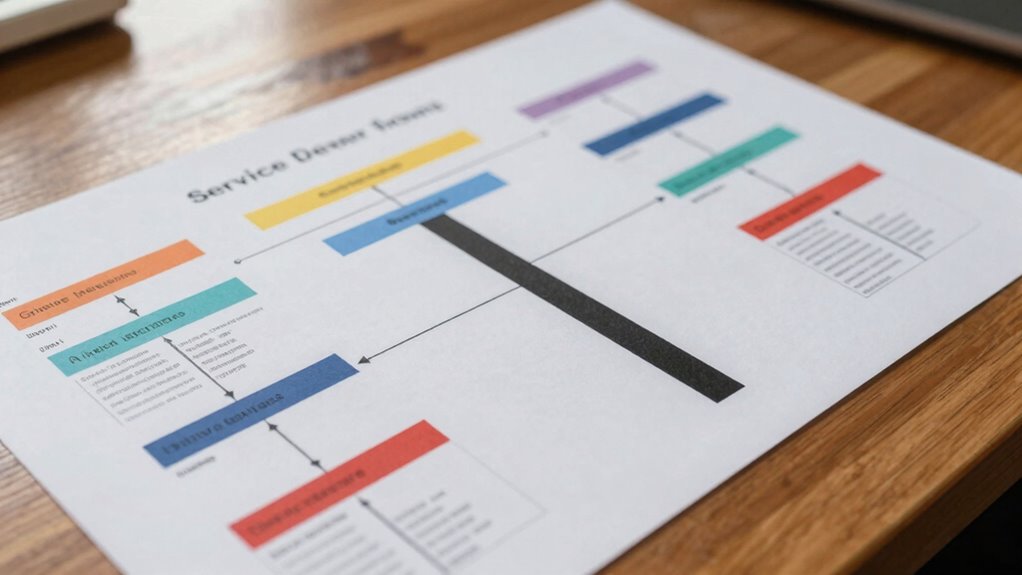
Have you ever wondered why many service blueprints overlook a vital layer that can greatly enhance your team’s efficiency? It’s often the case that teams focus heavily on the visible touchpoints—the interactions customers have with your service—but neglect the underlying layer that maps the customer journey from start to finish. This overlooked layer isn’t just about listing steps; it’s about understanding how each step influences the overall customer experience and operational efficiency. When you incorporate this layer into your blueprint, you create a comprehensive view that aligns frontline actions with customer expectations and business goals.
This missing layer is essentially the customer journey map embedded within the service blueprint. It illustrates how customers move through your service, highlighting pain points, moments of delight, and opportunities for improvement. By neglecting this, many teams miss the chance to optimize processes that directly impact customer satisfaction. Without a clear understanding of the customer journey, your team might focus on streamlining internal operations without realizing how those internal changes affect the customer’s experience. This disconnect can result in inefficiencies, redundancies, or gaps that frustrate customers and drain resources.
Adding this layer helps you see the service from your customers’ perspective, making operational efficiency more attainable. When you understand each step in the customer journey, you can identify where delays, confusion, or frustration occur. These insights empower you to refine processes—eliminating unnecessary steps, automating repetitive tasks, or reallocating resources to critical moments. As a result, your team can deliver a smoother, faster, and more seamless experience, which ultimately boosts customer satisfaction and loyalty. Recognizing the importance of the customer journey as a core element ensures your service blueprint remains a dynamic and effective tool.
Furthermore, integrating the customer journey into your service blueprint facilitates better cross-department collaboration. Everyone understands their role in shaping the customer experience, leading to more cohesive efforts. When each team member sees how their work impacts the customer’s perception, they’re more motivated to optimize their part of the process. This holistic view aligns operations with customer needs, fostering continuous improvement and innovation. Recognizing the importance of a comprehensive understanding of customer behavior allows teams to anticipate future needs and adapt proactively.
In essence, the layer most teams leave blank is the key to unlocking true operational efficiency. It transforms a static map into a dynamic tool that guides your team’s efforts toward delivering value at every touchpoint. By making the customer journey visible within your blueprint, you not only better understand your customers but also create a blueprint that drives smarter, more effective service delivery. This simple addition can be the difference between a good service and an exceptional one.
As an affiliate, we earn on qualifying purchases.
Frequently Asked Questions
How Do You Identify the Most Commonly Overlooked Blueprint Layer?
You identify the most overlooked blueprint layer by analyzing the customer journey for gaps. Pay close attention to moments where customer needs aren’t fully addressed or where interactions seem inconsistent. These overlooked areas often reveal missing or underdeveloped blueprint layers, especially those related to backstage processes or support systems. By mapping out the entire journey thoroughly, you can spot blueprint gaps and guarantee every layer supports a seamless customer experience.
What Tools Assist in Visualizing This Hidden Layer Effectively?
You can use tools like customer journey mapping and touchpoint mapping to visualize this hidden blueprint layer effectively. These tools help you see how customers experience your service at every interaction, revealing gaps and overlooked steps. By mapping touchpoints along the customer journey, you identify where the service blueprint lacks detail, allowing you to optimize processes and improve overall service delivery. Visualizations make the invisible parts of your blueprint clear and actionable.
How Does Neglecting This Layer Impact Overall Service Quality?
Neglecting this layer can greatly harm your service consistency, leading to inconsistent customer experiences. When you overlook the behind-the-scenes processes, customers may perceive your service as unreliable or unprofessional. This diminishes trust and satisfaction, making it harder to build loyalty. By paying attention to this hidden layer, you guarantee smoother operations, improved service quality, and a positive customer perception that encourages repeat business and strengthens your brand reputation.
Who Should Be Responsible for Filling in This Blank Layer?
You should be responsible for filling in this blank layer, as it guarantees role clarity and responsibility assignment. Clearly defining who handles each action prevents confusion and gaps in service delivery. By taking ownership, you contribute to a seamless customer experience and improve overall service quality. When everyone understands their role, the service blueprint becomes a reliable guide, making your team more efficient and aligned in delivering excellent service.
What Are the First Steps to Improve This Overlooked Layer?
Think of this layer as the secret sauce to your service. To improve it, start by mapping out your customer journey in detail, identifying moments where employee interactions shape experience. Then, focus on employee training to guarantee staff understand their role in delivering seamless service. These steps help fill the blank layer with insight and consistency, transforming your service from good to memorable and strengthening the overall customer experience.
As an affiliate, we earn on qualifying purchases.
Conclusion
By paying closer attention to the backstage or support processes often left blank, you can uncover hidden inefficiencies and improve the overall customer experience. It might seem unnecessary at first, but integrating these layers adds depth and clarity, ultimately leading to smoother service delivery. Don’t dismiss this step as trivial; instead, see it as an opportunity to differentiate your team through meticulous planning and seamless execution, ensuring every touchpoint truly counts.
As an affiliate, we earn on qualifying purchases.
customer experience analysis software
As an affiliate, we earn on qualifying purchases.
As an affiliate, we earn on qualifying purchases.
Halloween Picks
halloween
As an affiliate, we earn on qualifying purchases.