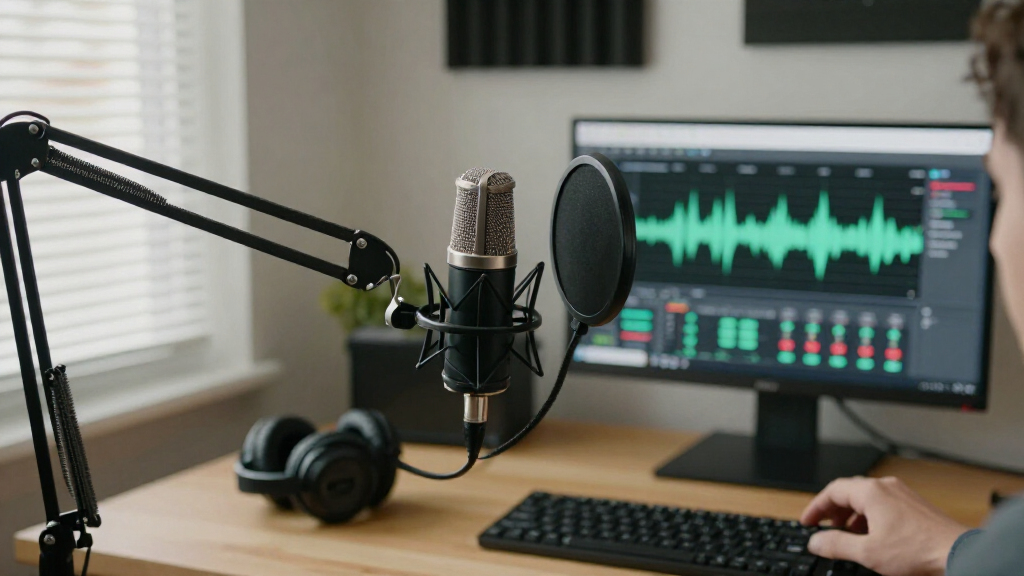

🔍 Read the full analysis: 10 AI-Focused Studio Condenser Microphones Worth Comparing In 2027 on ThorstenMeyerAI.com

Get business pricing on monitors, keyboards and dev gear
- Business-only prices and quantity discounts
- Tax-exempt purchasing
- Multiple users, one account, clear invoices
TL;DR
A buyer’s guide from ThorstenMeyerAI.com compares 10 studio condenser microphones for home recording, podcasting and music. The guide singles out the RØDE NT1 5th Generation for its USB-C and XLR connections, while noting that its recommendations and rankings are the guide’s judgments, not independently verified test results.
ThorstenMeyerAI.com has published a comparison of 10 studio condenser microphones for people choosing recording equipment for vocals, instruments, podcasts and voiceovers. The guide ranks the RØDE NT1 5th Generation first, citing its USB-C and XLR outputs, and weighs the other models against price, self-noise, room pickup and included gear. These are assessments reported by ThorstenMeyerAI.com, not results from a disclosed independent test.
According to ThorstenMeyerAI.com, the guide considered sound quality, self-noise, build durability, connectivity and accessories, alongside suitability for different users. The site says it gave greater weight to versatility and long-term value, arguing that a dual-connection microphone or a kit with a shock mount and pop filter can reduce extra purchases. ThorstenMeyerAI.com does not publish a detailed test protocol, measurements for every model or a full explanation of how each factor was scored.
For its leading recommendations, ThorstenMeyerAI.com calls the Audio-Technica AT2020 a value choice for XLR recording, while noting that it lacks USB connectivity and a built-in headphone jack. The guide presents the Shure SM4 as an option for loud sources and rooms with reflections, citing its cardioid pickup and off-axis rejection. These are the site’s evaluations, not independently confirmed comparative findings.
For entry-level buyers, ThorstenMeyerAI.com discusses the FIFINE T669 and MAONO A04 as USB kits aimed at podcasting and voice work. The guide says their included accessories can make setup easier, but warns that higher self-noise may be a drawback for quiet or detailed music recording. The source provides no prices, current stock information or dated model revisions.
The 10 picks
- 1
 Shure SM4 XLR Studio Condenser Microphone Kit for RecordingView on Amazon →
- 2
 RØDE NT1 5th Generation Studio Condenser Microphone with XLR and USB‑CView on Amazon →
- 3
 RØDE NT1 Signature Series Studio Condenser Microphone – BlackView on Amazon →
- 4
 RØDE NT1 Signature Series Studio Condenser Microphone – RedView on Amazon →
- 5
 Audio-Technica AT2035 Cardioid Condenser MicrophoneView on Amazon →
- 6
 Audio-Technica AT2020 Cardioid Condenser Studio XLR Microphone, BlackView on Amazon →
- 7
 AKG Pro Audio P120 2/3-Inch Diaphragm Condenser MicrophoneView on Amazon →
- 8
 MAONO A04 Gen2 XLR/USB Condenser Microphone Kit for PC Podcast RecordingView on Amazon →
- 9
 FIFINE T669 Studio Condenser USB Microphone Kit with Boom ArmView on Amazon →
- 10
 Mackie EM-91C Large-Diaphragm Condenser MicrophoneView on Amazon →
How Connectivity Shapes the Choice
ThorstenMeyerAI.com’s comparison highlights a practical question for home studios: whether a buyer needs a microphone that plugs straight into a computer, a conventional XLR connection for an audio interface, or both. The guide describes USB as a way to reduce the equipment needed to begin recording and XLR as a route to using an interface or mixer. It says the hybrid NT1 5th Generation lets users switch connection methods without replacing the microphone.
The site also stresses that stated sound quality is only part of a purchase decision. Self-noise matters for quiet sources, and off-axis pickup can affect recordings made in untreated rooms, according to the guide. ThorstenMeyerAI.com says included mounts, filters and cables may change the total cost of getting started. These are the site’s comparison points; buyers should check the exact product version, specifications and kit contents before purchasing.
Popular right now

Vitamix Touch & Go Advance 32-Ounce Bar Blender, White

Dyson V8 Cyclone Cordless Vacuum

Ninja DualZone Air Fryer 10 Qt Smart 6-in-1 Grey
As an affiliate, we earn on qualifying purchases.
The Guide’s Comparison Criteria
ThorstenMeyerAI.com describes its ranking as a balance of specifications and listening preferences. The site says it assessed microphones for frequency response, transient detail and low-frequency accuracy, as well as noise, construction, connections and included accessories. The guide says models with self-noise below 10 dB were favored where affordability allowed, but it provides no complete, model-by-model measurement table and does not identify an independent testing lab.
According to the guide, most of the microphones it discusses use a cardioid pickup pattern, intended to capture sound from the front while reducing sound from the rear and sides. ThorstenMeyerAI.com describes the AT2035 and SM4 as having tighter rejection and says the NT1 models have a wider cardioid response. The article provides no controlled acoustic test results to quantify those differences, which can also depend on placement and the room.
What the Ranking Does Not Establish
The supplied ThorstenMeyerAI.com material names several models and explains its selection criteria, but does not include the complete list of all 10 microphones or a full ranked breakdown. A model-by-model comparison of the remaining picks therefore cannot be verified from the supplied material; this article does not invent missing products or rankings.
ThorstenMeyerAI.com does not state when the guide was published, which prices or product revisions it reviewed, or whether its sound and noise assessments came from standardized measurements, listening tests or manufacturer specifications. Its labels such as “best” and “go-to” are editorial judgments, not evidence that one microphone will perform best for every voice, room or recording chain.
Check Models Before Buying
Readers comparing microphones should consult ThorstenMeyerAI.com’s full model list and check current manufacturer specifications, prices and kit contents before making a purchase. In particular, verify whether the exact model includes USB, XLR or both, whether an interface is required, and the stated self-noise for the version on sale. The supplied ThorstenMeyerAI.com material does not announce a follow-up test or a date for updated rankings, so changes to the list are not confirmed.
Key Questions
Which microphone does the guide rank first?
The supplied ThorstenMeyerAI.com material names the RØDE NT1 5th Generation as its top pick, citing its USB-C and XLR outputs. That is the guide’s ranking, not an independently established result.
Does the comparison include all 10 microphone names?
No. The supplied ThorstenMeyerAI.com material names the RØDE NT1 5th Generation, RØDE NT1 Signature Series, Audio-Technica AT2020, Audio-Technica AT2035, Shure SM4, AKG P120, FIFINE T669 and MAONO A04. It does not identify the full set of 10 picks or provide a complete ranking.
Is USB or XLR better for a home studio?
That depends on the setup. ThorstenMeyerAI.com describes USB as a direct computer connection and XLR as requiring an audio interface or mixer. The guide notes that a hybrid microphone offers both connection options, but does not claim one approach is best for all users.
Why does self-noise matter?
Self-noise is the noise produced by a microphone, expressed in dB(A). ThorstenMeyerAI.com says a lower figure can help when recording quiet vocals or instruments, while louder podcast speech may be less sensitive to it. Actual results also depend on the recording chain and environment.
Are the budget USB kits suitable for music recording?
ThorstenMeyerAI.com presents the FIFINE T669 and MAONO A04 as convenient options for podcasting and voiceovers, while warning that their higher self-noise may make them less suitable for critical music recording. The guide does not provide controlled comparative recordings to verify that judgment.
Source: ThorstenMeyerAI.com