🔍 Read the full analysis: A Guide To 10 Mobile Workstation Laptops For AI Performance In 2027 on ThorstenMeyerAI.com

Get business pricing on monitors, keyboards and dev gear
- Business-only prices and quantity discounts
- Tax-exempt purchasing
- Multiple users, one account, clear invoices
TL;DR
The supplied ThorstenMeyerAI.com guide names 10 mobile workstation models and compares their intended strengths, from compact systems to larger machines designed for sustained workloads. The guide does not provide a publication date, test data, prices or complete specifications, so its rankings and claims about 2027 performance should be treated as recommendations rather than independently verified results.
ThorstenMeyerAI.com has published a guide to 10 mobile workstation laptops for AI and professional workloads in 2027, recommending models for different priorities, including portability, graphics performance and cooling. The guide says laptop buyers should weigh sustained performance and software compatibility alongside peak specifications, but the supplied material does not include benchmark results, prices or confirmation that every named model is available in a 2027 configuration.
In its guide, ThorstenMeyerAI.com identifies the Lenovo ThinkPad P1 Gen 7 as its best overall choice, describing it as a relatively sleek option with dedicated NVIDIA RTX graphics; readers can also compare AI-powered mobile workstation laptops. The guide recommends the ThinkPad P14s Gen 7 for buyers seeking a 14-inch AMD Ryzen AI system and the Dell Precision 7680 for demanding engineering work where a larger chassis can support cooling. These are the guide’s judgments, not conclusions supported in the supplied material by comparative test data.
The other models named by ThorstenMeyerAI.com are the ThinkPad P16s Gen 4, ThinkPad P16 Gen 3, Dell Precision 5690, Dell Precision 7780, HP ZBook Studio G11, HP ZBook Fury 16 G11 and ASUS ProArt Studiobook 16 OLED. The source associates the P16s Gen 4 with an OLED display and contrasts thinner systems with thicker workstations built for extended loads. It does not provide a complete specification table for all 10 machines.
For selection, the guide points readers to professional GPU drivers and software certification, cooling under sustained workloads, display characteristics, build quality and upgrade access, considerations also covered in this guide to mobile workstations for AI development. It also flags tradeoffs: the guide says newer Intel Core Ultra and AMD Ryzen AI processors may improve battery efficiency, while they may not match older HX-series chips in peak multi-core performance for heavy rendering. The source does not accompany that comparison with model-specific measurements.
The 10 picks
- 1
 Dell Precision 7680 16-Inch Workstation Laptop, Intel Core i7-13850HX, NVIDIA…View on Amazon →
- 2
 Dell Precision 7680 Laptop, NVIDIA RTX 2000 Ada 8GB, Intel i7-13850HX, 32GB DDR5View on Amazon →
- 3
 Lenovo ThinkPad P1 Gen 7, w/ Ultra 7, NVIDIA RTX 3000, 16" 2.8K, 32GB RAMView on Amazon →
- 4
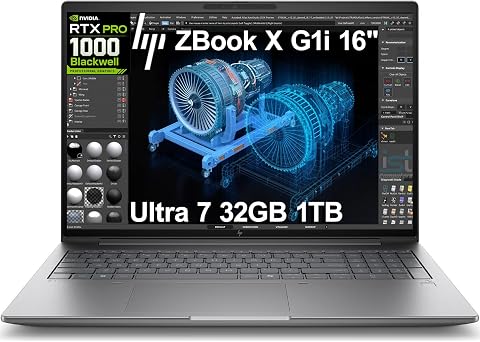 HP ZBook X G1i 16-inch Laptop, Intel Core Ultra 7 265H, NVIDIA RTX PRO 1000 B…View on Amazon →
- 5
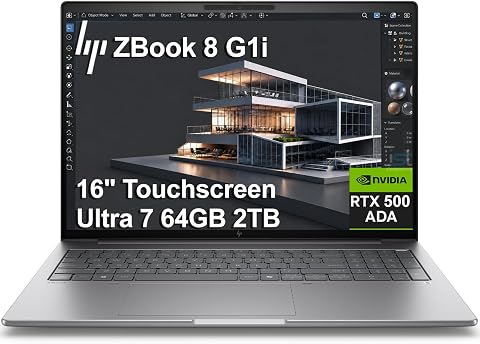 HP ZBook 8 G1i AI Mobile Workstation Laptop (16" FHD+ Touchscreen, Intel Ultr…View on Amazon →
- 6
 HP ZBook 8 G1i AI Mobile Workstation Laptop (16" 4K 120Hz, Intel Ultra 7 265H…View on Amazon →
- 7
 Lenovo ThinkPad P16s Gen 4 16-inch OLED Touchscreen Mobile WorkstationView on Amazon →
- 8
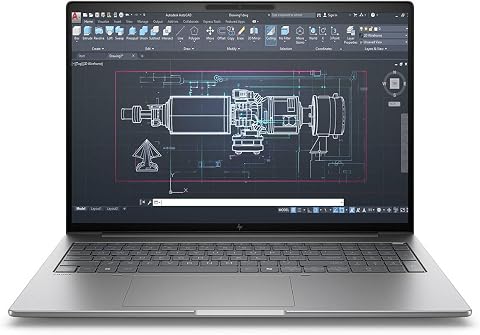 HP ZBook 8 G1i 16" Mobile Workstation – WUXGA – 60 Hz – Intel Core Ultra 7 25…View on Amazon →
- 9
 Lenovo ThinkPad P16s Gen 4 16-Inch Business LaptopView on Amazon →
- 10
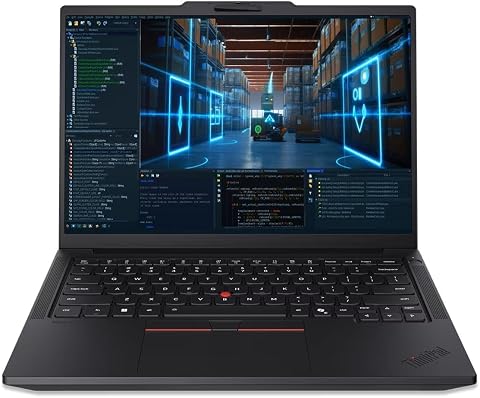 Lenovo ThinkPad P14s Gen 7 Mobile Workstation (2026) – 14" Touch, AMD Ryzen A…View on Amazon →
Choosing for Sustained AI Work
The guide’s main practical point is that an AI-capable laptop is not defined by a processor or graphics chip alone. Long-running computation produces heat, and a thin chassis may not sustain the same performance as a larger workstation, even when short benchmark bursts look strong. This matters to people running local AI workloads, rendering, simulations or large engineering projects away from a desk.
For professional users, driver support and application compatibility can matter as much as raw speed. ThorstenMeyerAI.com argues that certified professional graphics drivers can be useful in CAD and simulation software, while also saying that buyers focused on coding or general productivity may not need the most expensive graphics configuration. The article offers a framework for comparing needs, but its recommendations should be checked against the software and workload a buyer actually uses.
Popular right now

Vitamix Touch & Go Advance 32-Ounce Bar Blender, White

Apple AirPods Pro 3 Wireless Earbuds with Active Noise Cancellation

KitchenAid Artisan 5-Quart Tilt-Head Stand Mixer, Blue Velvet
As an affiliate, we earn on qualifying purchases.
The Guide’s Buying Criteria
ThorstenMeyerAI.com frames its recommendations around a familiar workstation tradeoff: portability versus sustained performance. The guide says thinner laptops have less thermal headroom, while thicker machines can better support extended CPU and GPU workloads. It advises buyers to look for tests conducted after prolonged use rather than relying only on peak or short-burst figures, though it supplies no such test results for the 10 picks.
The guide also compares OLED and IPS displays. It describes OLED as offering stronger contrast for creative work, with potentially higher power use, and says IPS may suit users who prioritize brightness, durability or battery life. On connectivity, the guide warns that some slim models may require a dock for legacy ports. Its broad discussion of Intel Core Ultra, AMD Ryzen AI and NVIDIA RTX Ada and Blackwell architectures is not tied to verified configurations for every listed laptop.
Specifications and Test Evidence
The supplied ThorstenMeyerAI.com source does not state when the guide was published, identify the exact configurations tested or provide benchmark methodology, measured battery life, sustained-load results or prices. It also does not establish that each listed model is sold in the 2027 market or that its processor and graphics options match the guide’s general references to newer AI chips and GPU architectures.
Accordingly, the guide’s labels “best overall” and “go-to” should be read as ThorstenMeyerAI.com’s recommendations, not independently verified rankings. The source presents statements about professional driver stability, OLED power consumption and cooling as buying guidance, but does not cite specific tests or software certification records. Buyers should confirm current configurations, availability and application certification directly with manufacturers and software vendors.
Verify Models Before Buying
Because ThorstenMeyerAI.com’s guide does not supply full configuration details, readers should compare the exact configurations currently on sale, including GPU, memory, storage, display and warranty options. For AI work, buyers should also confirm whether their intended tools run locally, whether they use the laptop’s GPU effectively and whether the system has enough memory for their projects.
Before choosing among the 10 recommendations, look for independent reviews that measure performance during extended workloads and report battery life under comparable conditions. Check software-vendor certification lists for critical CAD or simulation applications, and confirm which ports are built in rather than available only through a dock. The source provides no scheduled follow-up testing or product announcements, so further verification remains with buyers and future reviews.
Key Questions
Which laptop does the guide recommend as its best overall pick?
ThorstenMeyerAI.com names the Lenovo ThinkPad P1 Gen 7 as its best overall choice, citing its relatively sleek design and dedicated NVIDIA RTX graphics. The supplied guide does not provide comparative benchmark data to independently substantiate that ranking.
Which models does the guide name for compact and heavy-duty work?
ThorstenMeyerAI.com recommends the ThinkPad P14s Gen 7 for a compact 14-inch AMD Ryzen AI system and the Dell Precision 7680 for demanding engineering workloads. Those descriptions reflect the guide’s recommendations; configuration details and test results are not included in the source material.
Does the guide prove which laptop is fastest for AI?
No. The supplied guide gives no comparable AI benchmarks or sustained-load measurements for the 10 models. It discusses general tradeoffs in cooling and processor generations but does not establish a fastest system.
What should buyers verify before choosing a workstation?
Check the exact configuration, current availability, sustained performance, battery life, port selection and compatibility with the software you use. For professional CAD or simulation work, verify ISV certification and driver support for the specific application version.
Source: ThorstenMeyerAI.com