
📊 Full opportunity report: DDR5 Now, DDR6 Soon: A Buyer’s Field Guide on ThorstenMeyerAI.com — validation score, market gap, and execution plan.
TL;DR
DDR5 remains the recommended memory standard for 2026, with the optimal configuration being DDR5-6000 CL30. DDR6 is on the horizon but not suitable for most buyers now due to high costs and compatibility issues. Waiting for DDR6 is generally unwise unless building for specific long-term, high-bandwidth workloads.
DDR5 memory remains the recommended choice for most PC builds in 2026, with prices and performance optimized at DDR5-6000 CL30. Meanwhile, DDR6 technology is still in development, with commercial availability not expected until 2027, and it will come at a premium. Experts advise against waiting for DDR6 due to high costs and limited compatibility, making DDR5 the practical upgrade path now.
Market analysts and industry sources confirm that DDR5-6000 with CL30 timings offers the best value for mainstream users, as it balances speed, latency, and cost. Both AMD and Intel platforms support this configuration effectively, and faster kits like DDR5-8000 are generally unnecessary for typical workloads.
In contrast, DDR6, which promises significantly higher bandwidth through architectural innovations such as four 24-bit sub-channels and speeds up to 17,600 MT/s, is not yet commercially available for mainstream consumers. It will require new CPUs, chipsets, and modules, with initial launches targeted at enterprise and AI markets in 2026–27, and mainstream adoption not expected until 2027 or later. The first DDR6 modules will be expensive and may have limited capacities, with early adoption risks including unstable profiles and immature support.
Manufacturers have phased out DDR4, making it a poor choice for new builds in 2026, as its prices are comparable to DDR5 and it will soon be obsolete. Building on DDR4 now would mean investing in a platform with no future upgrade path.
DDR5 now, DDR6 soon
A buyer’s field guide. The 20-year instinct — wait for prices to drop, or wait for the next generation — is broken this cycle. Buy the DDR5 you actually need now; don’t wait for DDR6. Here’s the reasoning.
Driven to end-of-life, production slashed. Same money, dead-end socket. Leave a working DDR4 box alone — but never start a new build on DDR4 to “save.”
A framework, not a gamble. Buy the DDR5 you need now, at the sweet spot, in the capacity you’ll actually use — don’t buy DDR4, don’t wait for DDR6. The two costliest mistakes in this market are the ones that feel prudent: waiting for a price drop that isn’t coming, and waiting for a next-gen part that launches dearer than what’s on the shelf. Next: The SSD Squeeze.
Why DDR5 Remains the Best Choice in 2026
For most consumers, choosing DDR5 now avoids the higher costs and compatibility issues associated with DDR6. It allows for a balanced, future-proof upgrade that supports current platforms and workloads. Waiting for DDR6 would delay system upgrades and incur higher costs without immediate benefit, especially since DDR6’s advantages are mainly relevant for specialized, high-bandwidth applications.

TEAMGROUP T-Force Delta RGB DDR5 Ram 32GB (2x16GB) 6000MHz PC5-48000 CL30 Intel XMP 3.0 & AMD Expo Compatible Desktop Memory Module Ram White FF4D532G6000HC30DC01
- Memory Type: DDR5 RAM for high performance
- Overclocking Support: Supports Intel XMP 3.0
- Compatibility: Compatible with Intel 600 & 700 Series
As an affiliate, we earn on qualifying purchases.
As an affiliate, we earn on qualifying purchases.
Market Trends and Future Memory Developments
The memory market has experienced significant price volatility in recent years, driven by supply shortages and increased demand. DDR5 was introduced in late 2021 but remains expensive, with prices stabilizing around the recommended DDR5-6000 CL30 configuration. DDR4 is being phased out, and DDR6 remains in development, with initial deployment limited to enterprise and AI sectors. Historically, new memory standards take several years to reach mainstream affordability and compatibility, with DDR6 expected to follow a similar trajectory, arriving around 2027–28.
Manufacturers emphasize that DDR6 will offer substantial bandwidth improvements, but these are primarily relevant for specialized workloads. For gaming and general productivity, DDR5’s performance is already sufficient, and the cost premium for DDR6 is unlikely to justify early adoption for most users.
“DDR6 will significantly increase bandwidth, but it will require new platforms, and early modules will be costly and limited in capacity.”
— Hardware manufacturing executive

Crucial 32GB DDR5 RAM Kit (2x16GB), 5600MHz (or 5200MHz or 4800MHz) Laptop Memory 262-Pin SODIMM, Compatible with Intel Core and AMD Ryzen 7000, Black – CT2K16G56C46S5
- Memory Capacity: 32GB DDR5 RAM Kit (2x16GB)
- Memory Speed: 5600MHz, 5200MHz, or 4800MHz
- Performance Boost: Enhances system responsiveness and multitasking
As an affiliate, we earn on qualifying purchases.
As an affiliate, we earn on qualifying purchases.
Unconfirmed Aspects of DDR6 Adoption Timeline
It remains unclear exactly when DDR6 modules will become affordable and widely compatible with mainstream platforms. The transition timeline from enterprise to consumer markets is still being defined, and early modules may face stability and capacity issues. Additionally, the exact performance benefits for typical users are yet to be fully realized and validated in real-world scenarios.
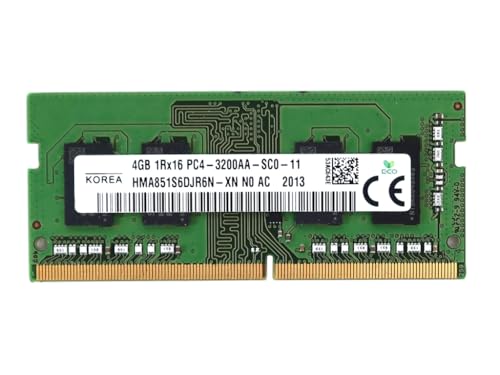
Laptop Memory Module HMA851S6DJR6N-XN Compatible Replacement Spare Part for SK Hynix HMA851S6DJR6N 4GB 1RX16 DDR4 SO-DIMM PC4-25600 3200MHz 260-Pin Non-ECC CL22 1.2V
- Model Number: HMA851S6DJR6N-XN
- Memory Type: DDR4 SODIMM 260-Pin
- Capacity and Speed: 4GB 3200MHz
As an affiliate, we earn on qualifying purchases.
As an affiliate, we earn on qualifying purchases.
Key Milestones for Future Memory Upgrades
Next steps include monitoring JEDEC standards for DDR6 adoption, observing motherboard compatibility lists, and waiting for the first validated DDR6 modules and CPUs to appear in 2027. Consumers should focus on DDR5 upgrades now, with plans to evaluate DDR6 once it matures and becomes cost-effective, likely around 2028 or later.

PNY Performance 16GB (2x8GB) DDR5 RAM 5600MHz (PC5-44800) – CL46, 1.1V – Compatible with 5200MHz, 4800MHz – Desktop Memory Kit – MD16GK2D5560046-TB – Not Compatible with Intel 15th Gen
- Compatibility: Supports Intel 12th-14th Gen, AMD Ryzen 7000-9000
- Memory Technology: DDR5 for faster performance and efficiency
- Standards and Reliability: Meets JEDEC standards with high-quality testing
As an affiliate, we earn on qualifying purchases.
As an affiliate, we earn on qualifying purchases.
Key Questions
Should I buy DDR4 or DDR5 in 2026?
Buy DDR5 for new builds or upgrades, as DDR4 is being phased out and offers no future upgrade path. DDR5 provides better performance and compatibility for current platforms.
Is waiting for DDR6 a good idea?
Generally no, unless you are building a long-term workstation or need the highest bandwidth for AI or scientific computing. DDR6 is still in development, with availability and costs uncertain until at least 2027.
Will DDR6 be worth the wait?
For most users, DDR6 will offer performance benefits mainly in specialized workloads. For gaming and everyday use, DDR5 is sufficient, and waiting may delay your upgrade unnecessarily.
How much should I spend on memory in 2026?
Focus on DDR5-6000 CL30 kits at a reasonable price point. Avoid overspending on faster or larger capacities unless your workload specifically demands it.
Source: ThorstenMeyerAI.com