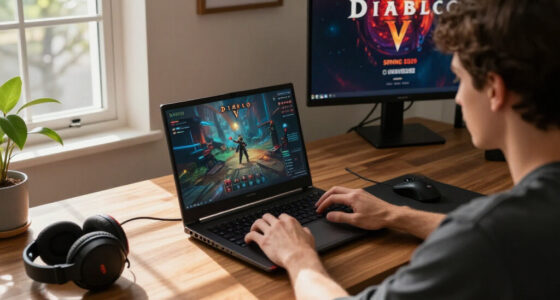
🔍 Read the full analysis: How Anthropic’s New Claude Code Limits Aim To Prevent Game Cloning on ThorstenMeyerAI.com

Get business pricing on monitors, keyboards and dev gear
- Business-only prices and quantity discounts
- Tax-exempt purchasing
- Multiple users, one account, clear invoices
TL;DR
A Tom’s Hardware headline reports that Anthropic confirmed new Claude Code limits intended to prevent game cloning. The headline also cites user reports that Opus 5.5 blocks some reverse-engineering tasks, but the available material does not establish which requests are affected or whether the reports are tied to the limits.
Anthropic has confirmed new limits for Claude Code intended to prevent game cloning, according to a Tom’s Hardware headline. The same headline says users report that Opus 5.5 blocks reverse-engineering tasks, but the available information does not show which requests trigger refusals or whether those reports are connected to the announced limits.
The reported change concerns Claude Code, Anthropic’s coding assistant, and restrictions described as targeting requests to reproduce games. The source material does not include Anthropic’s exact statement, policy text, technical explanation, or examples of prompts that are refused. The purpose is reported; the boundary of the restriction is not.
The Opus 5.5 reports are a separate, less established part of the account. The headline characterizes them as user reports that the model blocks reverse-engineering work. No user accounts, sample responses, dates, model settings, or test results are included in the material available here, so it cannot establish how frequent or consistent the behavior is.
It is also not clear whether the Claude Code limits apply to a particular model, plan, or workflow, or when they took effect. The source does not establish that Opus 5.5’s reported refusals are part of the same policy rather than a separate safeguard or model behavior.
Limits Could Affect Game Analysis
Restrictions aimed at reproducing games could shape how developers use coding assistants for software analysis and recreation. The implications depend on how Anthropic defines cloning: a request to recreate a commercial game is not necessarily the same as examining behavior for compatibility, maintenance, preservation, or security research.
That distinction matters to developers and researchers who may use reverse engineering for legitimate purposes. If the limits are narrowly focused on producing close copies, their effect could differ substantially from a broader rule that blocks analysis of existing games. The available account does not say whether Anthropic distinguishes these activities, offers a review route for refusals, or provides alternative guidance.
For rights holders, limits could reduce the risk that a coding assistant helps users reproduce protected game elements. That is a potential consequence of the stated aim, not evidence that the safeguards work in every case. Without the policy details or independent tests, the actual effect on copying and legitimate work cannot yet be assessed.
Popular right now

Breville BES870BTR Barista Express Espresso Machine, Black Truffle

Ninja Foodi Air Fryer, 8 Qt DualZone, 6-in-1, Grey, DZ201

Vitamix Propel Series 510 Professional-Grade Blender, 3 Programs, Black
As an affiliate, we earn on qualifying purchases.
Game Copying and Reverse Engineering
AI coding assistants can generate or modify software in response to user instructions. Requests to reproduce an existing game may raise intellectual-property concerns, while reverse engineering can also serve purposes such as interoperability, maintenance, preservation, and research. In practice, these activities can overlap, making the wording and application of a restriction important.
The confirmed scope in the source material is narrow: a Tom’s Hardware headline attributes to Anthropic confirmation of Claude Code limits with a game-cloning purpose. It does not provide a timeline, policy document, or technical account of enforcement. Nor does it establish that the Opus 5.5 reports are new or directly connected to the Claude Code change.
Policy Scope Remains Unspecified
The main unanswered question is what Anthropic classifies as game cloning and which prompts or workflows fall within the limits. The source material does not say whether restrictions apply only to attempts to recreate games or also to broader analysis of game code and behavior.
It is also unknown which Claude Code or model versions are covered, when the change took effect, how refusals are enforced, or whether users can ask for a review. The Opus 5.5 reports lack enough detail to determine their frequency, consistency, or relationship to the confirmed limits. No independent testing or product documentation is provided.
Documentation and Tests Needed
The next useful development would be an Anthropic policy explanation defining game cloning and describing how the limits apply to adjacent analysis tasks. Release notes or product documentation could clarify the affected versions, effective date, enforcement process, and options available when a request is refused.
More detailed user reports, reproducible examples, and independent testing could help establish whether Opus 5.5 blocks a broad category of reverse engineering or only requests associated with recreating games. Until those details emerge, the reach and practical effect of the reported restrictions remain uncertain.
Key Questions
What limits did Anthropic confirm?
A Tom’s Hardware headline reports that Anthropic confirmed new Claude Code limits intended to prevent game cloning. The available material does not provide the specific rules or technical details.
Does Opus 5.5 block all reverse engineering?
No. The headline cites user reports of Opus 5.5 blocking reverse-engineering tasks, but it provides no examples or evidence that all such work is blocked.
Are the Opus 5.5 reports linked to the Claude Code limits?
The available information does not establish a link. The reported Opus 5.5 refusals could be connected to the limits or reflect a separate safeguard or model behavior.
When did the limits take effect?
The source material does not provide an announcement date or effective date for the limits.
Could the limits affect preservation or security research?
That is not clear. The impact depends on whether Anthropic distinguishes attempts to clone a game from other forms of analysis, preservation, compatibility, or security research. No such distinction is described in the available material.
Primary source: Anthropic · via ThorstenMeyerAI.com